Squat

Auto Added by WPeMatico

“Ass to Grass” or 90 Degrees? Here’s How Low You Should Be Squatting

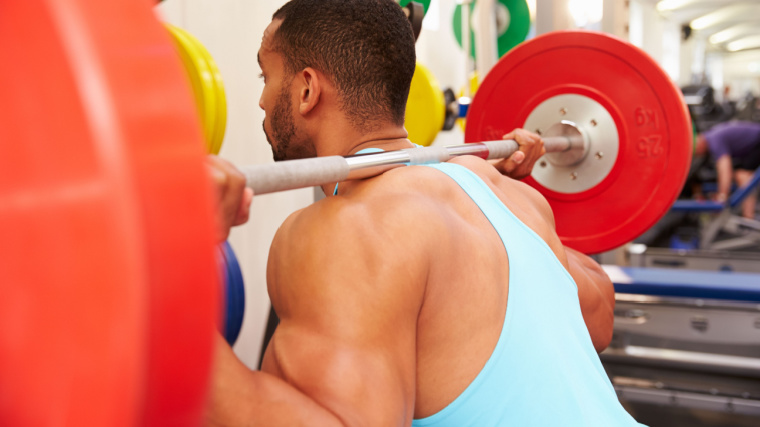
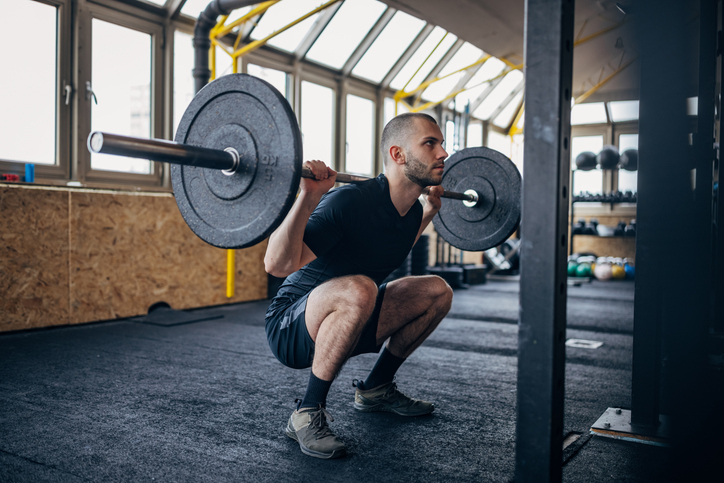
“Ass to Grass” or 90 Degrees? Here’s How Low You Should Be Squatting Whether you’re loading a barbell on your back, racking a kettlebell over your shoulder, or just warming up with bodyweight squats, one question remains a constant: What is the proper squat depth? How low you go is as important to your performance, safety, and results as how much weight you press, so squat depth should be high on your form checklist, according to Carol Mack, D.P.T., C.S.C.S., doctor of physical therapy and strength and conditioning coach. Read on to learn why. How Low Should You Squat? Unless you’re a competitive powerlifter whose goal is to squat as much weight as possible, Mack recommends squatting as deep as you can comfortably without sacrificing form. A deeper squat helps to fire up the muscles more efficiently and builds strength in a greater range of motion, which is important if you’re training for anything beyond aesthetics, like athleticism or everyday function. But your squat depth will vary based on a few personal factors, like “whether you have knee, hip, or ankle pain, and if you have enough mobility to go deeper,” says Mack. What If Your Knees Drift Past Your Toes? One unrelenting myth about squat depth is that you should never let your knees go past your toes. While this cue may indicate other form mistakes you may be making — such as not hinging at the hips — Mack says that your knees will likely drift past your toes if you’re going into a deeper squat, particularly with an activity like powerlifting. “Don’t worry about your knees coming forward when going past 90 degrees,” she says. “Of course, don’t force yourself deeper if you feel pain or a tight spot. But if you’re comfortable going deeper and you’re listening to your body, then it’s OK to go lower.” One alignment tip that helps, she adds, is to look down and make sure your knees are in line with your middle two toes, rather than splaying outward. (Just be sure to apply this tip during your warm-up and not, say, during a PR attempt.) How Can You Improve Squat Depth? If squat depth is something you struggle with, here are some strategies to help you get lower. 1. Focus on your hips Because squat depth is not just about your quads and glutes, focusing on the hips can be a game-changer, Mack says. Instead of dropping your butt straight down, try sending your hips back slightly — known as hinging — as you lower into your squat. This will help you bend with more hip flexion (a.k.a. bringing your knees closer to your chest), which can improve depth. It’s also important to keep your knees from caving inward as you approach the bottom of your squat and drive up to stand. “That might require adding hip mobility or strengthening to your routine to improve your squats,” Mack notes. Hip mobility exercises can do more than help squat depth, too. They can reduce the strain on the body from sitting too much, improve overall flexibility, and give you greater range of motion. 2. Increase ankle mobility Mack adds that it’s also important to have greater ankle mobility. This aspect of the squat can sometimes get ignored, but it plays a huge part in helping you get deeper. If you ever feel your ankles lifting off the ground during a squat, that’s a sign that you need to improve your mobility. Ankle-strengthening exercises can give you greater mobility and stability to support your squats, no matter how deep you go. 3. Strengthen your core Finally, remember that squats involve your spine as well, Mack says. “Some people have trouble keeping their trunk upright as they move deeper into their squat,” she says. “This can throw off alignment throughout the squat movement. It can happen for a lot of reasons, including mobility, but core strength is a big culprit.” If you tend to round your back as you come into a squat, or feel your upper body collapse as you’re pushing back up to standing, that usually means you need to integrate more core work into your routine, she suggests. Fortunately, there are tons of options for that, and much like the other mobility and strengthening choices here, you’ll be reducing your risk of injury and improving your form for a breadth of moves, including squats. The post “Ass to Grass” or 90 Degrees? Here’s How Low You Should Be Squatting appeared first on BODi. Whether you’re loading a barbell on your back, racking a kettlebell over your shoulder, or just warming up with bodyweight squats, one question remains a constant: What is the proper squat depth? How low you go is as important to your performance, safety, and results as how much weight you press, so squat depth should be high […] The post “Ass to Grass” or 90 Degrees? Here’s How Low You Should Be Squatting appeared first on BODi. William Kang{authorlink}https://www.beachbodyondemand.com/blog/squat-depthBODi BODi is a Health Esteem platform to help you embrace the person you are today so you can take action to achieve all your health and fitness goals. https://bodiblog.wpenginepowered.com/wp-content/plugins/bod-blog/assets/vendor/beachbodydigital/wordpress-core-plugins/beachbody.png

“Ass to Grass” or 90 Degrees? Here’s How Low You Should Be Squatting Read More »

What CAN’T fit in this pocket?!

What CAN’T fit in this pocket?! Sooo we need to talk about the POPFLEX Half Zip Warm Up Hoodie. I did make it for YOU, after all.   View this post on Instagram   A post shared by Cassey Ho (@blogilates)   SHOP HALF ZIP HOODIE The Half Zip Warm Up Hoodie A classic that I designed and launched a couple years ago, and to this day, remains one of my favorites. You can wear it long or cinch the adjustable bungees on the sides for a cropped look! The structured neck is so regal and gives a higher end, elegant look to an otherwise very casual, sporty piece! But the key to how good it looks is… THE SHAPE. It’s an inverted triangle that tapers you in at the waist. NO FRUMP HERE. Some other things that make the half zip hoodie one of my faves: Cloud fabric Drop shoulder Blousy sleeves A HUGE double-lined hood A zippered pocket (no dropped phones!)   And yeah… I did fit my entire lunch in the kangaroo pocket. Anyway, what else do you guys want to see? From full zip to no zip to half zip…which is your zip of choice!? SHOP HALF ZIP HOODIE Sooo we need to talk about the POPFLEX Half Zip Warm Up Hoodie. I did make it for YOU, after all.   View this post on Instagram   A post… Cassey{authorlink}https://www.blogilates.com/blog/half-zip-warm-up-hoodie-pocket/Blogilates The official blog of Cassey Ho https://i0.wp.com/www.blogilates.com/wp-content/uploads/2021/02/fav-1.png?fit=32%2C32&ssl=1

What CAN’T fit in this pocket?! Read More »

I tried to make the perfect legging…

I tried to make the perfect legging… I can’t believe this legging has been going for nearly 4 years, and every year, as trends change, the bottom hem changes. We’ve added colors and inseams and as of now, you have 1,075 different options to choose from. FOR REAL. But as we add and evolve this legging, you know what stays? That iconic waistband That anti-cameltoe crotch That booty seam That squat proofability Those pockets And the fact that I’ll always cover my shorties to my supermodels.   View this post on Instagram   A post shared by Cassey Ho (@blogilates)   SHOP LEGGINGS What’s silhouette is your fave? I am 5’5” wearing the POPFLEX Crisscross Hourglass® Legging in size small, 27” inseam. This legging comes in xxs-3x in 5 inseams! For leggings measure from crotch to ankle bone. For flares measure from crotch to floor. I can’t believe this legging has been going for nearly 4 years, and every year, as trends change, the bottom hem changes. We’ve added colors and inseams and as of… Cassey{authorlink}https://www.blogilates.com/blog/the-perfect-legging/Blogilates The official blog of Cassey Ho https://i0.wp.com/www.blogilates.com/wp-content/uploads/2021/02/fav-1.png?fit=32%2C32&ssl=1

I tried to make the perfect legging… Read More »

What Muscles Do Squats Work? Maximize Your Benefits from the King of Leg Exercises

What Muscles Do Squats Work? Maximize Your Benefits from the King of Leg Exercises The back squat, universally hailed the king of leg exercises, holds a timeless place in the realm of strength training. It’s a basic barbell movement that challenges not only your physical strength, but mental strength as well. The reason it is such a tough exercise to conquer has to do with not just muscular power, but muscular coordination, as well. (1) When you perform the classic barbell squat, you’re recruiting multiple muscle groups at the same time, from head to toe, while coordinating your effort amongst the physical and technical demands of the exercise. Credit: Monkey Business Images / Shutterstock While many exercises can have their place in a leg workout, if you’re seeking to enhance the muscular density and strength of your lower body, the back squat is the undisputed champion. It puts your muscles to the test, as it demands a level of metabolic dedication that’ll trigger a spike in growth hormone that plays a role in stimulating hypertrophy. (2) Take a closer look and focus on the mechanics of the squat, the muscles recruited, and some simple and effective variations that can help you get the most out of the time-tested back squat. What Muscles Do Squats Work? Squat Technique Muscle Recruitment How to Emphasize Specific Muscles Squat Variations How to Do the Squat— A Technique Guide The barbell back squat can appear deceptively simple at first — put the bar on your back, squat down, and stand up. However, there are many details to this lift that can often be overlooked, such as specific bar placement, hand and foot position, and the posture of your head and neck. Here’s a step-by-step guide to performing the squat, along with some tips to become a better squatter. Safety is crucial. Make sure to apply all of these steps for every individual repetition to not only get stronger, but to train smarter, too.  Step One — Set the Barbell Height Set the barbell at shoulder-height in a squat rack. When you grip the bar, position your arms parallel to the ground, ensuring a comfortable grip width that suits your shoulder mobility. Starting with a shoulder-width grip is recommended, but adjust to your individual balance of mobility and stability. Credit: Ihor Bulyhin / Shutterstock Coach’s Tip: If you encounter difficulties with your shoulder mobility, perform a thorough upper-body warm-up before starting your leg workout to improve your shoulder and chest mobility. Step Two — Position the Bar and Create a Shelf Choose between using either a high bar or low bar placement. What deciphers between a high bar or low bar position is whether the barbell is above your rear deltoids, or on top of (or below) your rear deltoids. A high-bar squat tends to emphasize the knee joint which would recruit more quadricep dominance than a low-bar squat, which would place the weight closer to the hip joint to recruit the glute muscles. Select the bar placement that aligns with your training goals. Credit: hurricanehank / Shutterstock “Building a shelf” helps to create a space for the barbell to sit comfortably on the upper back to squat. To build a shelf, retract your scapulae (shoulder blades) and tighten your upper back to create a stable shelf for the bar to rest on. Ensure your elbows are positioned underneath the bar, further securing it and promoting better posture. If your elbows aren’t under the bar or near perpendicular to the floor, your upper back might lose tightness and cause your spine to bend forward.  Coach’s Tip: To help keep your elbows underneath the bar, explore your grip width on the bar. The wider the grip, the more mobility your shoulder will have to support this aspect of your squatting performance. Step Three — Unrack the Weight and Set Your Stance Lift the barbell off the J-hooks and take two steps back. If you’ve set your barbell height correctly, it should be relatively easy to unrack the weight. When stepping back, keep the initial step small, as the second step is primarily used to adjust your stance. Avoid stepping too far back, as this will make it more challenging to re-rack the weight later. Your stance significantly influences muscle engagement. For a more quadriceps-focused squat, opt for a closer stance with your toes forward or slightly outward. Athletes should keep their feet forward to mimic the stance of their specific sport. (3) If you are looking for maximum squat strength, angle your toes slightly outward to make sure your knees stay outward in a more advantageous position. If you want to engage your hips more, stand wider and turn your toes outward — a technique often used by powerlifters and strongman competitors.  Coach’s Tip: The strongest and relatively biggest muscles of the body are your glutes. If you want to maximize strength, you want to use a more “glute-dominant” variation of the squat. Make sure your feet are a little wider than a normal stance, with your toes outward. Consider using a low-bar position, as well. Step Four — Head Position To maintain a flat and rigid spine throughout the squat, make sure you position your head slightly down at roughly a 45-degree angle. This head placement helps flatten the cervical spine — the vertebrae of your neck — which helps influence the rest of your spine to remain stable during the lift. Coach’s Tip: If you struggle to have good posture, start off with your head slightly facing down, but, as you perform the squat, keep your head slightly forward until you hit your sticking point moving upward. Once you hit that sticking point, tilt your head up and forward to help influence your spine to “get taller.” This should put you in a better position and improve your squat.  Step Five — Time to Squat After the detailed process of setting up in a good position, it’s time to perform the squat itself. View

What Muscles Do Squats Work? Maximize Your Benefits from the King of Leg Exercises Read More »

Phillip Herndon Squats 414.5 Kilograms (914 Pounds), Unofficially More Than World Record

Phillip Herndon Squats 414.5 Kilograms (914 Pounds), Unofficially More Than World Record On August 8, 2023, powerlifter Phillip Herndon recorded a video of himself successfully locking out a 414.5-kilogram (914-pound) raw back squat during a recent training session. The mark is unofficially more than the current all-time raw World Record in Herndon’s usual 125-kilogram weight class. That honor still officially belongs to Reece Fullwood, who squatted 412.5 kilograms (909.4 pounds) at the 2023 GPC-GB Welsh Championships. Herndon achieved his latest training squat while wearing knee sleeves, wrist wraps, and a lifting belt. Such an equipment set-up still constitutes as raw in a powerlifting context. He wrote in his post that he weighed 271 pounds at the time of the lift, meaning the athlete squatted approximately 3.3 times his body weight. Herndon evidently had little trouble with this squat, hitting the hole and rising up quickly without much of a struggle as his spotters on all three sides kept a close watch. View this post on Instagram A post shared by Phill Herndon (@phillip_herndon) More from Breaking Muscle: Back Squat vs. Front Squat: Which, When, and Why The 20-Rep Squat Program for Old School Size and Strength Herndon’s squat is connected to his ongoing preparation for the 2023 World Raw Powerlifting Federation (WRPF) American Pro 2. That contest is currently scheduled to take place on October 27-29, 2023, in San Diego, CA. Herndon could be seeking a measure of redemption as he did not place at the 2022 iteration, having been disqualified while competing with wraps. In his squat Instagram post, the athlete wrote that he will again compete with wraps at this year’s American Pro. Herndon has been on a competitive and training tear of late. In March 2023, during the United States Powerlifting Coalition (USPC) Mid-Atlantic Classic & Regional Championship, the powerlifter squatted 411 kilograms (906.1 pounds) to put himself within striking distance of the 125-kilogram class World Record. Then, in late June 2023, the athlete became the lightest person ever to squat 453.9 kilograms (1,000 pounds) raw with wraps during a performance at the 2023 International Powerlifting Association (IPA) Strength Spectacular. With months to go before his latest competitive appearance, Herndon has once again inched closer to another hallowed squat mark in the gym. View this post on Instagram A post shared by Phill Herndon (@phillip_herndon) More from Breaking Muscle: Low-Bar vs. High-Bar Squats: What’s the Best Lower-Body Builder for You? Learn How to Build Strength with Three Key Principles Herndon technically doesn’t “need” to add another squat record to his growing laundry list of achievements. He already stands atop the 110-kilogram class and seldom loses in full competition. Athletes like him seemingly don’t rest on their laurels, though. They have an interest in writing their name all over the record books. Featured image: @phillip_herndon on Instagram The post Phillip Herndon Squats 414.5 Kilograms (914 Pounds), Unofficially More Than World Record appeared first on Breaking Muscle. On August 8, 2023, powerlifter Phillip Herndon recorded a video of himself successfully locking out a 414.5-kilogram (914-pound) raw back squat during a recent training session. The mark is unofficially more than the current all-time raw World Record in Herndon’s usual 125-kilogram weight class. That honor still officially belongs to Reece Fullwood, who squatted 412.5 kilograms (909.4 pounds)… The post Phillip Herndon Squats 414.5 Kilograms (914 Pounds), Unofficially More Than World Record appeared first on Breaking Muscle. Robert Zeglinski{authorlink}https://breakingmuscle.com/phillip-herndon-squat-914-pounds/Breaking Muscle Breaking Muscle https://breakingmuscle.com/wp-content/uploads/2016/11/cropped-bmlogowhite-red-120×68.png

Phillip Herndon Squats 414.5 Kilograms (914 Pounds), Unofficially More Than World Record Read More »