Blog

Last Ride Before Rains Hit

Last Ride Before Rains Hit Last Friday I snuck in a ride in beautiful late fall weather because the rains didn’t hit till later than expected, after lunch. We’ve gotten 3 inches so far since then so I have to ride outside when I can. We got storms all weekend, but Tuesday was supposed to be dry for my group ride. It was so foggy that morning I thought we’d have to skip it, you could barely see across the street. But by the time the ride started it was clearing up. I didn’t bother to take my GoPro camera because I thought the visibility would be poor, which was unfortunate because it became gorgeous when the sun broke through. I did manage to get a few shots with my phone. The first few pictures are fall weather from Friday’s ride: These next are from my phone on Tuesday: Taking a break at Chictactic-Adams Park Beautiful Clouds to the South At the Same Spot A field near Gilroy Sports Complex Yesterday another big storm hit so I just did 45 minutes, including intervals, on the indoor bike. I’ll get out as much as I can over the next few days to avoid cabin fever. Last Friday I snuck in a ride in beautiful late fall weather because the rains didn’t hit till later than expected, after lunch. We’ve gotten 3 inches so far since then so I have to ride outside when I can. We got storms all weekend, but Tuesday was supposed to be dry for my group … Continue reading Last Ride Before Rains Hit → BionicOldGuy{authorlink}https://bionicoldguy.home.blog/2026/11/19/last-ride-before-rains-hit/BionicOldGuy Aging Gracefully And Staying Active https://bionicoldguy.home.blog/wp-content/uploads/2018/12/book-cover-1-e1545437983923.png?w=32

Last Ride Before Rains Hit Read More »

The Weekly Roundup: Your Go-To Guide For Everything You May Have Missed This Week & More! 11/13- 11/19

The Weekly Roundup: Your Go-To Guide For Everything You May Have Missed This Week & More! 11/13- 11/19 Welcome to Ben Greenfield’s Weekly Roundup! In this weekly post, I share with you my most interesting discoveries of the week, including the latest news on the fronts of fitness, nutrition, health, wellness, biohacking, and anti-aging research. I also recap my upcoming events and special announcements so you can keep up with opportunities to learn, […] The post The Weekly Roundup: Your Go-To Guide For Everything You May Have Missed This Week & More! 11/13- 11/19 appeared first on Ben Greenfield Life – Health, Diet, Fitness, Family & Faith. Welcome to Ben Greenfield’s Weekly Roundup! In this weekly post, I share with you my most interesting discoveries of the week, including the latest news on the fronts of fitness, nutrition, health, wellness, biohacking, and anti-aging research. I also recap my upcoming events and special announcements so you can keep up with opportunities to learn, […] The post The Weekly Roundup: Your Go-To Guide For Everything You May Have Missed This Week & More! 11/13- 11/19 appeared first on Ben Greenfield Life – Health, Diet, Fitness, Family & Faith. Jill{authorlink}https://bengreenfieldlife.com/article/wkru11-13-11-19-2-2/Articles by Ben Greenfield – Ben Greenfield Fitness Discover the best life-hacking secrets for body, mind and spirit optimization, personal productivity, work-life balance, family, relationships, survival, spirituality & more! https://bengreenfieldlife.com/wp-content/uploads/2022/02/cropped-BGL-Favicon-negative-5@512-32×32.png

The Weekly Roundup: Your Go-To Guide For Everything You May Have Missed This Week & More! 11/13- 11/19 Read More »

Autoimmune Nutrition Coaching: Where Nutrition Helps and Where It Doesn’t

Autoimmune Nutrition Coaching: Where Nutrition Helps and Where It Doesn’t She has three autoimmune diagnoses and six doctors. None of them talk to each other. She has a rheumatologist, an endocrinologist, a gastroenterologist, a primary care physician, and a stack of prescriptions—and she’s come to a nutrition coach because she wants to know what she can do for herself.  That client is common. Autoimmune diseases collectively affect an estimated 8 percent of the U.S. population, according to NIH estimates cited in AFPA’s autoimmune curriculum, and they affect women more than twice as often as men. People living with them frequently describe delayed diagnoses, providers who dismissed their symptoms, frequent appointments, multiple co-occurring conditions, and energy that rises and falls without warning. Nutrition can help. But being useful to this client means being honest about where it helps and where it doesn’t.  Where Nutrition Helps  Nutrient density and diversity. Across the dietary approaches studied for autoimmune conditions, a common thread is that the helpful approaches tend to be higher in nutrient density and diversity, include adequate protein, and supply more micronutrients. “Eating the rainbow” isn’t a slogan here—it’s a practical, low-risk starting point.  Anti-inflammatory eating patterns. Patterns like the Mediterranean diet have been associated in research with outcomes such as reduced joint swelling and pain and increased gut microbiota diversity.  Structured protocols for some people. The autoimmune protocol (AIP) is an elimination-style approach with an elimination phase and a reintroduction phase. Studies summarized in AFPA’s Autoimmune Holistic Nutrition Specialist Certification course associate it with improved quality of life and reduced symptoms in inflammatory bowel disease.  Lifestyle foundations. Sleep, stress management, movement, community, and time in nature are all part of AFPA’s autoimmune curriculum because they influence how clients feel day to day.  Where Nutrition Doesn’t Help, or Needs a Careful Hand  It isn’t a cure or a replacement for treatment. The coach’s role is not to diagnose or treat autoimmune disease. Language that implies diagnosing, treating, curing, or preventing illness is off-limits.  The evidence isn’t universal. There’s supporting evidence for specific diets in some conditions, but it isn’t definitive, and no single protocol works across every autoimmune disease.  “Immune-boosting” can backfire. Some herbs and supplements stimulate parts of the immune system that are already overactive in autoimmunity, and some foods interact with medications (e.g., grapefruit’s effect on drug metabolism is a classic example).  Doing everything at once overwhelms. An all-or-nothing, fast-paced plan can be too much for a client already managing symptoms and appointments.  One case study in AFPA’s autoimmune course makes the supplement point concrete: A client with Hashimoto’s thyroiditis buys an “immune power” blend containing echinacea, astragalus, lemon balm, and willow bark after reading a health-food-store pamphlet. The right response isn’t to endorse it or dismiss it—it’s to explain that some of those ingredients may affect his autoimmunity and that he should review the product with a licensed provider before taking it.  Many autoimmune clients have been dismissed or let down, so the most helpful thing I can do is be honest about what food can do, rather than promise relief through a complicated diet or supplement. Realistic expectations build more trust than any quick fix.  Where Coaches Add the Most Value  For many autoimmune clients, the most valuable thing a coach offers isn’t a protocol, it’s coordination and pace. That means validating experiences that others may have dismissed, letting the client set priorities, starting with one manageable change instead of an overhaul, expecting symptom severity to fluctuate, and working in tandem with the client’s care team rather than around it. For the client with six doctors, a coach who helps her connect what she’s hearing into one sustainable daily routine may be the first person on her team focused on how the client actually lives.  Learn to support autoimmune clients within scope: AFPA Autoimmune Holistic Nutrition Specialist Certification References:  AFPA. (2022). Plant-Based Nutrition Specialist Certification, Module 5: Plant-Based Functional Foods & Supplements.  AFPA. (2023-a). Autoimmune Holistic Nutrition Specialist Certification, Module I: Introduction & Welcome.  AFPA. (2023-b). Statistics about autoimmune disease. Autoimmune Holistic Nutrition Specialist Certification, Module I: Introduction & Welcome, Unit 5.  AFPA. (2023-c). Autoimmune Holistic Nutrition Specialist Certification, Module V: Holistic Nutritional Approaches & Strategies.  AFPA. (2023-d). Reference sheet of therapeutic diets and protocols. Gut Health Nutrition Specialist Certificate, Module 5.   Angum, F., Khan, T., Kaler, J., Siddiqui, L., & Hussain, A. (2020). The prevalence of autoimmune disorders in women: A narrative review. Cureus, 12(5), e8094. https://doi.org/10.7759/cureus.8094  National Institute of Allergy and Infectious Diseases. (n.d.). Autoimmune diseases. Retrieved November 19, 2026, from https://www.niaid.nih.gov/diseases-conditions/autoimmune-diseases  Ready to Specialize in Autoimmune Nutrition? AFPA’s Autoimmune Holistic Nutrition Specialist Certification is an online, self-paced program with 6 modules, 3 case studies and dozens of downloadable handouts and reference guides covering the 20–30 most common autoimmune diseases. Finish in six months or less and gain the skills to help clients manage autoimmune conditions with a holistic, nutrition-based approach. Learn More About the Autoimmune Holistic Nutrition Specialist Course Now The post Autoimmune Nutrition Coaching: Where Nutrition Helps and Where It Doesn’t appeared first on AFPA. Nutrition can support people living with autoimmune disease, but it isn’t a cure. Learn where coaches add value and where the line sits. The post Autoimmune Nutrition Coaching: Where Nutrition Helps and Where It Doesn’t appeared first on AFPA. Margo Carroll{authorlink}https://www.afpafitness.com/blog/autoimmune-nutrition-coaching-benefits-and-limitations/Blog | AFPA TURN YOUR DREAM CAREER INTO REALITY https://www.afpafitness.com/wp-content/uploads/2022/07/fav.webp

Autoimmune Nutrition Coaching: Where Nutrition Helps and Where It Doesn’t Read More »

How to Read CBD Oil Labels: What to Look For

How to Read CBD Oil Labels: What to Look For I remember going into a shop to buy CBD oil and seeing all these different bottles with numbers like 500 mg, 1,000 mg and different percentages. I had no idea what they meant or which one I should choose. And to be honest, the person working there wasn’t much help either. So I ended up […] I remember going into a shop to buy CBD oil and seeing all these different bottles with numbers like 500 mg, 1,000 mg and different percentages. I had no idea what they meant or which one I should choose. And to be honest, the person working there wasn’t much help either. So I ended up […] Petra Nakashian{authorlink}https://www.behealthynow.co.uk/natural-health/how-to-read-cbd-oil-labels/Be Healthy Now

How to Read CBD Oil Labels: What to Look For Read More »

How to Build Muscle Fast: Training, Nutrition, and Recovery Tips

How to Build Muscle Fast: Training, Nutrition, and Recovery Tips In This Article How Does Muscle Growth Work?·The Best Training Strategies to Build Muscle Fast·Nutrition Essentials for Building Muscle·Post-Workout Protein·Can You Lose Weight and Build Muscle at the Same Time?·How Long Does It Take to Build Muscle?·Recovery Is Essential for Muscle Growth·Build a Complete Muscle-Building Routine·How to Grow Muscle Faster: Simple, Supportive Steps If you want to know how to lose weight and build muscle fast, there are no instant wins. However, there are simple, supportive ways to build muscle more quickly. Consistent training, protein intake, and recovery are key elements of muscle growth. With the right plan under your belt, it is possible to grow muscle and lose weight at the same time. Get to know the real fundamentals of how to build muscle fast, without overstraining your body or dramatically changing your diet. How Does Muscle Growth Work? Resistance training provides a powerful stimulus for muscle growth. When you challenge your muscles with weights, resistance bands, bodyweight exercises, or other forms of resistance, you stimulate adaptations that can lead to muscle hypertrophy. Muscle hypertrophy refers to an increase in muscle size, primarily through enlargement of existing muscle fibers. Muscles are damaged during exercise routines where you gradually add more resistance or weight. This is a normal part of hypertrophy. High volumes of protein are needed to repair muscle and grow the additional muscle mass you’ve trained your body to need. Rest and recovery are when this repair and growth occur. The Best Training Strategies to Build Muscle Fast Progressive overload is an important principle for continued muscle growth. Over time, training should provide an appropriate challenge, which can involve increasing resistance, repetitions, sets, range of motion, or other aspects of training difficulty. Balanced muscle growth means training each major muscle group consistently: chest, back, core, forearms, upper arms, upper legs, glutes, and lower legs, plus the groups within those categories. When considering how to build muscle fast, think about exercises that work several muscle groups at once. These compound exercises require moving different parts of your body simultaneously. Examples include: Bench press Rows Pull-ups Squats Deadlifts Compound exercises train multiple muscle groups at once, making them a time-efficient foundation for a resistance-training program. Isolation exercises can also be valuable for targeting specific muscles, so an effective muscle-building program may include both. Training three times a week will get you better results than once or twice. But overtraining can be just as detrimental. Time to recover is essential for muscle growth. You also need to make sure you’re performing each exercise or lift correctly. Get a trainer or experienced friend to check your form. Using appropriate technique can help you train the intended muscles effectively, progress consistently, and manage injury risk. Nutrition Essentials for Building Muscle From form to food: Learning how to lose weight and build muscle fast isn’t about fad diets. Instead, consider nutrition as the fuel for muscle growth. Key principles include: Enough calories to support muscle growth High-quality protein throughout the day, not just with your main meal Carbohydrates to fuel workouts and replenish your glycogen levels (glycogen is a primary energy source, essential for exercise) Healthy fats to support overall wellness Nutrient Why It Matters Examples Protein Supports muscle repair and growth Chicken, fish, eggs, legumes, Greek yogurt, protein powder Carbohydrates Fuel workouts and replenish energy stores Rice, oats, potatoes, fruit Healthy fats Support overall health and hormone production Avocado, nuts, seeds, olive oil Studies suggest that rapid muscle gain is more achievable when you combine protein supplementation with resistance training.[1] Post-Workout Protein Consuming protein after your workout supports recovery and repair, as well as starting the process of muscle protein synthesis, the foundation of muscle mass expansion. While total daily protein intake is more important than timed consumption, post-workout protein sources are a simple way to meet those daily goals.[2] Prioritize whole-food protein sources (such as eggs and fish) and consider protein powder as a convenient supplement for the gym. P90X Protein Powder can support muscle recovery and help you hit your protein goals for faster muscle growth. Blend it with your favorite smoothie ingredients or mix with milk or water after you train. Can You Lose Weight and Build Muscle at the Same Time? If you have very low body fat, you’re unlikely to lose weight while building muscle. But if you have weight you’d like to lose, with regular exercise and healthy nutrition, you will probably achieve this alongside muscle growth. This is down to body recomposition, which means changing the ratio of fat to muscle. The fat dwindles as the muscle grows. You’re more likely to experience this if you’re new to resistance training, have taken time away from working out, or have a moderate-to-high body fat percentage. Weight loss also requires a calorie deficit, while muscle growth requires additional protein, so nutrition is a vital consideration. And remember, when you’re focused on two goals instead of one, you may take longer to get there. How Long Does It Take to Build Muscle? Noticeable changes take weeks or months of consistent training and proper nutrition. Progress will be impacted by: Training experience Nutrition Recovery Genetics Consistency Even when you do everything right, muscle growth is gradual. Recovery Is Essential for Muscle Growth Growth happens outside the gym. Schedule in recovery days and make sure you’re sleeping well. Stay hydrated and don’t overtrain. If you miss a day, don’t add two extra days in to compensate. Eat enough calories to support your goals, and make sure you consume enough protein. Build a Complete Muscle-Building Routine Create a routine of compound exercises you can commit to regularly, with rest days included. Support your hydration with BODi Hydrate Electrolyte Powder, replacing essential electrolytes without overloading on sugar. Consider P90X Creatine, which provides creatine monohydrate — a well-studied supplement that can support strength, high-intensity exercise performance, and gains in lean mass when combined with resistance training, or work with a Registered Dietitian Nutritionist

How to Build Muscle Fast: Training, Nutrition, and Recovery Tips Read More »

What to Eat Post-Workout for Recovery, Weight Loss, and Muscle Gain

What to Eat Post-Workout for Recovery, Weight Loss, and Muscle Gain In This Article What to Eat Post-Workout for Recovery, Weight Loss, and Muscle Gain·Why Post-Workout Nutrition Matters·What Should You Eat After a Workout?·Protein·Carbohydrates·Healthy Fats·Hydration·How Post-Workout Nutrition Changes Based on Your Workout·What to Eat Post Workout for Weight Loss·What to Eat Post Workout to Gain Muscle·When Should You Eat After a Workout?·Easy Post-Workout Meal Ideas·Frequently Asked Questions·Conclusion What to Eat Post-Workout for Recovery, Weight Loss, and Muscle Gain What you eat after working out is more important than you think. Not only does a nutritious post-workout meal help to calm the post-workout munchies, but it also helps to replenish your energy stores, repair muscle, and prepare your body for your next workout. While eating after a workout is important, aim to eat within one to two hours for the greatest benefit. Both the amount and type of food you need depend on your workout’s intensity, type, and duration, as well as your goals: whether you want to gain muscle or lose weight. In every case, a meal with protein and carbohydrates, plus balanced nutrition, supports recovery and progress. Why Post-Workout Nutrition Matters During exercise, your body uses glycogen for energy, stresses muscle tissue, and loses fluids and electrolytes through sweat. Once your workout is over, recovery begins as your body works to repair muscle, replenish glycogen, and rehydrate. While you may have heard about a 30-minute “anabolic window,” post-workout nutrition doesn’t need to happen immediately. Getting enough protein, carbohydrates, and fluids throughout the day is more important for supporting recovery. What Should You Eat After a Workout? What you eat after a workout is just as important as what you eat before. To support your body’s recovery, consume balanced meals containing protein, carbohydrates, and fats, though carbohydrates and protein are the priority. Protein You may have been told to have a protein shake or to eat a protein-rich meal after working out, and this isn’t without reason. Exercise creates tiny tears in your muscles, and your body needs protein to repair them. Protein provides amino acids, which your body uses to heal tissues, support recovery, and build muscle. However, not all protein is created equal. Some proteins are complete, while others are incomplete. Complete proteins include nine essential amino acids, which you can only get from food. Examples of complete protein choices include: Chicken Fish Eggs Cottage cheese Milk Greek yogurt Protein shakes Most plant-based protein sources, including beans, lentils, nuts, seeds, and whole grains, contain all nine essential amino acids, but some provide one or more essential amino acids in relatively lower amounts and may be less digestible than many animal proteins. Eating a varied diet with a range of plant-based protein sources can provide adequate amounts of all essential amino acids. Soy foods, including tofu, are particularly high-quality plant protein sources with a well-balanced essential amino acid profile. Protein powders provide all nine essential amino acids in a convenient, supplemental form. For example, P90X Protein Powder by BODi helps you meet your protein needs after a workout, especially if you can’t eat whole foods within the anabolic window. You can mix it in seconds after exercise or enjoy it with a small protein-rich snack. As for how much protein you need, the International Society of Sports Medicine recommends 20 to 40 grams, or 0.25 to 0.40 grams per kilogram of body weight per serving. Always consult your physician about any unique medical needs before commencing any fitness program or nutritional product. Carbohydrates Eating carbohydrates after working out can help replenish glycogen. This is a stored form of glucose that your body uses for energy during exercise. How much you need will vary depending on the exercise type, duration, and intensity. Low-intensity workouts require less glycogen than endurance exercises such as running or swimming. Combining your carbohydrates with a protein source is the best way to support muscle repair and glycogen replenishment. As for how much you need of both protein and carbohydrates, as a rule of thumb, follow a 3:1 carbohydrate-to-protein ratio (for example, 60 g of carbohydrates and 20 g of protein). Examples of nutritious carbohydrate sources include: Whole-grain bread Sweet potatoes Oats Rice Fruit The choices listed above provide vitamins, minerals, and fiber that support your overall health. Healthy Fats Contrary to popular belief, you need to include fat in your diet. In fact, fat provides energy and helps you absorb fat-soluble vitamins from your food. It also helps with hormone production and may keep you satiated longer than meals without it. For a lighter meal that digests more quickly after exercise, it’s better to prioritize protein and carbohydrates and include healthy fats in smaller amounts. Examples of healthy fats include: Avocados Olive oil Seeds Nuts During training, many people choose meals high in carbohydrates and protein post-workout, and healthy fats throughout the day. Consistency matters more than exact timing for post-workout nutrition. If you can’t eat a full meal right away, try P90X Protein Powder to support recovery until your next meal. Hydration It’s important to replenish fluids after exercising to replace what was lost through sweating and respiration. This is especially important after sweat-heavy workouts such as weightlifting and running. Replenishing your fluids shortly after exercise can help prevent symptoms of mild dehydration, which include dizziness and fatigue. Although water is readily available, adding electrolytes such as sodium and potassium can help regulate fluid balance and support muscle function. Follow these practical hydration tips to ensure you’re giving your body exactly what it needs: Drink small amounts of fluid before, during, and after exercise. Pair an electrolyte drink with a small balanced meal that contains protein, carbohydrates, and sodium. Choose an electrolyte drink after sweat-heavy workouts. How Post-Workout Nutrition Changes Based on Your Workout The intensity, duration, and type of exercise you engage in influence how much fluid, protein, and carbohydrates your body needs. Remember, the heavier your workout, the more nutrients your body will need. However, daily nutrition is the biggest contributor

What to Eat Post-Workout for Recovery, Weight Loss, and Muscle Gain Read More »

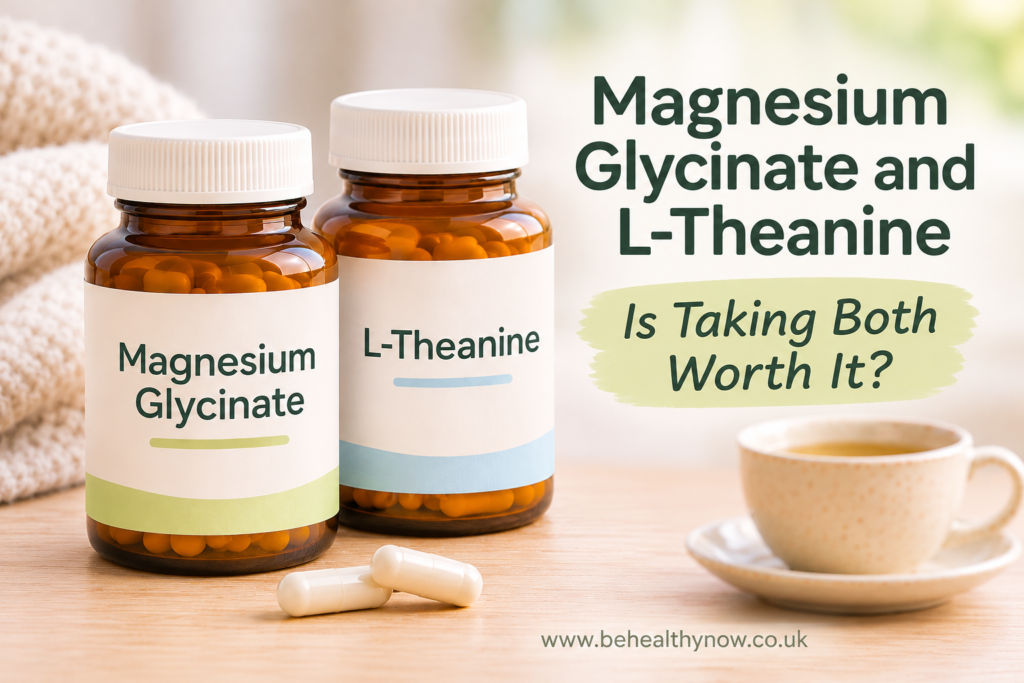
Magnesium Glycinate and L-Theanine: Is Taking Both Worth It?

Magnesium Glycinate and L-Theanine: Is Taking Both Worth It? You may have heard that taking magnesium and L-theanine together can help you sleep better or feel less stressed. But does this combination really work as well as people claim? And is taking both any better than taking just one? I’ve looked into the research to see what the evidence actually shows and what you […] You may have heard that taking magnesium and L-theanine together can help you sleep better or feel less stressed. But does this combination really work as well as people claim? And is taking both any better than taking just one? I’ve looked into the research to see what the evidence actually shows and what you […] Petra Nakashian{authorlink}https://www.behealthynow.co.uk/nutrition/magnesium-glycinate-and-l-theanine/Be Healthy Now

Magnesium Glycinate and L-Theanine: Is Taking Both Worth It? Read More »

Cold Plunge Best Practices: How To Work With Your Body (Not Against It) In Cold Water

Cold Plunge Best Practices: How To Work With Your Body (Not Against It) In Cold Water I remember back in 2017, when the “cold thermogenesis” craze was really taking off, I was speaking at a wellness event in Austin, Texas. People were cold plunging left and right, and I noticed something oddly paradoxical. It seems to me that folks were spending far more time getting ready to plunge than they were […] The post Cold Plunge Best Practices: How To Work With Your Body (Not Against It) In Cold Water appeared first on Ben Greenfield Life – Health, Diet, Fitness, Family & Faith. I remember back in 2017, when the “cold thermogenesis” craze was really taking off, I was speaking at a wellness event in Austin, Texas. People were cold plunging left and right, and I noticed something oddly paradoxical. It seems to me that folks were spending far more time getting ready to plunge than they were […] The post Cold Plunge Best Practices: How To Work With Your Body (Not Against It) In Cold Water appeared first on Ben Greenfield Life – Health, Diet, Fitness, Family & Faith. Jill{authorlink}https://bengreenfieldlife.com/article/cold-plunge-best-practices/Articles by Ben Greenfield – Ben Greenfield Fitness Discover the best life-hacking secrets for body, mind and spirit optimization, personal productivity, work-life balance, family, relationships, survival, spirituality & more! https://bengreenfieldlife.com/wp-content/uploads/2022/02/cropped-BGL-Favicon-negative-5@512-32×32.png

Cold Plunge Best Practices: How To Work With Your Body (Not Against It) In Cold Water Read More »

The Weekly Roundup: Your Go-To Guide For Everything You May Have Missed This Week & More! 11/6- 11/12

The Weekly Roundup: Your Go-To Guide For Everything You May Have Missed This Week & More! 11/6- 11/12 Welcome to Ben Greenfield’s Weekly Roundup! In this weekly post, I share with you my most interesting discoveries of the week, including the latest news on the fronts of fitness, nutrition, health, wellness, biohacking, and anti-aging research. I also recap my upcoming events and special announcements so you can keep up with opportunities to learn, […] The post The Weekly Roundup: Your Go-To Guide For Everything You May Have Missed This Week & More! 11/6- 11/12 appeared first on Ben Greenfield Life – Health, Diet, Fitness, Family & Faith. Welcome to Ben Greenfield’s Weekly Roundup! In this weekly post, I share with you my most interesting discoveries of the week, including the latest news on the fronts of fitness, nutrition, health, wellness, biohacking, and anti-aging research. I also recap my upcoming events and special announcements so you can keep up with opportunities to learn, […] The post The Weekly Roundup: Your Go-To Guide For Everything You May Have Missed This Week & More! 11/6- 11/12 appeared first on Ben Greenfield Life – Health, Diet, Fitness, Family & Faith. Jill{authorlink}https://bengreenfieldlife.com/article/wkru11-6-11-12-2/Articles by Ben Greenfield – Ben Greenfield Fitness Discover the best life-hacking secrets for body, mind and spirit optimization, personal productivity, work-life balance, family, relationships, survival, spirituality & more! https://bengreenfieldlife.com/wp-content/uploads/2022/02/cropped-BGL-Favicon-negative-5@512-32×32.png

The Weekly Roundup: Your Go-To Guide For Everything You May Have Missed This Week & More! 11/6- 11/12 Read More »

Group Ride On a Warm Fall Day

Group Ride On a Warm Fall Day Last Tuesday my group went on a ride up in the hills West of town for about 2 1/2 hours. This was at an enjoyable brisk cruising pace, on a surprisingly warm day (ending in the 70s F or 20s C). We have to enjoy this nice late fall weather while we can, the rains should start hitting hard fairly soon. Heading into Paradise Valley Through Vineyards Past Some Orchards Up Llagas road from the West Side We dropped down Llagas into town and are now heading North on Santa Teresa Heading onto Willow Springs road Challenging climb up Willow Springs Regrouping at the top of the hill Unfortunately my camera ran out of battery at this point because there was more nice scenery to come. We ended up at our favorite lunch stop, Eric’s deli, in town. Last Tuesday my group went on a ride up in the hills West of town for about 2 1/2 hours. This was at an enjoyable brisk cruising pace, on a surprisingly warm day (ending in the 70s F or 20s C). We have to enjoy this nice late fall weather while we can, the rains … Continue reading Group Ride On a Warm Fall Day → BionicOldGuy{authorlink}https://bionicoldguy.home.blog/2026/11/13/group-ride-on-a-warm-fall-day/BionicOldGuy Aging Gracefully And Staying Active https://bionicoldguy.home.blog/wp-content/uploads/2018/12/book-cover-1-e1545437983923.png?w=32

Group Ride On a Warm Fall Day Read More »