I’m a Trainer in My 60s: 5 Stretches to Do After Every Walk
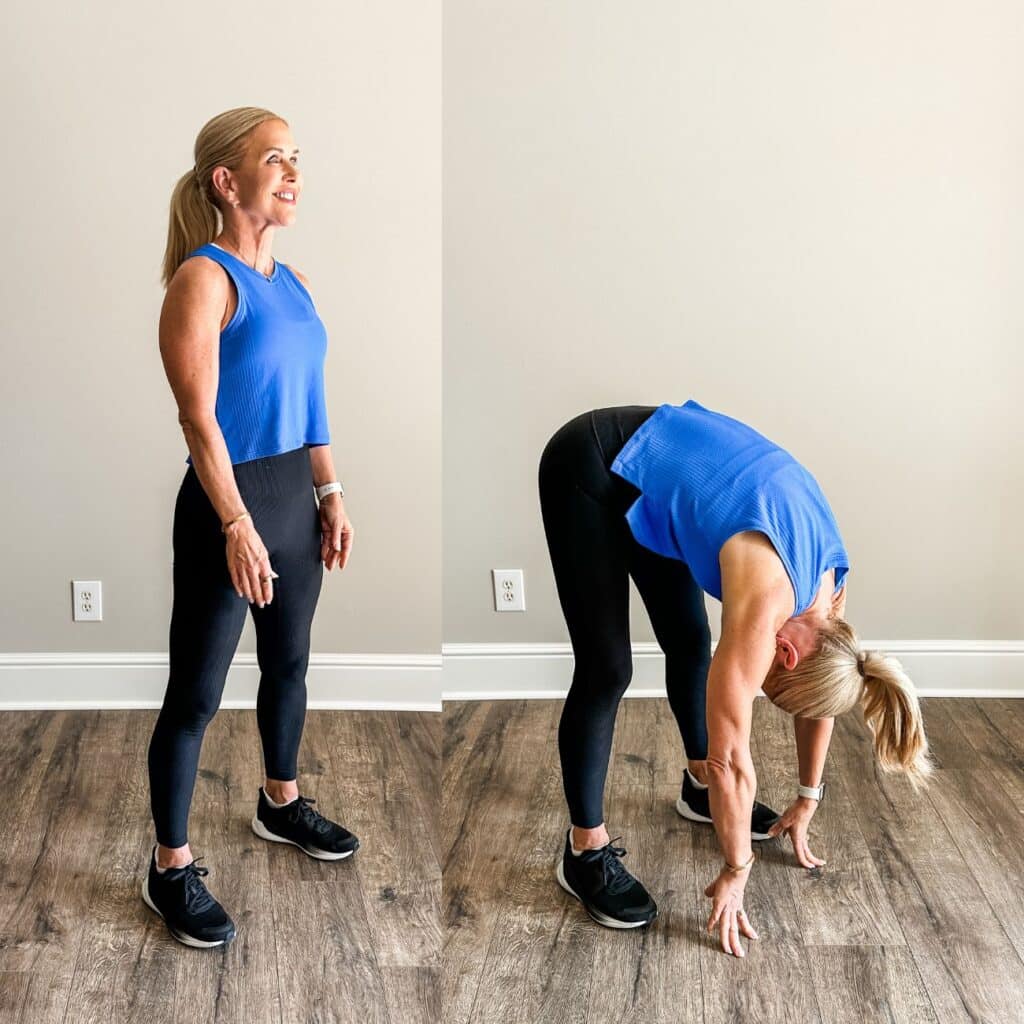
I’m a Trainer in My 60s: 5 Stretches to Do After Every Walk I hate to admit this one. As a trainer, I’m religious about mobility work for my workouts. I’ve told every woman who’s ever taken my class to be the same. But my daily walk? For years I’d come through the door, kick off my shoes, grab a glass of water, and get on with my day. No stretches after walking. Not a thing. Walking felt like it didn’t warrant it. It’s just walking! My body had a different opinion. Stiff hips by dinnertime. Hamstrings that felt like guitar strings the next morning. That low back ache that shows up when you stand from the couch and have to take a second before you’re fully upright. Sound familiar? So I started doing something about it, and the difference showed up faster than I expected. Why Walking Needs Mobility Work More Than You’d Think Here’s what nobody tells you about walking: it’s a repetitive, straight-ahead movement in one single plane. You’re not rotating. You’re not moving side to side. You’re not taking any joint through a big range of motion. You’re doing the same small motion thousands of times in a row, which is exactly what makes it so joint-friendly and so easy to do every day. It’s also what makes you stiff. Take your hips. When you push off your back foot, that leg does travel behind you, but only a little, maybe 10 or 15 degrees. Your hip is built to go about twice that far. And as our stride naturally shortens over the years, we use even less of it. Then you come home and sit, which folds that hip to 90 degrees for the rest of the evening. So the front of your hip gets shortened for hours a day and lengthened almost never. Here’s why that matters more than it sounds: when your hip flexors are tight, your leg can’t extend as far behind you, so your low back arches a little to make up the difference. Every single step. That’s where a lot of the “my back hurts after I walk” complaints actually come from. Add up a daily walk, a desk, a car, and a couch, and you’ve got hip flexors that are short, hamstrings that are tight, calves that never fully lengthen, and a spine that hasn’t rotated in who knows how long. Read this twice: a lot of the stiffness we chalk up to “getting older” is really just accumulated sameness. I say this all the time and I’ll say it again here. Cardio is to live longer, strength training is to live stronger, and mobility training is to live pain-free. If you’re walking every day (and I hope you are), the mobility piece is what keeps you walking every day at 75. The Best Time to Stretch After Walking Here’s the part I want you to hear. Your walk is the warm-up. Mobility work is about moving your joints through their full range, and joints respond best when they’re already warm. You just spent 30 or 45 minutes warming them up. That means the moment you walk back through your door is the single best window you’re going to get all day, and it’s free, because you’re already dressed and already out there. Do it before you sit down. If you sit down first, we both know it isn’t happening. The whole thing takes under 10 minutes. I do mine on a mat by the door, and honestly, some days I do it right on the driveway. The 5 moves, at a glance: Standing Forward Fold, 30 to 60 seconds Low Lunge, 30 to 60 seconds each side Yogi Squat, 30 to 60 seconds Cobra to Down Dog, 3 to 5 rounds plus 30 seconds of foot pedaling Glute Bridge, 8 to 12 reps plus a 20 to 30 second hold 1. Standing Forward Fold (Hamstrings, Calves, and Low Back) Hold: 30 to 60 seconds Stand tall with your feet about hip-width apart. Keep a soft bend in your knees. Do not lock them out. Hinge from your hips and fold forward, letting your head and arms hang heavy. Grab opposite elbows and sway gently side to side if that feels good. Take five slow breaths and let your neck go completely. Roll up slowly, one vertebra at a time. This is my non-negotiable. It lengthens the whole back of your legs, your hamstrings and calves, and it opens up the sacrum and low back where walking tension likes to collect. The knee bend matters, ladies. Locked knees turn this into a hamstring yank and put the stretch in your low back instead, which is the opposite of what we want. 2. Low Lunge (The Hip Flexor Stretch Most Walkers Skip) Hold: 30 to 60 seconds each side Step your right foot forward and lower your left knee to the ground (put a towel or the edge of your mat under it). Square your hips so both hip bones face forward. Tuck your tailbone slightly under, like you’re starting a crunch. This is the cue that makes the whole thing work. Press your hips gently forward, keeping your front knee stacked over your ankle. Rest your hands on your front thigh, or reach both arms overhead for more. Switch sides. This is the one most walking articles skip, and it’s the most important on the list. It’s the direct answer to the hip flexor problem I described above, and it’s the move that gives you your stride back. (If you want the deeper version, this is the same shape as a runner’s lunge.) The tuck of the tailbone is everything here. Without it, you’ll arch your low back and feel almost nothing, which is the same compensation your body makes while you’re walking. You’ll feel this in the front of your hip and down into your quad, which is exactly right. Both get handled here. Don’t want to
I’m a Trainer in My 60s: 5 Stretches to Do After Every Walk Read More »