Workouts for Seniors

Auto Added by WPeMatico

5 Squat Alternatives For Bad Knees

5 Squat Alternatives For Bad Knees Discover five effective squat alternatives for bad knees that target your lower body muscles while minimizing knee strain. Improve strength and stability with these safe exercises. Working your legs is essential for your overall fitness! After all, your legs not only move you, but as the largest muscles in your body, they help you perform those big calorie-burning exercises which bump up your metabolism. The problem is that bad knees can get in the way—and they’re a common problem. One study from Gallup-Healthways found that 26% of the adult population in the United States suffers from knee pain. Injuries, surgeries, arthritis, and runner’s knee—there are many reasons you might be experiencing knee pain, but it should never cause you to skip leg day. I’m going to show you the best exercises for bad knees so you can strengthen your legs without putting stress on your knees. Follow along with this video or read the exercises below as I show you the five great squat alternatives for bad knees, or people who just don’t like squats ; ). If you’re looking to rebuild knee strength carefully, check out my 10 exercises for bad knees which focus on carefully strengthening and toning your legs with little to no strain on your knee joints. [adthrive-in-post-video-player video-id=”kW9yUMDJ” upload-date=”2020-07-24T22:45:18.000Z” name=”5 Exercise Modifications For Bad Knees and A Low-Impact Workout Plan” description=”Your workout with five great exercise modifications for bad knees! Try this workout and make your knees happier, while still working up a sweat! ” player-type=”static”] 1. Stability Ball Wall Squats Stability ball squats are a great alternative to regular squats for those with knee issues because they reduce stress on the knees by providing support and cushioning through the ball. These squats still effectively work the quadriceps, hamstrings, and glutes while improving balance and core strength, making them beneficial for maintaining lower body muscle tone without aggravating knee pain. Stability ball wall squat How to Perform a Stability Ball Wall Squat Lean slightly back against the ball with your feet shoulder-width apart in front of you and begin your squat. Not only will this take some pressure off your knees, but you’ll also be able to adjust the move on the fly to suit your own strengths and weaknesses. Get a feel for this and then add some dumbbells in your hand to make it harder. Tip: Choose your range of motion—go lower if you can, but stay higher if your knee pain kicks in. The key is to sit back as you squat, keep legs hip width apart, and focus your weight in your heels! 2. Reverse Lunges The reverse lunge exercise is a good alternative to regular lunges for those with knee issues because they place less pressure on the front knee by shifting the weight backward. This exercise targets the quadriceps, hamstrings, and glutes, and is beneficial for building lower body strength while minimizing strain on the knee joints. Reverse lunges How to Perform Reverse Lunges Stand tall with your feet hip distance apart. Take a large step backward and lower your body toward the floor.  Both legs should be bent at a 90-degree angle at the bottom of the lunge. Rise back to start and repeat. Tip: Pay attention to your glutes. You should feel this move in your rear end and put very little weight into the leg that goes behind you. 3. Deadlifts The deadlift move is a good alternative to regular squats for those with knee issues because they emphasize hip hinge movement rather than knee flexion, reducing stress on the knees. They primarily work the hamstrings, glutes, and lower back, offering a powerful way to build lower body and core strength while minimizing knee strain. How to Perform Deadlifts: Start standing with feet hip distance apart and dumbbells resting in front of thighs. Tighten your abdominals and keep a flat back as you bend the knees slightly, lowering the dumbbells towards the floor. Squeeze the glutes and use your hamstrings and legs to lift and return to your upright position. Tip: Use heavy weights—either barbells or dumbbells—since you have many muscles recruited to do this lift. Keep your knees slightly bent and legs hip width apart – but do all the work in your abs and glutes. 4. Glute Bridges The glute bridge exercise is an excellent alternative to regular squats for those with knee issues because they engage the glutes and hamstrings without placing any strain on the knees. This exercise helps strengthen the lower body and core while improving hip stability, making it beneficial for maintaining muscle tone and reducing knee discomfort. Glute bridges How to Perform a Glute Bridge: Lie on your back with knees bent and feet flat on the floor close to your glutes. Your knees should be in line with your hip bones. Place your arms flat on the floor at your sides and tuck your shoulders under your back. Press your palms into the ground as you raise your hips, squeezing your glutes and abdominals. Keep your neck relaxed on the mat. Continue to move your hips up and down for 30 seconds. Tip: Try single leg glute bridges too! Isolating one leg will target the hamstrings and give you an extra challenge once you’ve mastered traditional glute bridges. 5. Stability Hamstring Roll-In Performing stability ball hamstring roll-ins are a good alternative to regular squats for those with knee issues because they target the hamstrings and glutes without involving knee flexion, thereby reducing knee strain. This exercise also enhances core stability and balance, making it beneficial for building lower body strength while protecting the knees from excessive stress. How to Perform Stability Ball Hamstring Roll Ins Begin lying on back, arms by side and feet on top of stability ball. Squeeze glutes and abs and lift body up so you are in a straight line with only shoulders and head relaxed on mat. Pull heels toward glutes rolling ball in, then push the ball back out. Continue

5 Squat Alternatives For Bad Knees Read More »

Quick Low Impact Workout At Home For Any Level

Quick Low Impact Workout At Home For Any Level Discover a low impact workout at home perfect for all fitness levels. Avoid stress on joints while still enjoying a high-intensity routine using light dumbbells—ideal for anyone, anytime! Nothing is more frustrating than wanting to stay active when your body isn’t cooperating. Whether you once ran marathons and now struggle with a 5k, or you used to thrive on plyometrics but now shy away from high-impact moves, our bodies change over time. This is where a low impact workout at home comes in handy. It’s not just for those recovering from injury, dealing with chronic pain, or facing physical limitations—low impact workouts are great for everyone! Low-impact exercise, which keeps at least one foot on the ground and avoids jumping, can still deliver a high-intensity experience without the stress on joints and bones. Walking workouts, step aerobics, cardio-dance, and even no-impact activities like swimming and spin class are excellent choices. If knees are your problem area, skip over to my 12 minute HIIT workout for bad knees instead! We’ve crafted a fantastic low impact workout that you can easily do at home. It’s quick, easy, and perfect for all fitness levels. Grab a light set of dumbbells, and let’s get started! Low-Impact Workout At Home Instructions This circuit-style routine features eight exercises, each performed for one minute, with minimal rest in between. Remember, low impact doesn’t mean low intensity—it’s all about the effort you put in! [adthrive-in-post-video-player video-id=”KOhK34pR” upload-date=”2021-02-17T21:13:27.000Z” name=”Low Impact High Results Workout ” description=”You can choose low-impact exercise and still put forth a maximal work effort to get great results. We’ve created this low-impact workout just for you with some of the best exercises to do at home!” player-type=”static”] 1. Punching The punching move is a low-impact exercise that enhances cardiovascular fitness and upper body strength while maintaining minimal joint stress, making it ideal for an effective workout without high-impact movements. How to Perform Punching: Stand with feet slightly wider than shoulder-distance apart and bend knees slightly. Tighten the core to keep your center still. Punch out one arm at a time at a steady pace. 2. Kick Through Lunges Performing kick through lunges will engage multiple muscle groups and improve balance and flexibility with low impact on the joints, providing a comprehensive workout that strengthens the lower body and core while minimizing strain. How to Perform Kick Through Lunges: Stand tall with your feet hip-distance apart. Take a large step backward with the right foot and lower your body toward the floor. Both legs should be bent at a 90-degree angle at the bottom of the lunge. Straighten your left leg and kick your right foot forward to hip height or higher if possible. Repeat for the desired number of reps then switches legs. 3. Army Crawl Planks The army crawl plank exercise challenges your core stability and strength with minimal impact on your joints, effectively engaging your abdominal muscles and improving overall body control. How to Perform Army Crawl Planks: Begin in a plank position with your shoulders over your wrists, your feet together, and your body in a straight line. Bend your left arm so that it is now in the forearm plank position. Then bend your right arm so you are in a full forearm plank position. Lift your left hand and place it on the mat directly below your shoulder as you push through your palm to lift yourself. 4. Squat Thruster The squat thruster move combines squats with an overhead press to boost lower body strength and cardiovascular endurance, offering a low-impact alternative that maximizes calorie burn and muscle engagement. How to Perform Squat Thrusters: Start standing with feet hip-distance apart and lower into a squat position by bending the knees. Keep the spine straight, chest lifted, and knees behind toes. The elbows are bent and dumbbells are at shoulder height. Using the lower body, thrust up to standing and press the dumbbells overhead extending the arms long. Then lower back to starting position. 5. Front Kicks Performing front kicks targets the lower body muscles, including the glutes and quadriceps, with low impact on the joints, enhancing strength and flexibility while providing a dynamic, low-impact cardio option. How to Perform Front Kicks: Stand with feet hip-width apart and arms bent and held in front of you. Lift right leg up, bend the knee slightly, and kick right foot forward. Keep ankle flexed and push through your heel. Place the right foot down and switch to the left. Continue to repeat for the desired amount of time or number of repetitions. 6. Squat Curl Alternating Knee Lifts This exercise blends squats, bicep curls, and knee lifts, delivering a full-body workout with minimal joint strain, promoting muscle toning and coordination. How to Perform Squat Curl Alternating Knee Lifts: Start in a squat position, weight back on heels and arms long next to the side holding dumbbells. Squeeze your glutes to press up and lift your right knee as you curl the weights to your shoulders. Slowly lower the weights back down and return to a squat position.  Repeat with left knee. 7. Upper Cuts Upper cuts are a low-impact exercise that enhances upper body strength and coordination while keeping joints protected, making it an effective way to build arm and shoulder muscles. How to Perform Upper Cuts: Stand with feet shoulder-width apart and knees slightly bent. Make two fists and hold arms next to the side with elbows bent. Punch the right fist in upward motions, stopping firmly at chin level. Switch to left fist. Continue to switch right and left until you are at a fast, rhythmic pace, always stopping at chin level as if you are punching a target. 8. Sit Up Press The sit up press move combines traditional sit-ups with an overhead press, targeting the core and upper body with a low-impact approach that improves core strength and shoulder stability. How to Perform a Sit Up Press: Start on the

Quick Low Impact Workout At Home For Any Level Read More »

5 Benefits of HIIT Workouts During Menopause

5 Benefits of HIIT Workouts During Menopause In the realm of fitness, High-Intensity Interval Training (HIIT) has gained a lot of traction for its efficiency and effectiveness. But how does it fare for midlife women, particularly those navigating perimenopause and post-menopause stages? As a 59-year-old personal trainer with over three decades of experience, I’m here to tell you that HIIT can be a game-changer for us. In midlife, we women are experiencing changes in our metabolism and hormonal imbalances. HIIT can be great way to push yourself a little harder and improve many health markers. If you have been fairly sedentary for the past few decades, you will want to work your way up to HIIT training.  But, if you have been mildly active and are ready for more, read on and let me tell you why HIIT exercise isn’t harmful and is actually helpful for your heart health, metabolism, bone health, muscle mass and more.   The Mayo Clinic backs me up with findings that HIIT training can reverse the aging process in older adults. Here are the benefits of HIIT workouts during menopause: 1. Metabolism Boost As we age, our metabolism naturally slows down, which can make maintaining or losing weight more challenging. HIIT workouts during menopause is an effective way to counteract this metabolic decline. The high-intensity nature of HIIT workouts creates an “afterburn” effect, scientifically known as excess post-exercise oxygen consumption (EPOC). This means that after a HIIT session, your body continues to burn calories at an elevated rate, even when you’re at rest. This boost in metabolic rate helps combat midlife weight gain, making it easier to manage a healthy weight and improve overall metabolic health. Here are a few additional resources about metabolism during menopause: How to Increase Your Metabolism After 50 How to Find Your Metabolic Body Type Foods That Help Increase Metabolism & Burn Fat 2. Muscle Mass A common menopausal symptom for women is a decrease in muscle mass due to hormonal changes (decreasing estrogen and progesterone) and lack of use. HIIT is not only about cardio; it often incorporates strength training elements that are crucial for maintaining and building muscle mass. The high-intensity intervals push your muscles to their limits, promoting muscle growth and strength. Preserving muscle mass is vital as it supports overall metabolic rate, aids in weight management, and enhances functional fitness, helping us stay strong and active in our daily lives. 3. Bone Mass Bone density decreases as we age if we are not actively doing something to maintain it or increase it. This process naturally increases the risk of osteoporosis and fractures. HIIT often includes weight-bearing and resistance exercises that are essential for maintaining and even improving bone density. These exercises stimulate bone formation and help slow down the rate of bone loss. By incorporating HIIT into your fitness routine, you can support your bone health, reduce the risk of osteoporosis, and maintain a stronger skeletal structure.  4. Lifestyle Improvements HIIT is well known for its cardiovascular benefits, which are crucial for maintaining heart health as we age. Regular HIIT workouts improve heart function, increase stamina, and enhance overall cardiovascular health. Additionally, HIIT is known to boost energy levels, improve mood, and enhance mental clarity. The endorphin release during high-intensity exercise can help alleviate stress and anxiety, leading to a better quality of life. These improvements extend beyond physical health, positively impacting our mental and emotional well-being. The big thing here is to realize YOU define what “high intensity” means to you. As I’ve gotten older, what I call high intensity may feel easy to a 30 year old female. It’s about how it feels in your body and how you push yourself.  5. Time Efficiency One of the greatest advantages of HIIT is its time efficiency. In our midlife years, balancing work, family, and personal commitments can be challenging, and finding time for exercise might seem daunting. HIIT workouts can be completed in as little as 20-30 minutes, making them easy to fit into a busy schedule. Despite the shorter duration, HIIT workouts are highly effective, providing the benefits of longer exercise sessions in a fraction of the time. This efficiency can help you stay consistent with your fitness routine, even with a packed schedule. The Argument Against HIIT and the Cortisol Myths Now that I’ve shared the benefits of HIIT workouts during menopause, I wanted to address the argument you may have heard against it. Menopausal women seem to hear from their doctors and media sources that increased cortisol is the reason they are gaining belly fat and that high intensity exercise elevates cortisol levels so they need to stop. That is oversimplified and incorrect.  Cortisol which is often referred to as the “stress hormone”, is a misunderstood topic. While it’s true that acute stress from intense workouts can temporarily elevate cortisol, it’s important to differentiate between acute and chronic stress. Acute stress is a short-term response to a specific event or situation, such as a sudden increase in workload or an unexpected argument.  Chronic stress is a prolonged and ongoing state of stress that can be caused by factors such as chronic health conditions, financial difficulties, or relationship problems. During exercise, our bodies experience an acute stress response due to the physical demands placed on our muscles and cardiovascular system. This triggers the release of cortisol. In small amounts, like when you exercise, cortisol can actually be beneficial as it helps to regulate blood sugar levels and aids in tissue repair.  However, excessive or chronic release of cortisol can have negative effects on our health. Chronic elevation of cortisol levels has also been linked to an increased risk of chronic diseases such as heart disease, diabetes, and obesity. The real takeaway is managing balance and ensuring recovery times between workouts, which allows the body to reap the benefits without succumbing to chronic stress. How Much HIIT Exercise Should You do in Peri and Post Menopause? Balancing HIIT with other forms of exercise is crucial. Aim for 2-3 HIIT sessions per

5 Benefits of HIIT Workouts During Menopause Read More »

7 Benefits of Adding a Step Platform to Your Home Gym

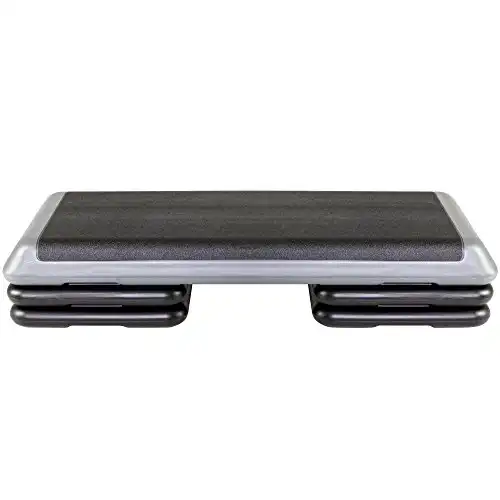
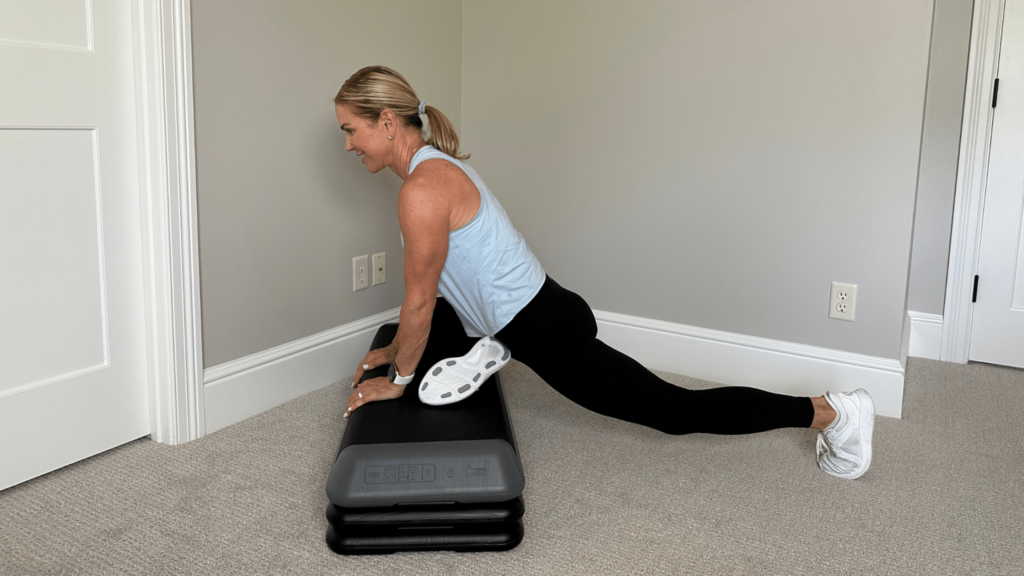
7 Benefits of Adding a Step Platform to Your Home Gym The step platform is a versatile exercise tool that comes with tons of benefits. With decades of experience training women, I’m breaking down the top reasons you might want to add a step platform to your home gym. Plus, I’m sharing my top picks! If you were exercising in the 90’s then you think of a step platform as a tool for step aerobics. Remember all the repeater knees, v-steps and straddle steps? Flash forward 30 years and the step platform is a versatile piece of equipment that can be used for a variety of cardio and strength workouts. Check out the benefits below to see if you’re missing on out this useful tool. Then, get started building muscle with my guide to the best step exercises for your home workout! 1. It’s a Versatile Training Tool Step platforms came on the aerobics scene in the late 1980s. While they’re still used for step aerobics, they’ve evolved into a far more versatile training tool that can be used to build muscle strength and deepen stretches. 2. You Can Adjust Your Workout Intensity By adding risers, you can create different heights to make strength exercises easier or harder. Can’t do a full pushup yet? Elevate your hands on the step platform. Want to intensify a plyometric exercise like the jump squat? Jump onto the exercise step! 3. It Doubles as an Exercise Bench The platform doubles as a strength training bench for upper body moves like chest presses, core exercises like bicycle twists. It also works for lower body moves like reverse lunges, and even stretches like the seated toe touch. You can easily create total-body workouts right in your living room! 4. It Can Help You Lose Weight Step platforms are a great way to burn calories. Stepping up and down gets your heart pumping—think of how you feel after climbing a flight of stairs! Adding a high-intensity step aerobic workout to your schedule can help with weight loss when combined with a healthy diet. 5. It’s a Safe Choice for Older Adults A step platform can be used to create low-impact workouts, which is ideal for older adults. It helps build balance and coordination while strengthening your bones. 6. Step Platforms are Convenient and Easy to Use Exercise steps are a great piece of home gym equipment because they’re lightweight and easy to move. Simply set them aside to save space when you’re done using them! Plus, it’s easy to adjust the height of the step by adding or removing risers.  7. It Creates a Fun Workout! Last but not least, step platforms provide the perfect way to change up your workouts. Try a few of the best step exercises I linked below to keep things fresh. More possibilities equals more fun! Explore My Free Step Platform Workouts I love using step exercises in my workouts. With decades of experience training thousands of women, I can tell you – these are popular workouts for a reason. They’re fun, and they work! Check out my 33 Favorite Step Exercises for At Home Workouts to try my top picks. I also put together five of my full length step platform workout videos that are filled with great moves and tips for free! You can view these workout videos (between 30-45 minutes each) and follow along with me! I’ll give you form tips and keep you motivated! My Top Step Platform Picks I use these regularly for my online workouts — you can’t go wrong, no matter which you choose! ZENY 43” Exercise Aerobic Step Platform With 4 Detachable Risers The Step Original Aerobic Platform (43”) With Risers Tone Fitness Compact Aerobic Step Platform (27”) Product Image Product Name Primary Button The Step – Original Aerobic Platform for Total Body Fitness Check Price ZENY 43” Exercise Aerobic Step Platform Adjustable Fitness Stepper with 4 Detachable Risers Check Price Tone Fitness Aerobic Step, Pink, Exercise Step Platform Check Price The Step – Original Aerobic Platform for Total Body Fitness Check Price ZENY 43” Exercise Aerobic Step Platform Adjustable Fitness Stepper with 4 Detachable Risers Check Price Tone Fitness Aerobic Step, Pink, Exercise Step Platform Check Price The step platform is a versatile exercise tool that comes with tons of benefits. With decades of experience training women, I’m breaking down the top reasons you might want to add a step platform to your home gym. Plus, I’m sharing my top picks! If you were exercising in the 90’s then you think of […] Chris Freytag, CPT{authorlink}https://gethealthyu.com/step-platform-benefits/Get Healthy U | Chris Freytag

7 Benefits of Adding a Step Platform to Your Home Gym Read More »

33 Best Step Exercises for Your At Home Workout

33 Best Step Exercises for Your At Home Workout If you haven’t added step exercises to your workout routine yet, now is the time! There are so many different types of step exercises to choose from, from cardio and strength training to stretching. I have decades of experience training women and there is truly something for everyone, no matter your fitness level. To prove it, I’ve rounded up 33 of the best step exercises for boosting endurance, losing weight, and toning different muscle groups. Each exercise falls under one of four categories: cardio, strength, core, or stretching. There are so many great benefits of step aerobics, and it’s time for you to start taking advantage of them. Check out the best step exercises for your home workout below, followed by my favorite step platforms on the market. 1. Up Up Down Down Category: Cardio Muscle groups targeted: Glutes, hamstrings, quads How to do up up down downs (also known as the right and left basic steps exercise): Start by standing in front of the step. Step up with the right foot, and then the left foot. Step down with the right foot, and then the left foot.  Continue stepping up and down, gradually increasing speed.  Keep going for the desired amount of time. Then, switch to stepping up with the left foot, and then the right foot for the desired amount of time.  Keep your core tight and step as quietly as possible. https://gethealthyu.com/wp-content/uploads/2023/06/Untitled-design-7.mp4 2. V-Step Category: Cardio Muscle groups targeted: Glutes, hamstrings, quads How to do a v-step exercise: Start by standing in front of the step. Step up with the right foot with toes pointed slightly out, and then step up with the left foot with toes pointed slightly out. Your feet should create a “V,” with heels shoulder-width apart.  As you step up, lift both arms to your sides and reach them overhead to touch.  Step down with the right foot, and then the left foot, bringing your arms back down.  Continue stepping up and down, gradually increasing speed.  Keep going for the desired amount of time. Then, switch to stepping up with the left foot, and then the right foot for the desired amount of time.  Keep your core tight and step as quietly as possible.  https://gethealthyu.com/wp-content/uploads/2023/06/Untitled-design-8.mp4 3. Alternating Knee Pull Category: Cardio Muscle groups targeted: Glutes, hamstrings, quads How to do an alternating knee pull step exercise: Start by standing in front of the step. Lean forward slightly and step up with the right foot, raising both arms overhead.  Then, pull your left knee toward your midline while swinging both arms down. Keep your torso upright; don’t crunch. Lower your arms as you return your left foot to the floor, followed by the right foot.   Repeat, but this time step up with your left foot and pull your right knee toward your midline.  Continue alternating sides for the desired amount of time, gradually increasing speed.  https://gethealthyu.com/wp-content/uploads/2023/06/Untitled-design-9.mp4 4. Up and Over Category: Cardio Muscle groups targeted: Glutes, hamstrings, quads How to do an up and over step exercise: Start in a squat position (feet shoulder-width apart, chest lifted, abs tight, and seat back) with one foot on the center of your step. Use your lower body muscles to jump up and over the step. Land in a squat with your other foot on the step. Repeat, jumping back and forth quickly for the desired amount of time. https://gethealthyu.com/wp-content/uploads/2023/06/Untitled-design-10.mp4 5. Burpee Category: Cardio Muscle groups targeted: Chest, arms, core, glutes, hamstrings, quads How to do a burpee step exercise: Start in a standing position and quickly drop down into a squat.  Jump (or walk, for low impact) both feet back into a plank position with your hands on the step (hands are below shoulders, body long, and abs tight). Check that your lower back isn’t sagging. Jump (or walk, for low impact) both feet together between your hands. Release your hands from the ground as you explode into the air. Jump as high as you can, reaching both arms overhead. (Skip the jump if you want to keep it low impact.)  https://gethealthyu.com/wp-content/uploads/2023/06/Untitled-design-11.mp4 6. Burpee Box Jump Category: Cardio Muscle groups targeted: Chest, arms, core, glutes, hamstrings, quads How to do a burpee box jump step exercise: Start in a standing position in front of the step and quickly drop down into a squat.  Jump (or walk, for low impact) both feet back into a plank position with your hands on the step (hands are below shoulders, body long, and abs tight). Check that your lower back isn’t sagging. Jump (or walk, for low impact) both feet together between your hands. Release your hands from the ground as you explode into the air, jumping onto the step using your leg muscles.  Land on the step in a squat position, keeping your weight in your heels.  Step down and repeat. https://gethealthyu.com/wp-content/uploads/2023/06/Untitled-design-12.mp4 7. Power Knee Lift Category: Cardio Muscle groups targeted: Glutes, hamstrings, quads How to do a power knee lift step exercise: Start in a squat position with your left foot on the step and right foot on the floor.  Drive the right knee up while jumping in the air and swinging the left arm.  Land in a squat on the same side and repeat for the desired number of reps.  Switch sides.  https://gethealthyu.com/wp-content/uploads/2023/06/Untitled-design-13.mp4 8. Straddle Feet Up Up Down Down Category: Cardio Muscle groups targeted: Glutes, hamstrings, quads How to do a straddle feet up up down down step exercise: Stand with both feet straddling the step platform. Step up with your right foot, and then up with your left foot.  Step down with your right foot, and then down with your left foot to return to the straddle position.  Continue for the desired amount of time, gradually increasing speed.  Then, switch to stepping up with the left foot, and then the right foot for the desired amount of time.  https://gethealthyu.com/wp-content/uploads/2023/06/Untitled-design-6.mp4 9. Lateral Toe Tap Category: Cardio Muscle groups targeted: Glutes, hamstrings, quads How to do a

33 Best Step Exercises for Your At Home Workout Read More »

10 Best Leg Exercises For Bad Knees (Gentle & Effective)

10 Best Leg Exercises For Bad Knees (Gentle & Effective) These leg exercises for bad knees are expertly designed to help you strengthen and tone your legs with little to no strain on your knee joints. Take it from a personal trainer, you can get a killer workout while keeping pain and injuries at bay! Think about all of the movements you do in a single day. Many of them have your knees to thank! Movements at the knee joint are essential to everyday activities — and suffering from bad knees can severely impact your daily routine and overall wellness. The key to knee strength is strengthening the muscle groups that surround and protect the knee joint, namely the quads, glutes, hamstrings, and adductors (inner thighs) — and these ten lower-body strengthening exercises are designed to do just that. I’ve included a mix of exercises, some that require just your bodyweight, while others use equipment such as a resistance band or medicine ball. You can do a few or all of my knee-strengthening exercises. Use them regularly for the best results! Leg Exercise Workout Instructions: Perform each exercise for 45 seconds, then rest for 15 seconds between exercises. Repeat the entire circuit of the ten lower-body exercises twice for a 20-minute lower-body workout to combat knee pain. Don’t forget your warm up! You can do a march in place, leg swings, a heel-to-toe walk, or butt kicks. Note: Always consult with a healthcare professional before starting any new exercise program, especially if you have pre-existing knee conditions or concerns. 1. Supine Straight Leg Lifts The supine straight leg lift is a great exercise to strengthen your core muscles, improve your hip flexor flexibility, and enhance overall stability. How to Perform Supine Straight Leg Lifts: Lay on your back with legs out straight and toes pointing up. Squeeze the right quad and raise the right leg off the ground a few inches. Hold and squeeze for 10 seconds, then release. Complete ten repetitions and switch legs. 2. Banded Leg Extension I love banded leg extensions because they are a great move to target your quadriceps and lower body strength while promoting knee stability. How to Perform Banded Leg Extensions: Sit on the ground or in a chair with a small loop band around your ankles. Step down on the band with your right foot, anchored at that spot. Flex your left foot and press out, squeezing the quad as you lengthen. Hold briefly and return your foot down very slowly. Repeat ten times and switch legs. 3. Inner Thigh Squeeze The inner thigh squeeze exercise strengthens your adductor muscles while toning your inner thighs. How to Perform an Inner Thigh Squeeze: Sit on the ground or in a chair and place either a small, squishy ball or a rolled-up towel between your knees. Squeeze your inner thighs and press in on the ball or towel as hard as you can, hold for the count of 3, then gently release but not so far that you drop the towel. Squeeze right away again. Repeat ten times. 4. Body Bar Inner Thigh Lift This body bar inner thigh lift is a great way to engage your adductor muscles, which promotes inner thigh strength, stability, and toning. How to Perform a Body Bar Inner Thigh Lift: Begin by laying on your right side on a mat or carpet with the body bar or weighted bar in front of you. Bend the knee of the top leg (left leg) and set that foot down in front of the bottom leg, which stays long on the ground. Place the end of the bar onto the inside of the foot of the bottom leg (right leg) and the other end on the floor in front of you with your hand, gently keeping it still. (If you don’t have a weighted bar, use a small weight that will stay put on the inside of your foot) Now raise the bottom leg slowly up and down to lift and lower the bar. Perform 10-12 reps and switch sides. If it feels too easy, go to a heavier bar. 5. Leg Press-Ups The leg press-up exercise targets your quadriceps, glutes and hamstrings. It helps with building lower body strength and muscle definition. How to Perform Leg Press-Ups: Stand behind a bench, stool, low chair, or step. You can hold dumbbells in your hands for an extra challenge. Place your right foot on top of the bench so the foot is flat. Lean slightly forward. Press your body up until your right leg is straight, keeping weight on the heel of the right foot. The left foot should come off the ground. Lower with control, keeping weight on the right foot. Repeat ten times. Switch feet. 6. Side Step-Ups The side step-up exercise targets the muscles in your outer thighs, hips, and glutes while promoting strength, stability, and balance. *Note: This move may seem similar to the step-ups, but the action provided when the muscles and connective tissue surrounding your knee joint pull you up sideways strengthens the tissue surrounding the knee. How to Perform Side Step-Ups: Stand alongside a long step or bench, so the step is on your right. You can hold dumbbells in your hands for an extra challenge. Place right foot on top of the step, follow with left, then step left down and right down. Repeat ten times and switch sides. 7. Kneeling Dumbbell Glute Lift The kneeling dumbbell glute lift is a great exercise to target and strengthen, you guessed it, your glute muscles! It helps improve hip extension and posture too! How to Perform Kneeling Dumbbell Glute Lifts: Kneel on all fours and place a light dumbbell behind your right knee. Keep your back flat and abs very tight, and do not arch your lower back at any time. Squeeze the glute to lift your right leg behind you, keeping the dumbbell snug so it doesn’t fall out. Lift and lower with control.

10 Best Leg Exercises For Bad Knees (Gentle & Effective) Read More »

Strength Training for Women Over 50: 11 Best Moves

Strength Training for Women Over 50: 11 Best Moves While aging is inevitable, aging well is not. There are many factors involved in maintaining good physical and mental health as you age, but one of the most important things to consider as you grow older is weight training. The below strength training exercises are proven to get results for women over 50. I’ve been a personal trainer for over 30 years. My body has aged right along with my clients. I know from personal experience that strength training not only keeps you feeling and looking younger and stronger but actually physically slows down the aging process. And while exercise comes in many forms, strength training is where the true anti-aging magic happens. Muscle is the secret to metabolism, having energy, sleeping better, maintaining weight and balancing hormones. Strength training is one of the best types of exercises for women over 50 – it’s time to start!  Let’s explore in detail the benefits of strength training for women and some of the specific strength training exercises that I recommend that women over 50 do. Weight Training for Women Over 50 Program Guide Benefits Of Weight Training for Women over 50 11 Strength Training Exercises Women Over 50 Should Do  Additional Strength Training Tips Before You Get Started  7 Reasons Why Is It Important to Strength Train After 50  I sound like a broken record but as a 58 year old woman, I know firsthand that women who consistently strength train look, feel and move better. Muscle is the secret to aging well and keeping independent and mobile. 1. Weight Training For Women Builds Lean Muscle Mass  As we get older, our bodies inevitably go through muscle loss if we’re not focused on a strength training workout regularly. We women lose approximately a half pound to a full pound of muscle a year after the age of 35 if we are not actively replacing it. Those who strength train see tighter, more toned bodies. And, it’s a myth that weight training will make you bulk up. Muscle is a more dense, metabolic tissue than body fat and takes less space. It will, in fact, help you achieve that coveted sculpted appearance everyone wants. Cardio workouts help burn calories and get your heart pumping, which is critical for your overall heart health and weight management. But strength training is the secret to aging gracefully and feeling capable. Being stronger means you can stay independent and strong for life’s daily activities such as carrying groceries, lifting grandchildren, or engaging in fun activities like golf or other sports.  As I said above, around the age of 35, we women start to lose our muscle mass if not doing anything to actively replace it. As many women age, they become more sedentary, and hence, their muscles start to deteriorate. There is no pill to take or potion to drink that builds muscle. You have to do the work. 2. Weight Training For Women Builds Bone Density & Reduces Injury Risk Muscle loss can have further consequences on bone health. Unexpected falls put countless older people in the hospital every year. In fact, according to the CDC, falls are the leading cause of injury and death in older Americans. By training the muscle and connective tissue that surrounds your bones, you are making yourself stronger and helping to prevent a fall from happening in the first place. Bone density is a big deal and strength training is the best way to preserve it. The stronger your muscles are, the less likely you’ll be to get injured during everyday tasks or workouts. How? Strong muscles protect your bones and joints when they’re in motion and make your ligaments better at absorbing the shock they endure during dynamic movements. To avoid random strains and sprains, incorporate weekly strength training into your routine. Injury prevention is important, especially as you age—and it’s an often-overlooked benefit of building muscle. 3. Weight Training For Women Decreases Body Fat Maintaining a healthy weight is important when it comes to preventing many diseases that come with aging. Strength training can help you build muscle and paired with a healthy clean diet, can help you decrease body fat. Strength training also creates an calorie after-burn, keeping your body churning through calories for a longer period of time after your workout than a cardio workout. 4. Weight Training Speeds Up Metabolism It’s cruel but true – as you age, your metabolism can begin to slow down. One great way to revive it is by weight training. Your resting metabolic rate (RMR) is how many calories your body burns at rest; the more muscle you have on your body, the higher that metabolic rate is. Essentially, the more muscle you have, the faster your metabolism works. Let that sink in: more muscle means a faster metabolism. When you have more muscle mass in your body, you burn more calories every day even when just sitting on the couch. 5. Weight Training Improves Mental Health Strength training is not just about more muscle mass. As you get older, you may go through a lot of life changes. Feeling strong gives you confidence, makes you feel better about your body, and helps you sleep better. Adopting a strength training program has been shown to boost your mental health which is so important as we enter this next phase known as mid-life. Harvard Medical School reports that exercise helps lessen the incidence and the degree of clinical depression. 6. Weight Training For Women Improves Balance, Coordination, and Mobility Regular strengthening workouts improve your balance and coordination, which helps you do just about everything, from yoga and dance to daily tasks. As you age, you tend to lose the overall muscle strength that allows you to balance. By lifting weights, you are not only building up muscle strength and protecting bone health, but you are also forcing your body to fire up your core muscles and stabilizers, thus improving overall balance and coordination. The concept of functional fitness  is that

Strength Training for Women Over 50: 11 Best Moves Read More »

10 Effective Seated Chair Exercises For Seniors

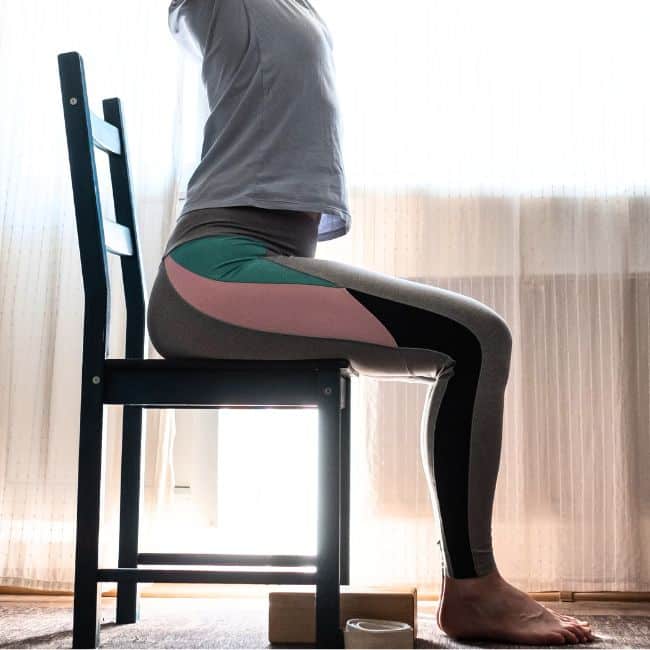
10 Effective Seated Chair Exercises For Seniors Discover 10 gentle and effective chair exercises for seniors to improve strength and flexibility without standing up. Ideal for low-impact workouts at any age! Exercise is crucial for maintaining a healthy lifestyle, regardless of age. For older adults, finding an exercise program that is safe and accessible can be a challenge. That’s where seated chair workouts come in – they offer a low-impact, safe, and effective way to stay active while sitting down. Chair exercises for seniors are a great exercise routine option for anyone who’s intimidated by resistance training. For example, if you’re wobbly on your feet, trying to curl a set of dumbbells while keeping your balance can be tough. You can sit in a chair and start working on your abdominal strength. The goal is to avoid falling. In this article, we’ll dive into 10 seated chair exercises specifically designed for seniors. This workout for seniors is beginner-friendly, easy to follow, and requires nothing more than a sturdy chair. Whether you have lower body mobility issues or just prefer exercising in a seated position, these body chair exercises can help you maintain regular exercise and promote overall well-being. They will also help keep your heart healthy, bones and muscles strong, weight under control, and mood at optimal levels.  If you’re looking for a low-impact way to get your resistance training done, seated exercises are the way to go. Keep reading to learn more about the benefits of chair exercises for seniors. Then, try out the 10 seated exercises we’d recommend for any senior looking to get strong and fit! It’s never too late to start, so what are you waiting for? Table of contents The Benefits of Seated Chair Exercises for Seniors Chair Exercises are More Accessible Build Lean Muscle Increase Blood Circulation Chair Exercises for Seniors Improve Joint Health Prevents Bone Fractures Can You Lose Belly Fat Doing Chair Exercises? Getting Started with Chair Exercises for Seniors Choose the Right Chair Maintain Proper Posture Warm Up Before You Begin The 10 Best Chair Exercises for Seniors 1. Seated Side Bends 2. Seated Calf Raises 3. Seated Single-Leg Extensions 4. Seated Knee-to-Elbow 5. Chair Squats 6. Seated Dumbbell Biceps Curls 7. Seated Dumbbell Overhead Shoulder Presses 8. Seated Dumbbell Rows 9. Seated Dumbbell Triceps Kickbacks 10. Seated Forward Roll-ups Conclusion Other Workouts for Seniors to Explore The Benefits of Seated Chair Exercises for Seniors Chair exercises are an excellent way for seniors to stay active, no matter their ability. Not only are these exercises safe and low-impact, but they also provide a range of benefits for overall wellness. From improved strength, flexibility, and balance to better blood circulation, there are many benefits of chair exercises for seniors. Here are just a handful of the perks of using this exercise for seniors: Chair Exercises are More Accessible Standing exercises can be risky if your balance or mobility is less-than-great. While it’s important to practice standing exercises to improve your balance and mobility, you may need a safer movement option if you’re exercising by yourself or just starting to lift weights. Seated exercises allow you to reap the benefits of resistance training without fear of falling down and breaking a bone. They are a great option for individuals with limited mobility. Build Lean Muscle The sad truth is most of us lose 25% of our valuable muscle mass by our 70th birthday. Thankfully, seated exercises are one of your best options for rebuilding any lost muscle — especially if they incorporate resistance bands or dumbbells for a fuller body workout. You can try any of my favorite home gym products for seniors from Amazon. And adding muscle will make everyday life a lot easier, from carrying heavy bags to getting up without having to use the back of the chair.  Increase Blood Circulation Seated exercises wake up your muscles and other tissues, moving blood and other fluids through your limbs in the process. Boosting blood flow is a big deal, especially as we get older and more sedentary. Strength training will also challenge your heart, which helps to improve cardiovascular health. Chair Exercises for Seniors Improve Joint Health Moving your limbs as you lift weights encourages your joints to self-lubricate. Seated exercises will go a long way toward improving range of motion and reducing stiffness and other joint soreness. Remember, motion is lotion!  Prevents Bone Fractures Osteoporosis — and the broken bones that go with it — is a common symptom of aging. Whether it’s your left leg, right leg, left foot, or right foot, something is bound to happen without preventative movement. By challenging your muscles through seated exercises, you can build greater bone strength, which may prevent painful fractures.  Overall, chair exercises are an excellent way for seniors to maintain their physical health and stay active. You can even try chair yoga! By incorporating these exercises into their routine, seniors can improve their strength, flexibility, and balance while reducing the risk of falls and joint pain. Can You Lose Belly Fat Doing Chair Exercises? It’s not uncommon to pack on a few pounds around your midsection as you age. You can blame a slowed metabolism and decrease in energy-burning muscle tissue. Aside from the annoyance that carrying extra weight can bring, it also increases your risk of chronic illnesses like diabetes and heart disease. Seated exercises — like the ones below — may help you lose those extra pounds. Just make sure you do them consistently to see maximum benefits. Try to work hard enough to get your heart pumping during the exercises.   Getting Started with Chair Exercises for Seniors Starting chair exercises, or anything new, can seem daunting. But don’t worry, this workout is simple and accessible. It’s a great way to get back into moving. Here are some beginner-friendly tips to help you get the most out of your seated workouts: Choose the Right Chair For seated exercises, you’ll need a sturdy, stable chair without wheels. Look for

10 Effective Seated Chair Exercises For Seniors Read More »

19 Ways To Get Rid of Menopause Belly Fat

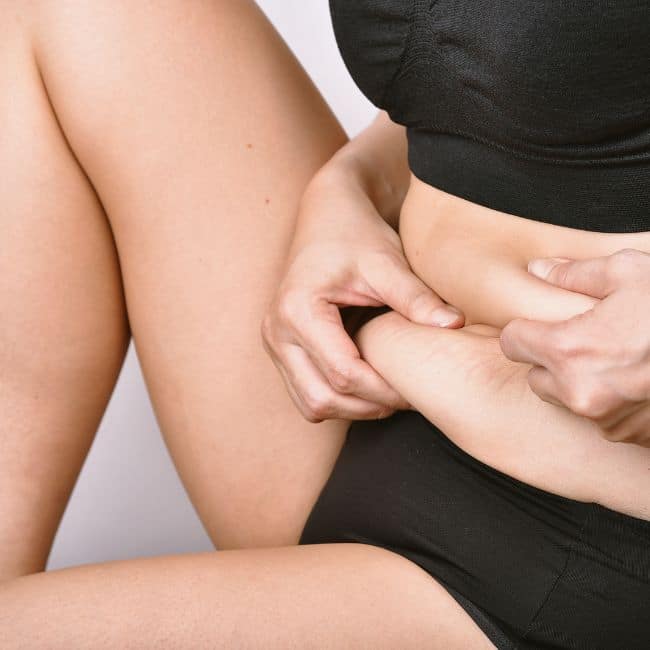
19 Ways To Get Rid of Menopause Belly Fat Explore 19 effective strategies to tackle menopause belly fat and reclaim your confidence with my easy-to-follow tips for a healthier you! Menopause can be a challenging time for many women. It comes with a range of symptoms that can affect quality of life, including one of the most common – menopause belly fat. Whether you’re in perimenopause (the 2-10 years leading up to menopause) or you’re in the throes of menopause itself, you may notice an increased weight gain, particularly around your middle. You may have heard terms like meno-pot belly, menopause apron belly, or menopause hanging pouch referring to this common but frustrating issue. Many women gain a “menopause belly” in their 40s and 50s, and many of us know from experience it can be frustrating to try and work it off. But, don’t feel powerless in menopause! This stubborn fat can be frustrating and difficult to manage, but there are effective strategies to combat it and improve overall health and wellness. In this article, we’ll explore 19 ways to get rid of menopause belly fat and achieve a healthier, more balanced body. From exercise and nutrition to lifestyle changes and self-care, I will cover a range of approaches to help you take control of your health and confidently navigate the symptoms of menopause as it relates to belly fat. Table of contents Understanding Menopause and its Effects on Belly Fat Hormones and Body Fat Weight Gain In The Midsection During Menopause Subcutaneous vs. Visceral Fat in Menopause 19 Ways to Get Rid of Menopausal Belly Fat 1. Start Your Day With ACV or Lemon Water 2. Add Strength Training To Your Workouts 3. Cut Back On Sweets 4. Eat Smaller Meals More Often 5. Strengthen Your Core 6. Minimize Stress 7. Keep Eating Habits in Check 8. Get More Sleep Every Night 9. Do HIIT Exercises 10. Stand More Often 11. Increase Your Protein Intake 12. Find an Exercise Group or Friend 13. Decrease Alcohol Intake 14. Skip Crash Diets 15. Use an Activity Tracker 16. Support Your Body with Supplements 17. Stay Hydrated 18. Focus on Fiber-Rich Foods 19. Talk to Your Doctor Embracing a Positive Body Image Additional Menopause Resources FAQ Understanding Menopause and its Effects on Belly Fat As women age, they go through menopause, which causes changes in their bodies. Menopause occurs when the ovaries stop producing eggs, and the levels of female sex hormones like estrogen and progesterone decrease. The hormonal changes that occur during menopause can have a significant impact on a woman’s body composition. Understanding the relationship between menopause, belly fat, and estrogen levels can help women take steps to manage their weight, support their overall health, and avoid future health risks. Let’s start by exploring some of the relationships happening within our bodies. Hormones and Body Fat As you begin to transition into menopause, your ovaries no longer produce high levels of estrogen and progesterone. Changes in these hormone levels can cause uncomfortable symptoms. Common menopause symptoms include hot flashes, night sweats and other unpleasant events. But the one issue women ask me about all the time is the onset of weight gain around the abdomen known as menopause belly fat. Contributors to weight gain and extra belly fat at menopause include declining estrogen levels, age-related loss of muscle tissue and lifestyle factors such as poor diet and lack of exercise. This type of weight gain is linked to an increased risk of cardiovascular disease, diabetes, and metabolic syndrome. When estrogen levels plummet, the body fat that used to settle around the hips, thighs, or butt may start to settle around your middle instead. Your progesterone decreases during menopause too, and this contributes to elevated cortisol levels in the body. And, surprise, elevated cortisol can cause menopause belly weight gain as well. Changes in estrogen and progesterone levels during menopause can both lead to weight gain. And unfortunately, this belly fat is notoriously difficult to lose. Weren’t the hot flashes, mood swings and night sweats enough!? Weight Gain In The Midsection During Menopause So yes, decreasing estrogen levels can affect your fat mass in the midsection area. But beyond the hormones, another factor most women don’t consider is that as we hit our 40’s 50’s and 60’s, we tend to have unknowingly become a bit more sedentary, making weight gain all the more common. It varies based on your lifestyle and job but the majority of us are not chasing little kids anymore, not moving as much, and spending more time sitting. Then to make matters worse, you may have stopped strength training. You will start to lose about a a half pound to a pound of muscle mass each year after the age of 35 if you are not actively replacing it. As you lose muscle, your metabolism slows down, aches and pains set it, and the belly fat appears. Slower metabolism means those cravings and carbs are going to have a much longer lasting impact than they used to. This shift in body composition can be challenging to manage. The key to aging is to strength train. Building and maintaining muscle mass becomes increasingly important during our later years and post menopause. Muscles help to boost metabolism and burn calories, aiding in weight management. (A pound of muscle burns more calories at rest than a pound of body fat.) Additionally, strength training can help to counteract the effects of age-related muscle loss. Subcutaneous vs. Visceral Fat in Menopause Belly fat isn’t just annoying, it’s complicated and can lead to a whole host of health problems. One of the many changes that occurs with menopause, is a tendency for subcutaneous fat (fat that is stored just beneath the skin) to convert to visceral fat. Visceral fat is stored deep within the abdominal cavity and surrounds important organs like the stomach, liver and intestines, increasing the risk of fat-related illnesses like cardiovascular disease, diabetes (due to insulin resistance) and certain

19 Ways To Get Rid of Menopause Belly Fat Read More »

11 Simple Back Strengthening Exercises for Seniors

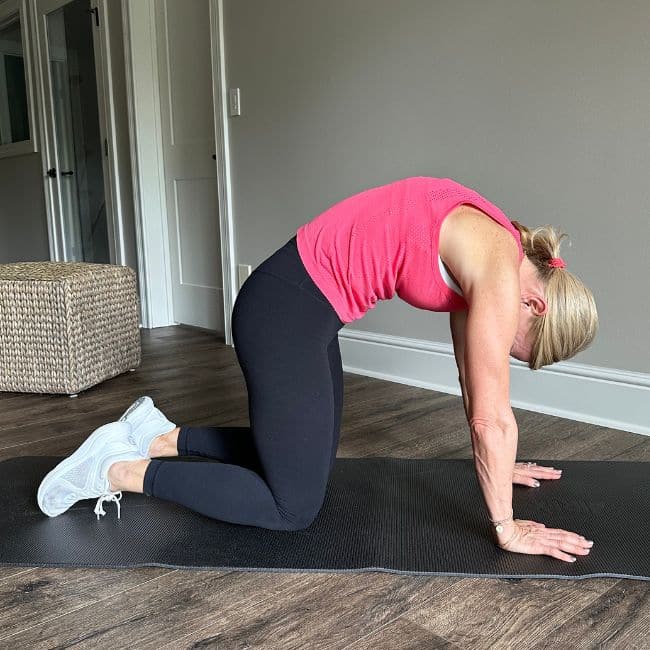
11 Simple Back Strengthening Exercises for Seniors Discover 11 simple back strengthening exercises for seniors that can help strengthen your back, relieve pain, and embrace a more mobile, active lifestyle. Is there anything more frustrating than chronic back pain? If you’re someone who struggles with back pain you’ve probably tried just about everything to make it go away. The quick fixes are tempting, and they can help short term. However, simple exercises performed consistently are actually one of the best ways to ease pain, improve poor posture, and prevent future injuries. The best back strengthening exercises can help maintain spinal health while reducing symptoms of low back pain, bad posture, muscle strains, or tight backs. Not to mention they promote a larger range of motion, core strength, and a better quality of life. If you’ve been suffering from back pain for a long time, it’s time to get proactive about back-strengthening exercises. Table of contents My Experience With Back Pain Common Causes of Back Pain Benefits of Back Strengthening Exercises What To Do About Existing Back Pain 11 Back Strengthening Exercises for Seniors Child’s Pose Pelvic Tilts Hip Rolls Glute Bridges Spinal Rotation Forearm Plank Bird Dog Cat-Cow Stretch Mid-Back Extension Superman  Swimming My Experience With Back Pain I’ve selected the absolute best exercises for strengthening you back, keeping older people in mind. The good news is, these exercises are simple to follow and easy to add to your daily routine. Physical therapy will help but most people can’t afford to keep attending PT sessions forever. Therefore, learning and doing each of these exercises is a great way to strengthen weak back muscles in an effective way at home. Every exercise has modifications and tips for making them more comfortable. The important thing is to decide what works best for you depending on your body and capabilities. I suffered from low back pain 10 years ago. As a certified personal trainer who moves my body for a living, I needed to deal with it and I wanted to fix my issue long term. I started a daily routine where I take 10 minutes to preform a handful of these exercises daily and it changed my life.  Over the course of several months my back pain subsided. I no longer have back pain but still do my quick strengthening routine of core exercises and back exercises daily to prevent it from reoccurring.   There has never been a better time than now to switch up your exercise routine and improve your back strength! Common Causes of Back Pain There are many common causes of back pain. The pain can also become acute, or chronic. Acute pain is short-term (lasting six months or less), while chronic pain lasts longer than six months. Some of the most common causes of back pain include: Arthritis Disc Problems Lifestyle Triggers Scoliosis Muscle Sprains, Strains, Spasms Benefits of Back Strengthening Exercises Adding science-backed stretches to your weekly routine can help ease existing pain, and prevent future pain. The right exercises help strengthen the back and surrounding muscles that help support it. For example, did you know that strong abdominal and hip flexor muscles help with good posture? Or that our leg muscles support our backs while we move? Stronger gluteal muscles help us with walking, standing, and even sitting. Similarly, a strong back can help with daily activities.  Adding simple back strengthening exercises to your workout schedule can help by: Promoting Disc Health Decreasing Stiffness Strengthening Muscles What To Do About Existing Back Pain Should you still do back strengthening exercises if you have back pain? We always recommend checking with a physician or physical therapist before undertaking any new exercise program. This is especially true if you have existing back pain.  These exercises were chosen specifically to help strengthen back muscles and reduce the potential for injuries or pain. Try these exercises if they feel ok for your body and know they have been helpful for my 58  year old body.  You can also explore our other recommendations for treating back pain.   11 Back Strengthening Exercises for Seniors These gentle and effective exercises will help strengthen lower back muscles and upper back muscles while helping to ease existing pain, and prevent future injury. Several of these exercises will work your back muscles, ab muscles and hip muscles, all of which will work together to alleviate back pain,  You can start by trying just a few, and build to adding more as you get more comfortable. Add them to your weekly routine, and use the modifications when you need them! All of these exercises can be done without any weights or other equipment. You’ll just need a yoga mat! If you’d like to add an extra challenge to your exercise routine, check out my top picks for the best home gym equipment for seniors. Product Image Product Name Primary Button TriggerPoint Foam Massage Ball for Deep-Tissue Massage Check Price TriggerPoint Foam Massage Ball for Deep-Tissue Massage, MBX Extra Firm (2.6-inch) Buy Now Amazon Basics High-Density Round Foam Roller for Exercise and Recovery Check Price TriggerPoint Foam Massage Ball for Deep-Tissue Massage Check Price TriggerPoint Foam Massage Ball for Deep-Tissue Massage, MBX Extra Firm (2.6-inch) Buy Now Amazon Basics High-Density Round Foam Roller for Exercise and Recovery Check Price Child’s Pose Child’s pose is a great move to incorporate at the beginning and end of your routine. It targets your low back, pelvic region and spinal extensors, and helps you avoid stiffness. It’s a great exercise to use to counterbalance the extension in the prone exercises. After you perform extension, it is nice to follow with flexion and child’s pose is my pick to do just that. Feel free to also do this exercise several times between the exercises lying face down. It will stretch your back and promote relaxation. How To Do Child’s Pose Start in kneeling position and sit back your glutes onto your heels or as close as you can get to that.  Splay your knees a little wider and drop

11 Simple Back Strengthening Exercises for Seniors Read More »