Strength Training

Auto Added by WPeMatico

À venir le 10 juin : 25 Minute Speed Train de Joel Freeman

À venir le 10 juin : 25 Minute Speed Train de Joel Freeman Que tu t’entraînes sans obtenir les résultats que tu veux, ou que tu souhaites renforcer ton corps, développer ton endurance et t’entraîner régulièrement, mais tu manques de temps : Joel Freeman a la solution. Tout le monde à bord pour 25 Minute Speed Train : ton plan de musculation étape par étape de 8 semaines qui t’aide à faire de réels progrès, peu importe ton point de départ. Depuis son gym à domicile, Joel te guide à travers des séances d’entraînement efficaces avec des consignes d’expert pour t’aider à effectuer chaque mouvement en maintenant une posture parfaite, avec un minimum d’équipement. Fini les pertes de temps, l’incertitude et les frustrations qui donnent envie d’abandonner. Voici un entraînement qui te permet de rester sur la bonne voie. Grâce à la méthode d’entraînement de volume ciblé, Joel t’offre des résultats complets en seulement 25 minutes par jour, 7 jours sur 7. Son protocole structuré étape par étape combine le temps sous tension, des intervalles basés sur le tempo et la surcharge progressive pour développer la force et l’endurance de manière efficace. Fini les devinettes. Fini le temps perdu. Fini les entraînements dysfonctionnels. Il te faut seulement des haltères légers, moyens et lourds, ainsi que des bandes de résistance. Joel n’oublie aucun groupe musculaire et t’aide à sculpter un physique équilibré tout en perfectionnant ta posture, sans surentraînement ni blessure. Peu importe ton point de départ, tu pourras enfin faire de tes objectifs une réalité. Prochain arrêt : les résultats! Qu’est-ce qui différencie 25 Minute Speed Train des autres programmes? Avec l’entraînement de volume ciblé, tu feras les exercices pendant une durée définie au lieu de compter les répétitions. Cette méthode te permet de suivre ton propre rythme tout en maintenant une bonne posture. À mesure que tu progresses, les séances d’entraînement s’intensifieront avec des intervalles actifs plus longs, un temps sous tension accru et plus de mouvements composés. Cette approche ciblant tout le corps aide à prévenir les déséquilibres musculaires et favorise les gains de force durables, en plus de te proposer un défi que tu pourras relever encore et encore en t’améliorant chaque fois. Après tes 8 premières semaines, refais le programme pour voir combien de répétitions tu peux enchaîner avec des poids encore plus lourds! À quoi ressemblent les séances d’entraînement? Joel a créé un programme complet de 8 semaines comprenant 48 séances d’entraînement uniques, ainsi que 2 séances de récupération qui alternent chaque semaine. Tu t’entraîneras 7 jours sur 7 : 5 séances de musculation, 1 séance de cardio et abdos et 1 séance de mobilité et flexibilité. Chacune des séances d’entraînement de 25 minutes cible le haut du corps, le bas du corps, les abdos ou tout le corps. Tu feras travailler tous tes groupes musculaires, y compris les plus petits, au moins deux fois par semaine. Haut du corps Développe force et endurance musculaire dans ton dos, tes épaules, ta poitrine, tes biceps et tes triceps. Bas du corps Définis et renforce tes quadriceps, ton fessier, tes ischio-jambiers et tes mollets. Tout le corps Les mouvements composés et complexes aident à développer la force musculaire, l’endurance et la stabilité. Cardio et abdos Fais travailler tes abdos, tes obliques et ton bas du dos en brûlant une tonne de calories. Mobilité et souplesse 1 Améliore l’amplitude de mouvement de tes articulations, ta flexibilité et ta mobilité tout en favorisant la récupération active de ton corps.   Qui est Joel Freeman? Joel est le créateur des programmes à succès de BODi LIIFT MORE™, 10 Rounds™ et LIIFT4®, ainsi que le co-créateur de CORE DE FORCE®. Entraîneur personnel certifié par la NASM avec plus de 20 ans d’expérience, il est reconnu pour ses séances d’entraînement efficaces et sans fioriture qui offrent un maximum de résultats. Son style clair, ses consignes précises et son expertise en musculation ont aidé des milliers de personnes à transformer leur corps et à révéler leur potentiel athlétique. Avec 25 Minute Speed Train, Joel présente son programme le plus efficace en termes de temps et de résultats à ce jour. Quand le programme 25 Minute Speed Train sera-t-il disponible? 25 Minute Speed Train sortira dans la bibliothèque de BODi le 10 juin. Accède gratuitement au programme avec ta souscription à BODi ou achète-le séparément pour seulement 129,95 $ afin de le regarder en continu ou même de le télécharger dans l’application BODi. Pour en savoir plus, consulte FAQ 00572. The post À venir le 10 juin : 25 Minute Speed Train de Joel Freeman appeared first on BODi. Que tu t’entraînes sans obtenir les résultats que tu veux, ou que tu souhaites renforcer ton corps, développer ton endurance et t’entraîner régulièrement, mais tu manques de temps : Joel Freeman a la solution. Tout le monde à bord pour 25 Minute Speed Train : ton plan de musculation étape par étape de 8 semaines qui t’aide à faire […] The post À venir le 10 juin : 25 Minute Speed Train de Joel Freeman appeared first on BODi. BODi{authorlink}https://www.bodi.com/blog/a-venir-le-10-juin-25-minute-speed-train-de-joel-freemanBODi BODi is a Health Esteem platform to help you embrace the person you are today so you can take action to achieve all your health and fitness goals. https://bodiblog.wpenginepowered.com/wp-content/plugins/bod-blog/assets/vendor/beachbodydigital/wordpress-core-plugins/beachbody.png

À venir le 10 juin : 25 Minute Speed Train de Joel Freeman Read More »
Coming June 10th: 25 Minute Speed Train by Joel Freeman

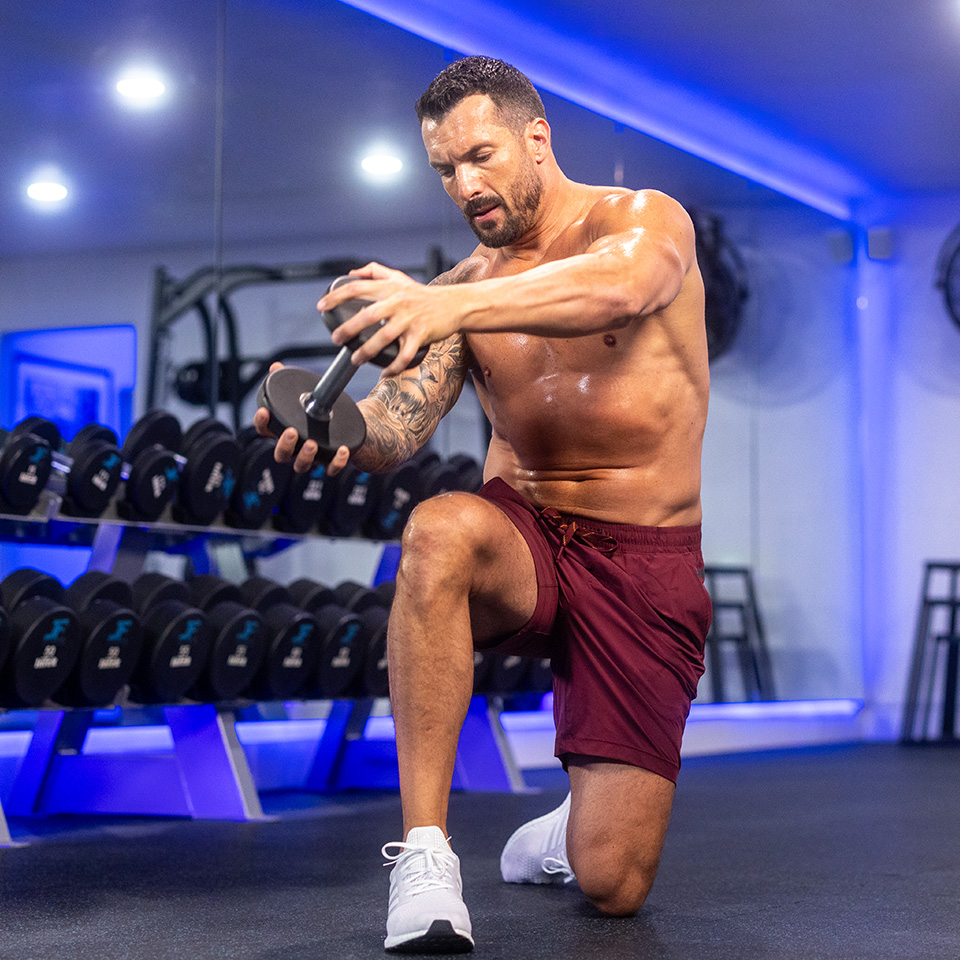
Coming June 10th: 25 Minute Speed Train by Joel Freeman If you’re trying to work out but not seeing the results you want, or you’re short on time but still want to get strong, build endurance, and train consistently, Joel Freeman has the answer. All aboard the 25 Minute Speed Train—your 8-week, step-by-step strength plan to help you make real progress, no matter your starting point. Joel trains you from his home gym, where his efficient workouts and expert cues help you execute every move with perfect form and minimal equipment. No more wasting time, wondering what to do, or giving up in frustration. This is training that keeps you on the right track. Using Targeted Volume Training, Joel delivers full-body results in just 25 minutes a day, 7 days a week. His step-by-step protocol combines time under tension, tempo-based intervals, and progressive overload to build strength and endurance efficiently. No more guesswork. No wasted time. All you need are light, medium, and heavy dumbbells, plus resistance loops. Joel leaves no muscle untouched while helping you sculpt a balanced physique as you perfect your form—without overtraining or injury. No matter where you’re starting from, you can finally make your goals a reality. Next stop: results! What makes 25 Minute Speed Train different? With Targeted Volume Training you’ll train for time, not fixed rep counts. This lets you go at your own pace while keeping proper form. As you progress, the workouts do too—challenging you with longer work intervals, increased time under tension, and more compound movements. This full-body approach helps prevent muscle imbalances, supports sustainable strength gains, and gives you a challenge you can repeat and level up every time. After your first 8 weeks, run through it again and watch yourself crush more reps with heavier weights! What are the workouts like? Joel created a comprehensive 8-week schedule that includes 48 unique workouts plus 2 recovery sessions that alternate every week. You’ll train 7 days a week: 5 strength, 1 core cardio, and 1 flexibility and mobility. Each 25-minute workout targets upper, lower, core, or full body, and you’ll hit every muscle group—including the smaller ones—at least twice per week. The result? A total-body transformation in less time, with a structure that’s as sustainable as it is effective. Upper Body Build strength and muscular endurance in your back, shoulders, chest, biceps, and triceps. Lower Body Define and strengthen your quadriceps, glutes, hamstrings, and calves. Total Body Compound and complex movements help build strength, stamina, and stability. Core Cardio Work your abs, obliques, and lower back while burning a ton of calories. Flexibility & Mobility Increase joint range of motion, flexibility, and mobility while promoting active recovery.   Who is Joel Freeman? Joel is the creator of hit BODi programs LIIFT MORE™, 10 Rounds™, and LIIFT4®, as well as co-creator of CORE DE FORCE®. As an NASM certified personal trainer with more than 20 years of experience, he specializes in efficient, no-nonsense workouts that deliver maximum results. His clear cueing, straightforward approach, and expertise in strength training have helped countless people transform their bodies and unlock their athletic potential. With 25 Minute Speed Train, he’s offering his most time-efficient, results-driven program yet.   When is 25 Minute Speed Train available?  25 Minute Speed Train will drop into the BODi library on June 10. Stream it free with your BODi Subscription, or purchase separately for just $119.95 to stream it — and even download it onto the BODi app. For more information, please visit FAQ 10572.   The post Coming June 10th: 25 Minute Speed Train by Joel Freeman appeared first on BODi. If you’re trying to work out but not seeing the results you want, or you’re short on time but still want to get strong, build endurance, and train consistently, Joel Freeman has the answer. All aboard the 25 Minute Speed Train—your 8-week, step-by-step strength plan to help you make real progress, no matter your starting […] The post Coming June 10th: 25 Minute Speed Train by Joel Freeman appeared first on BODi. BODi{authorlink}https://www.bodi.com/blog/coming-june-10-25-minute-speed-train-by-joel-freemanBODi BODi is a Health Esteem platform to help you embrace the person you are today so you can take action to achieve all your health and fitness goals. https://bodiblog.wpenginepowered.com/wp-content/plugins/bod-blog/assets/vendor/beachbodydigital/wordpress-core-plugins/beachbody.png

Coming June 10th: 25 Minute Speed Train by Joel Freeman Read More »

Try This Fast and Furious Medicine Ball Workout

Try This Fast and Furious Medicine Ball Workout For versatility, portability, and simplicity, it’s hard to beat the old-school medicine ball. This tough and rugged piece of fitness equipment was touted as far back as 1000 BCE for its purported ability to improve various aspects of health — hence the medically-inspired name. Those ancient strength coaches were on to something. The med ball is an exceptionally adaptable form of resistance, and thus an ideal way to increase the intensity of bodyweight moves like squats, lunges, push-ups, sit-ups, and leg raises. Its spherical shape challenges your grip and core in unusual ways. And for people who are accustomed to slow and methodical strength-training moves, throwing a five-pound object against the wall can be a frustration-releasing revelation that also builds fitness and explosive power. How to Choose the Best Medicine Ball If you haven’t done a medicine ball workout before, there are a few things you need to consider. Material Medicine balls may or may not bounce, and they can be soft-sided or made from firm, textured rubber. For this workout, opt for a soft-sided medicine ball with no bounce that can be used as both a medicine ball and a wall ball. Weight Medicine balls can range from 2 to 150 pounds, so what’s the best medicine ball weight? For this workout, choose a medicine ball that’s equal to about 5 to 10 percent of your bodyweight. (For a 160-pound person, that works out to an 8- to 16-pound ball; for a 200-pound person, that’s a 10- to 20-pounder.) You may be tempted to choose a heavier weight, especially if you’re a long-time strength trainer. But you’re not looking for a weight that’s hard to lift — you’re looking for something you can throw with maximum speed. 9-Move Medicine Ball Workout Run through the moves below for a fast-paced, full-body medicine ball workout. If you’re short on time, or you want to add a cardio challenge — or both! — perform all nine exercises as a circuit, resting minimally between exercises. Rest one to two minutes, and repeat (if desired) for a total of one to three rounds. 1. Reverse lunge to woodchop Stand holding a medicine ball at chest height. Take a long stride backward with your right foot, lowering the ball towards your right hip. Keeping your torso upright, bend both knees until your right knee is a couple inches from the floor. Return to the starting position, raising the medicine ball in a diagonal line up and to your left, finishing with the ball above your left shoulder and your arms straight. Repeat the movement five more times (for a total of six reps), then repeat for six reps on the opposite side. 2. Wall ball Stand about two feet in front of a brick or cinder block wall with your feet hip-width apart. Hold a soft-sided medicine ball or wall ball between your hands at chest height. Squeeze your elbows into your sides. Keeping the ball close to your chest, sink into a squat until the crease of your hip is at or below your knees — or as low as you can while maintaining a neutral spine. Keeping your chest up, push your body away from the floor and throw the ball up and forward, aiming to hit a spot on the wall about eight feet off the ground. Catch the ball as you descend into your next rep and repeat for a total of eight reps. 3. Med ball slam Choose a medicine ball that does not bounce. Assume an athletic stance, holding a medicine ball at chest height. Raise the ball overhead. Keeping your core tight, throw the medicine ball straight downwards as hard as you can, shooting your hips backward as you swing your arms down to slam the ball on the floor just in front of your feet. Squat to pick up the ball and return to starting position. Repeat for a total of six reps. 4. Med ball squat to rotational press Assume an athletic stance, holding a medicine ball at shoulder height. Keeping your chest up, your gaze forward, and your elbows tucked in, squat down until your hips are lower than your knees (or as low as you can go without dropping your chest). As you stand back up, rotate right as you press the med ball overhead, raising your left heel off the floor and rotating your hips and shoulders as you do. Return to the starting position and repeat the move, this time rotating to your left. Repeat for a total of six reps on each side. 5. Rotational walking lunge Stand with your feet together, holding a light med ball at arm’s length in front of your chest. With your torso upright, take a long step forward with your right foot, bending both knees 90 degrees and dropping your left knee close to the ground. Pause. From the low position of the lunge, rotate your shoulders and arms to the right as far as you can, keeping the arms long and the med ball at chest height the whole time. Return to the center position, and step forward with your left foot, bringing your feet together again. Step forward with your left foot and repeat the movement, alternating sides for a total of six reps per side. 6. Overhead med ball throw Hold a medicine ball at shoulder height. Crouch slightly, then explode upwards, pressing your arms overhead and throwing the ball as high as you can when you come up. (Stay clear of the ball as it falls to the floor.) Pick the ball up and repeat for six reps. 7. Split-stance lateral toss Stand with your left shoulder an arm’s length away from a brick or cinder block wall (so the wall is on your left side). Hold a soft-sided medicine ball or wall ball with both hands. Assume a split-stance lunge — left foot forward, right foot back — with both of your knees bent at about 90

Try This Fast and Furious Medicine Ball Workout Read More »

How to Biohack Your Muscle Recovery: Increase Your Circulating Stem Cells to Crush Soreness, Recover From Injuries, and Build Muscle Faster—WITHOUT Expensive Injections

How to Biohack Your Muscle Recovery: Increase Your Circulating Stem Cells to Crush Soreness, Recover From Injuries, and Build Muscle Faster—WITHOUT Expensive Injections Ever wonder why bouncing back from a tough workout takes longer as you age—or why building muscle and recovering from The post How to Biohack Your Muscle Recovery: Increase Your Circulating Stem Cells to Crush Soreness, Recover From Injuries, and Build Muscle Faster—WITHOUT Expensive Injections appeared first on Ben Greenfield Life – Health, Diet, Fitness, Family & Faith. Ever wonder why bouncing back from a tough workout takes longer as you age—or why building muscle and recovering from The post How to Biohack Your Muscle Recovery: Increase Your Circulating Stem Cells to Crush Soreness, Recover From Injuries, and Build Muscle Faster—WITHOUT Expensive Injections appeared first on Ben Greenfield Life – Health, Diet, Fitness, Family & Faith. Jill{authorlink}https://bengreenfieldlife.com/article/biohack-your-muscle-recovery-with-stem-cells/Articles by Ben Greenfield – Ben Greenfield Fitness Discover the best life-hacking secrets for body, mind and spirit optimization, personal productivity, work-life balance, family, relationships, survival, spirituality & more! https://bengreenfieldlife.com/wp-content/uploads/2022/02/cropped-BGL-Favicon-negative-5@512-32×32.png

How to Biohack Your Muscle Recovery: Increase Your Circulating Stem Cells to Crush Soreness, Recover From Injuries, and Build Muscle Faster—WITHOUT Expensive Injections Read More »

The Weekly Roundup: Your Go-To Guide For Everything You May Have Missed This Week & More! 1/31-2/6

The Weekly Roundup: Your Go-To Guide For Everything You May Have Missed This Week & More! 1/31-2/6 Welcome to Ben Greenfield’s Weekly Roundup! In this weekly post, I share with you my most interesting discoveries of the The post The Weekly Roundup: Your Go-To Guide For Everything You May Have Missed This Week & More! 1/31-2/6 appeared first on Ben Greenfield Life – Health, Diet, Fitness, Family & Faith. Welcome to Ben Greenfield’s Weekly Roundup! In this weekly post, I share with you my most interesting discoveries of the The post The Weekly Roundup: Your Go-To Guide For Everything You May Have Missed This Week & More! 1/31-2/6 appeared first on Ben Greenfield Life – Health, Diet, Fitness, Family & Faith. Miguel Vences{authorlink}https://bengreenfieldlife.com/article/wkru1-31-2-6/Articles by Ben Greenfield – Ben Greenfield Fitness Discover the best life-hacking secrets for body, mind and spirit optimization, personal productivity, work-life balance, family, relationships, survival, spirituality & more! https://bengreenfieldlife.com/wp-content/uploads/2022/02/cropped-BGL-Favicon-negative-5@512-32×32.png

Read More »

Is Working Out Twice a Day Helping or Hurting Your Goals?

Is Working Out Twice a Day Helping or Hurting Your Goals? If you’re chasing specific fitness results, you may wonder whether working out twice a day will help you achieve them twice as fast. Once a relic of high school sports training, two-a-day workouts are now all over social media and are even included in some popular lifestyle programs. But should two-a-days be part of your workout routine? Does working out twice a day double the payoff or double the risk? Are There Benefits to Working Out Twice a Day? When it comes to the advantages of two-a-day workouts, “there really aren’t any unless you’re an elite athlete,” says Trevor Thieme, CSCS. “If you have enough gas in the tank to tackle two daily workouts, you likely aren’t going hard enough in either one to optimize your progress toward your goals.” To be clear, that doesn’t mean that you should never work out more than once a day. “If you’re too busy to complete your whole workout all at once on some days, go ahead and split it up,” Thieme says. You can also perform some moderate-intensity cardio on the same day as strength training, or vice versa — though you’d probably be better off doing them on different days altogether if you’re serious about endurance and/or strength gains. But “divide and conquer” isn’t your only option when you’re pressed for time. “You should also consider doing a higher-intensity, shorter workout rather than a longer one split into two parts,” Thieme suggests. “When you get right down to it, workout density trumps workout duration.” What Are the Cons of Two-a-Day Workouts? Unless you’re splitting one workout into two parts to accommodate your schedule, working out twice a day is more likely to hold back your progress than hasten it. 1. Increases your risk of overtraining In order to adapt to the training stimuli provided by your workouts, your body needs sufficient time to recover between them. “Pushing yourself too hard too often can put you on the fast track to overtraining,” warns Thieme. “That can not only land you in a training rut, but also increase your risk of injury.” 2. Decreases physical performance Burnout caused by overtraining will include a decrease in your performance during workouts. What’s worse, the effects of overtraining can spill into your everyday life, and include mood swings, insomnia, and loss of appetite. 3. Negatively affects muscle growth Building muscle mass is a process of creating micro-damage in your muscles, which triggers repair and adaptation processes that leave you stronger and fitter than before. But overtraining impedes muscle repair, recovery, and growth. If you’re not building muscle effectively, you’ll have a more challenging time reaching your goals. Should Beginners Work Out Twice a Day? In general, it’s not advised for beginners to work out twice a day. “There’s almost no reason to do two-a-days,” says Thieme. “Besides, most people have trouble finding time to do one workout a day, let alone two.” When you’re just starting out, focus on being consistent, not overzealous. Adding a second workout to your day can actually hinder your goals. Thieme explains that beginners are at the same risk of overtraining as everyone else. That’s because overtraining “occurs when you push yourself too hard, too often for your fitness level, whatever that fitness level is. No matter what your fitness level is, overtraining will put the brakes on your gains and increase your risk of injury.” 3 Ways to Reach Your Goals Faster “When it comes to fitness, more isn’t necessarily better,” says Thieme. Instead of working out twice a day, consider the following training ideas, so you can train smarter, not harder, to achieve your goals faster. 1. Focus on workout quality, not duration How long you work out is far less important than how you work out. “As long as your workouts are aligned with your fitness objectives and you challenge yourself multiple times a week, you will reach your goals,” he says. 2. Prioritize rest Rest days are just as important as your workouts, and you should prioritize them. Even if you’re already taking rest days from the gym, you should watch for signs of overtraining like increased fatigue, sleeplessness, reduced athletic performance, mood changes, and a decline in motivation. If you notice any of these symptoms, it’s time to dial back your training volume and intensity and dial in your post-workout recovery until your performance is back on track. 3. Increase your daily activity level A daily workout doesn’t counterbalance an otherwise sedentary lifestyle. That’s why it’s essential to become more active in general. “Focus on increasing your non-exercise activity thermogenesis (NEAT), which is all of the calories you burn throughout the day outside of exercise,” says Thieme. “If your goal is weight loss, or even if it’s just being healthier overall, you need to give NEAT just as much attention as working out.” The post Is Working Out Twice a Day Helping or Hurting Your Goals? appeared first on BODi. If you’re chasing specific fitness results, you may wonder whether working out twice a day will help you achieve them twice as fast. Once a relic of high school sports training, two-a-day workouts are now all over social media and are even included in some popular lifestyle programs. But should two-a-days be part of your […] The post Is Working Out Twice a Day Helping or Hurting Your Goals? appeared first on BODi. Linnea Zielinski{authorlink}https://www.beachbodyondemand.com/blog/working-out-twice-a-dayBODi BODi is a Health Esteem platform to help you embrace the person you are today so you can take action to achieve all your health and fitness goals. https://bodiblog.wpenginepowered.com/wp-content/plugins/bod-blog/assets/vendor/beachbodydigital/wordpress-core-plugins/beachbody.png

Is Working Out Twice a Day Helping or Hurting Your Goals? Read More »

Functional Forever: My Top Tips For Maintaining & Building Muscle, Strength, Energy, and Confidence With Age.

Functional Forever: My Top Tips For Maintaining & Building Muscle, Strength, Energy, and Confidence With Age. Sandwiched between music producer Rick Rubin and author Neil Strauss, I struggled against a giant Nautilus machine in the basement The post Functional Forever: My Top Tips For Maintaining & Building Muscle, Strength, Energy, and Confidence With Age. appeared first on Ben Greenfield Life – Health, Diet, Fitness, Family & Faith. Sandwiched between music producer Rick Rubin and author Neil Strauss, I struggled against a giant Nautilus machine in the basement The post Functional Forever: My Top Tips For Maintaining & Building Muscle, Strength, Energy, and Confidence With Age. appeared first on Ben Greenfield Life – Health, Diet, Fitness, Family & Faith. Hannah Miller{authorlink}https://bengreenfieldlife.com/article/muscle-building-guide/Articles by Ben Greenfield – Ben Greenfield Fitness Discover the best life-hacking secrets for body, mind and spirit optimization, personal productivity, work-life balance, family, relationships, survival, spirituality & more! https://bengreenfieldlife.com/wp-content/uploads/2022/02/cropped-BGL-Favicon-negative-5@512-32×32.png

Read More »

Sumo Vs. Conventional Deadlift: What Are the Differences?

Sumo Vs. Conventional Deadlift: What Are the Differences? In the health and fitness space, there are a number of fearsome ideological match-ups: cardio vs strength training, plant vs animal protein, the front squat vs back squat. Among these titanic topics, however, few can rival that of the sumo vs conventional deadlift. Enter any weight room (or internet discussion) and you’ll be sure to hear the sumo vs conventional deadlift argument punctuated by the sound of clanging plates. Sumo is cheating! Conventional is dangerous! The list of accusations leveled against each of these deadlift variations is virtually endless. Sift through the accusations, however, and you’ll find that these compound movements have more in common than their respective fan bases understand. Sumo vs Conventional Deadlift: Is One Better Than the Other? While there are meaningful biomechanical differences between the sumo and conventional deadlift, “neither is superior to the other,” according to personal trainer and wellness coach Brandon Kwong, CSCS. Rather, each movement has its own unique set of benefits, and the “right” deadlift variation is the one that works for your goals, makes sense biomechanically, and can be performed both comfortably and confidently, according to Kwong. What Are the Differences Between Sumo and Conventional Deadlifts? Ultimately, the “best” movement comes down to the goals and abilities of the lifter. “Spend a few months on each type of deadlift focusing on good technique, and get a feel for which is more comfortable,” Kwong says. Testing the sumo vs conventional deadlift waters here may also point out weaknesses in your back or quad muscles, which the right accessory movements can help strengthen. With that being said, here are some key differences between the two deadlift styles. Conventional deadlift Feet are hip-width apart with arms outside the legs. Has more “sport-specific” applications due to the “conventional deadlift mirroring that of the universal athletic position,” according to Kwong. May be the easier lift for those lacking hip mobility. Can be a great exercise for those looking to build a strong upper back and spinal erectors. Most common form errors: bending the torso too far forward at the waist, not executing the all-important “hip hinge” correctly (more on that below), not cutting the slack in arms, losing tension in the posterior chain. Sumo deadlift Feet are several inches wider than hip-width, with arms inside the legs. The sumo deadlift’s “shorter range of motion means the barbell travels less distance,” according to Kwong, which can make it easier to train frequently with heavy loads. May yield a higher one-rep max. Can be difficult for those with poor hip mobility. Most common form error: bending the torso too far forward at the waist, not executing the hip hinge correctly, hyperextension of the lumbar spine (lower back) at the top of the lift. Can You Lift More With a Sumo Deadlift Than a Conventional Deadlift? “The sumo deadlift’s shorter range of motion due to its wide stance means the weight travels less distance,” Kwong says, which should make it easier to move heavy weight repeatedly for most people — in theory. However, the amount you can lift with either variation likely also comes down to your biomechanics, though the one-rep max record (held by Hafthor Bjornsson) sits at 1,104 pounds employing a conventional stance, while Chris Duffin’s record one-rep max sumo deadlift is approximately 100 pounds lighter. Which Variation Is Better for Building Strength and Muscle? The conventional and the sumo stance are both effective muscle-builders — specifically for the glutes, hamstrings, and lower back — and should have places in your training plan. Together, they will help you achieve the variety necessary to optimize muscle growth. In terms of building strength and athleticism, however, the conventional stance has the upper hand. The sumo deadlift is still a great exercise to improve lower-body strength, but the conventional deadlift is a foundational movement that should be at the core of your strength training program. It helps you build more functional strength than its sumo counterpart because it more effectively utilizes the hip hinge, a fundamental movement pattern of functional fitness. In short, the training adaptations you get from the conventional deadlift have more real-world applicability — from sports performance to day-to-day life. Which One Do Trainers Recommend? Trainers recommend mastering the conventional deadlift before progressing to its variations. Once you’ve perfected the movement, Kwong says the difference between the two comes down to the people performing them. “If you’re a powerlifter and the goal is to pull the most weight off the floor, and you’re comfortable with sumo, go for it,” he says. “At the end of the day, it’s about providing the most stimulus with the least risk of injury.” How to perform a conventional deadlift Stand with your feet hip-width apart and the barbell positioned directly over your mid-foot. Keeping your back flat and core engaged, push your hips back (imagine that you’re closing a door with your butt) as you bend at your knees slightly and grab the barbell with an overhand (palms facing backward) grip. (Be sure to keep your butt higher than your knees at all times.) This is the starting position. Keeping your core engaged, back flat, and bar close to your body, drive through your heels and lift the bar until your legs are fully extended, squeezing your glutes and driving your hips forward as you do. Pause, and then reverse the movement to return to the starting position. How to perform a sumo deadlift Stand with your feet several inches wider than shoulder-width apart, shoelaces directly beneath the barbell, and toes pointing slightly outward (roughly a 45 degree angle) With your back flat and your arms hanging naturally between your knees, push your hips back (imagine you’re closing a door with your butt—this is the “hip hinge” mentioned earlier) as you bend your knees slightly and grab the bar with an overhand (palms facing backward) grip. (Keep your knees in line with your feet and be sure to keep your butt higher than your knees

Sumo Vs. Conventional Deadlift: What Are the Differences? Read More »

Is a Push/Pull/Legs Routine Fastest for Building Muscle?

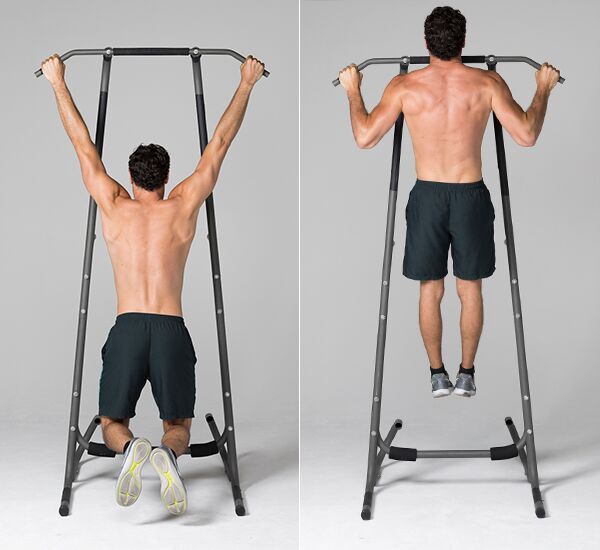
Is a Push/Pull/Legs Routine Fastest for Building Muscle? If figuring out how to organize and manage your strength-training routine feels more challenging than a heavy set of deadlifts, it’s time to consider a push/pull/legs schedule. Popular among weightlifters of all levels, this divide-and-conquer approach to training designates specific days — push days, pull days, and leg days — for targeting different muscle groups. Amanda Herrera, CPT, describes this type of training plan as “strategic,” as it allows you to build strength and muscle mass in all areas of the body with minimal rest. “It’s the idea of separating and working similar muscle groups on one day,” she explains. “That way, on the following day, you’re training the opposing muscles and not overworking or overtraining your body. Sometimes in full-body workouts, some muscle groups get used in multiple exercises, and you don’t realize it, so they’re actually working more than you think,” she adds. “This push/pull/legs way of training is great to prevent injury for everyone.” Below is an explanation of each type of day, sample exercises, and a straightforward seven-day schedule that can help provide structure to your workouts. Push Day Workout A push day workout is an upper body workout that targets the muscles used during pushing movements — primarily the triceps and the muscles of the chest and shoulders. Here are few common push exercises that require minimal equipment (you’ll need one set of dumbbells). 1. Push-up Assume a high-plank position with your feet together (or slightly apart for balance), your body straight from head to heels, and your hands in line with (but slightly wider than) your shoulders. Engage both your glutes and your core to lock your body into position. Keeping your elbows about 45-degrees away from your body and your head neutral, lower your torso until your chest is within a few inches of the floor. Pause, and then push yourself back up to the starting position. 2. Dumbbell lateral raise Stand tall with your feet hip-width apart holding a dumbbell in each hand at arm’s length by your sides, palms facing in. Keeping a slight bend at the elbow, raise your arms to your sides until they’re level with your shoulders. Keep your palms facing downward. Pause, and then lower the weights back to the starting position. 3. Dumbbell overhead triceps extension Sit on a bench or chair, cupping one end of a dumbbell in both hands directly overhead. This is the starting position. Keeping your chest up, core engaged, and back flat, bend the elbows to lower the weight behind your head without moving your upper arms. Elbows should stay close to the ears and be pointed forward. Pause, and then press the weight back up to the starting position. Pull Day Workout A pull day workout engages the opposing upper body muscles: the biceps, forearms, and back muscles. The sampling of exercises below requires a set of dumbbells and a pull-up bar. 4. Dumbbell bent-over row Stand with your feet hip- to shoulder-width apart holding a dumbbell in each hand at arm’s length by your sides, palms facing in. Brace your core, hinge at your waist to push your hips back, bend your knees slightly, and lower your torso until it’s nearly parallel to the floor. Keep your glutes engaged to protect your lower back. Let the dumbbells hang at arm’s length with your palms facing each other. Engage your shoulder blades to keep your shoulders pulled back. This is the starting position. Without moving your torso, and while keeping your elbows tucked and back flat, row the weights to your rib cage as you squeeze your shoulder blades together. Make sure there’s a 90-degree bend in the elbow, so you’re rowing to your ribs and not armpits. Pause, and then lower the weights back to the starting position. 5. Zottman curl Stand tall, holding a dumbbell in each hand at arm’s length by your sides, palms facing forward (underhand grip). Keeping your elbows tucked and locked by your sides, curl the weights toward your shoulders. Rotate the dumbbells 180-degrees so your palms are now facing down. Lower the weights back down to your sides and then flip your grip again (to underhand) to return to the starting position. 6. Pull-up Grab a pull-up bar with an overhand grip that’s slightly wider than shoulder-width. Hang at arm’s length with your arms straight (a position known as a dead hang) and your ankles crossed behind you. Without swinging or kipping (using momentum to propel you upward), engage your lats and squeeze your shoulder blades together as you pull your chin to the bar. Pause, and then lower yourself back to a dead hang. Legs and Core Day Workout While leg day is typically devoted to strengthening the hamstrings, quadriceps, glutes, and calves, it’s common practice to also incorporate core work. Below are some bodyweight core exercises and basic lifts that target multiple muscle groups of the lower body. 7. Romanian deadlift Stand tall, feet hip-width apart and parallel, with your knees slightly bent, holding a pair of dumbbells in front of your thighs, palms facing towards you. Keeping your back flat, core engaged, and the dumbbells within an inch or two of your body, push your hips back and lower the dumbbells until your torso is nearly parallel to the floor. Pause, and then reverse the movement to return to the starting position. 8. Dumbbell squat Stand with your feet hip to shoulder-width apart, holding a pair of dumbbells at arm’s length by your sides, palms facing in. Keeping your back flat and core braced, push your hips back, bend your knees, and lower your body until your thighs are parallel to the floor. Pause, then push yourself back up to the starting position. 9. Bulgarian split squat Stand facing away from a bench, holding a pair of dumbbells at arm’s length by your sides, palms facing in. Place the toes of your left foot on the bench behind you. Keeping your torso upright,

Is a Push/Pull/Legs Routine Fastest for Building Muscle? Read More »

8 Exercises for Your Best Full-Body Workout

8 Exercises for Your Best Full-Body Workout Maybe you want to break out of your split-routine. Or maybe your current workout regimen isn’t effectively hitting all of your major muscle groups. Either way, you could benefit from a full-body workout plan. Rather than focus on specific types of movement or parts of the body the way you would with a workout split, a total body workout is designed to engage muscles from head to toe. And for those whose usual routine is simpler — think running, cycling, etc. — a full-body workout may target otherwise-neglected muscles and energy systems. Whether it’s HIIT or heavy lifting, many BODi programs and workouts are comprised of exercises for total body engagement. Follow the full-body workout below made up of moves from several of these programs and discover the benefits of total body training. Why Do a Full-Body Workout? A full-body workout forgoes the compartmental focus of a split routine in favor of exercises that work all major muscle groups in a single workout. In addition to the benefits of increased muscle mass, strength, and/or cardiovascular capacity you might get from any workout, full-body workouts offer a number of advantages. 1. Train functional fitness Using exercises that challenge multiple joints and muscle groups, full-body workouts emphasize functional training, promoting movement patterns that better translate to everyday life. The result is often improved coordination, proprioception, balance, and stability that make daily tasks easier to manage and can reduce the risk of injury in routine activities. 2. Save time Working your whole body at once allows you to complete your workout quicker, rather than focusing on one or two muscle groups, hammering them for a set, and having to recover before doing it again. It may even allow you to exercise fewer days per week, as you pack more overall work into each session. 3. Burn more calories The more muscles you use, the more energy you’ll need to power them, and full-body workouts engage more muscle overall — burning more calories in the process. At high intensity, they can also help stimulate increased fat loss. That’s because working multiple muscle groups simultaneously at high intensity demands additional caloric burn even after you’ve finished your workout thanks to the afterburn effect (also known as excess post-exercise oxygen consumption, or EPOC). This higher calorie burn can contribute substantially to weight loss and improved metabolic health. 4. Improve mobility Instead of simply curling a dumbbell at your elbows or shuffling your legs at jogging stride, full-body workouts take your limbs (and muscles) through complete ranges of motion. This helps improve mobility, or your ability to move your joints to their fullest extent. By consistently working on mobility through a full-body workout routine, you also support joint health. 5. Emphasize strength and cardio There’s not much cardiovascular benefit to an overhead press alone, but when you pair it with a squat, you can significantly increase your heart rate, amplifying your aerobic gains while building strength in both your upper and lower body. 6. Promote muscular balance Rather than keying solely on mirror muscles, full-body workouts require a more equitable division of labor across the various muscle groups, helping to iron out or prevent muscle imbalances. Additionally, integrating a full-body workout into your routine can prevent overtraining of specific muscles, reducing the risk of injuries and allowing for more complete muscle recovery. What to Look for in a Full-Body Workout The way you structure a workout matters. When auditioning a full-body workout, there are several key qualities to consider: Fitness-level appropriate Foremost, it’s important to choose a workout that aligns with your level of fitness in order to maintain proper form, thereby minimizing the risk of injury and maximizing effectiveness. Movements should be challenging without inducing breakdowns in execution. Compound movements Any full-body workout should take you through a variety of compound movements, whether they’re bodyweight or loaded exercises. Compound movements engage multiple joints and muscles simultaneously, or at the very least collectively, ensuring holistic muscle activation. Resistance + aerobics A well-rounded full-body workout typically incorporates a blend of strength and cardiovascular elements to promote muscle growth (hypertrophy) and endurance as well as aerobic capacity. The workouts comprising 80 Day Obsession, for instance, combine weighted compound exercises with low- and high-intensity cardio intervals. Mobility training Finally, a full-body workout should offer flexibility and mobility work to ensure healthy joint movement in the fullest possible range of motion. Dynamic stretches, yoga-inspired movements, and action in all three planes of motion can help prevent injuries and enhance overall performance, as well as improve posture and decrease pain during daily tasks. Can You Do a Full-Body Workout Every Day? While full-body workouts spread the workload more evenly across muscle groups, doing them every day isn’t recommended for everyone. Muscles require rest to recover and grow following the stress of exercise, and working the same muscle groups daily can lead to overtraining and injury. Whether or not you can safely do a full-body workout every day hinges on several key factors: Intensity: How hard are you pushing through each workout? Duration: How long are you working out each day? Training focus: Are the exercises high-impact or easier on the body? It’s generally advised to take a rest day between full-body workouts to allow for adequate recovery. However, if you do choose to exercise daily, you might consider varying the intensity and focus of your workouts. Most BODi programs are designed to be performed between four and six times per week, depending on your goals and level of commitment. Consideration is given to the type, length, and intensity of work demanded in each workout, ensuring you get the benefits of full-body engagement while minimizing the risk of overtraining. How Long Should a Full-Body Workout Be? There is no standard length for full-body workouts. However, you may find they don’t take as long as the workouts you’re used to since they economize on time by targeting multiple muscle groups simultaneously. Still, if you follow the

8 Exercises for Your Best Full-Body Workout Read More »