Personal Training

Auto Added by WPeMatico

7 Ways a Pre and Postnatal Fitness Certification Can Advance Your Career

7 Ways a Pre and Postnatal Fitness Certification Can Advance Your Career Few life stages are as transformative as pregnancy and postpartum recovery. For fitness professionals, earning a pre and postnatal fitness certification is not only a meaningful way to support clients during this pivotal time, but also a specialization that can open doors you may not have considered.  Here are seven ways a pre and postnatal fitness certification can advance your career in the fitness industry and help you make a lasting impact.  1. Meet the Growing Demand for Women’s Health Expertise  Women’s health is one of the fastest-growing segments of the wellness market.  According to Nova One Advisor, the global women’s health app market is projected to grow significantly through 2034, reflecting rising demand for personalized health support across reproductive life stages. Similarly, Grand View Research reports strong growth in pregnancy tracking and postpartum care apps from 2023 to 2030, driven by increased awareness of maternal health and digital engagement.  These trends tell us something important. Pregnant and postpartum individuals are actively seeking specialized guidance. They are investing in tools, education, and services that support their well-being.  As awareness around maternal health grows, so does the need for qualified professionals who can safely bridge the gap between healthcare and fitness. As a certified pre and postnatal fitness professional, you can become part of this broader ecosystem of women’s health support and meet the growing demand.  2. Expand Your Client Base with a High-Need Population  Pregnancy and postpartum are life events that require tailored training. Many general personal trainers feel unsure about programming for this population, which creates a gap in the market.  When you earn a pre and postnatal fitness certification, you can confidently work with:  Clients in all three trimesters  Newly postpartum clients navigating recovery  Active individuals returning to sport  Parents managing the physical demands of early parenthood  Becoming a prenatal fitness specialist and/or a postpartum fitness specialist allows you to serve a population that often struggles to find qualified support.  And, pregnant and postpartum clients are not short-term clients. Pregnancy lasts nine months. Postpartum recovery and rebuilding can take a year or longer. Many clients also return for subsequent pregnancies. This can create long-term client relationships.  If you are building a personal fitness trainer career, adding this specialization can increase retention and referrals. Clients who feel safe and supported during such a vulnerable life stage are likely to recommend you to friends, family, and healthcare providers.  3. Increase Your Earning Potential Through Specialization  Specialization often leads to higher rates. In many professions, niche expertise commands premium pricing, and fitness is no exception.  The 2024 Nationwide Survey of Health and Fitness Professionals by ProNatal Fitness found income and pricing trends that suggest certified coaches with specialized training can command higher session rates than non-certified peers. While rates vary by location and experience, specialization often signals advanced skill, which clients are willing to pay for.  When exploring fitness career benefits, it is important to think beyond hourly pay. Specialized credentials can also lead to:  Small group prenatal classes  Online prenatal or postpartum programs  Workshops in collaboration with doulas or physical therapists  Corporate wellness programs focused on working parents  A pre and postnatal fitness certification does not just increase income potential, it diversifies it.  FREE TRIAL Experience the AFPA Pre & Postnatal Fitness Specialist Course Firsthand for Free! Experience 2 full modules from the AFPA Pre & Postnatal Fitness Specialist Certification Course for 14 days. No credit card required! ENROLL FOR FREE 4. Build True Programming Confidence and Reduce Liability Risks  Training pregnant and postpartum clients without formal education can feel intimidating. Many trainers worry about safety, contraindications, and medical complexity. That hesitation can limit your willingness to work with this population.  A comprehensive pre and postnatal fitness certification provides structured, evidence-based education on:  Physiological changes during pregnancy  Cardiovascular, musculoskeletal, and hormonal adaptations  Warning signs that require medical referral  Safe exercise progressions and regressions  This knowledge builds confidence. And confidence translates into better coaching.  It also reduces professional risk. When you understand how to screen, assess, and program appropriately, you are better equipped to operate within scope of practice and collaborate with healthcare providers.  In a career in fitness industry settings, professionalism matters. A strong educational foundation demonstrates to clients and referral partners that you take your role seriously.  5. Strengthen Your Professional Credibility and Referral Network  Healthcare professionals recognize the value of exercise during and after pregnancy. However, they often struggle to find qualified trainers to refer patients to.  When you become certified in this field, you can build relationships with:  OB-GYNs  Midwives  Pelvic floor physical therapists  Chiropractors  Doulas  These relationships can become a steady source of referrals.  Recent industry coverage, such as reporting from Athletech News on Equinox launching a data-driven women’s health and performance program, reflects a broader shift toward structured, science-based approaches to women’s training. High-end fitness brands are investing in women’s health programming because demand is there.  When you align yourself with evidence-based education and respected certifications, you’ll strengthen your authority and ability to tap into these spaces.  6. Align with Major Wellness Trends Shaping 2026 and Beyond  Wellness trends are shifting toward metrics, innovative solutions, and holistic care.  Clients today are asking better questions. They want to understand:  How hormones impact energy and performance  Why certain exercises feel different during pregnancy  How to safely rebuild core strength postpartum  When to return to running or high-impact training  A pre and postnatal fitness certification equips you to answer these questions with clarity. (This is especially important in the age of social media, where misinformation spreads quickly.)  Staying aligned with current trends also ensures your career remains relevant. The fitness industry rewards professionals who adapt to change. Specializing in prenatal and postpartum fitness places you squarely within one of the most meaningful movements in wellness.  7. Deepen Your Impact and Professional Fulfillment  Beyond income and market growth, there is something even more powerful about entering this field. The work is deeply meaningful.  Pregnancy and early parenthood represent one of the most physically and emotionally demanding transitions in a person’s life. Clients may be navigating:  Body image changes  Pain and discomfort  Sleep deprivation  Anxiety about childbirth or recovery  When you are trained to support both the physical and psychological aspects of this journey, you get the opportunity to enter into this vulnerable and important time in someone’s life and become a trusted ally.  Don’t underestimate the power that finding meaning in your work has to motivate you to keep going and advancing your career.  Why the Best Certification for Prenatal and Postnatal Fitness Matters  Not all education

7 Ways a Pre and Postnatal Fitness Certification Can Advance Your Career Read More »
How can I get more personal training clients?

How can I get more personal training clients? If you’re a personal trainer that has time free during the hours you’d rather be working, you’re probably wanting to find more clients to fill that time. After all, you’re not making money if you’re not training someone. If that’s the case for you, then you can use that spare time looking for new clients. Here are a number of ways you can use your time to fill up your client book. Exercise Correction By extending the olive branch with potential clients, by providing them with some valuable information, you are able to begin a dialogue and potentially spark up a new relationship. It’s particularly effective when spotting someone doing an exercise drastically wrong, and being able to provide a lot of help. Instead of being that person that films someone doing an exercise incorrectly and posting it for some laughs, go and help them. It’s a great way to foster a new relationship and show the person how knowledgeable you are. Explain how to do something, demonstrate it, and explain what muscles are being used and why it’s so good, as well as some of the progressions and outcomes of the exercise. When it comes to try and sell your services to them, it’s up to you how pushy you want to be. You might start by offering them a quick screening; i.e. finding out their goals and experience, then seeing if they’d be interested in a complementary training session. If you do all this well, they’ll be more inclined to become a new client. Renew Past Relationships A technique that can work really well is to give some of your old clients a call to see how they’re going. If they’ve fallen off the fitness treadmill, it might be fairly easy to persuade them to come back and train with you. Sweet talk them by telling them how motivated you thought they were when they were training with you. Give them a strong reason to come back and start training with you again. Oftentimes, people want to come back to their old trainer, but might feel bad after the initial ‘break up’. Ease their worries. No hard feelings, you just want to help them. If they are still training hard, congratulate them, show some interest in them, ask a few questions and see if they might want a quick workout analysis, and maybe you can get a few more sessions out of them to refresh their approach and help them train better. Use the gym’s database This might not be available to all PTs, and many gyms might not have the database, but some gyms and health clubs will have records of which of their members used a PT . Use these records to find out which members have previously used a PT but no longer do—make sure that their old PT no longer works at the gym and if you’re allowed to access this data—but if all is okay, try to spark up a new relationship with these potential clients, using similar tactics to those above. Engage in Other Activities Taking some time to attend and lead educational workshops, member fitness competitions, community seminars and special demonstrations. This will give you extra credibility and allow people to see your knowledge. Have an online presence Finally, I would highly recommend having an online presence of some soft. Whether that be a website, Instagram or TikTok account, having an easy way for people to find you, and share your details will pay dividends. There are plenty of ways to do this and it’s not too difficult. We have an Online Marketing Course that goes through the importance of all this, and goes through setting up a website. Find out more in our workshop page. The post How can I get more personal training clients? appeared first on Australian Fitness Academy. If you’re a personal trainer that has time free during the hours you’d rather be working, you’re probably wanting to find more clients to fill that time. After all, you’re not making money if you’re not training someone. If that’s the case for you, then you can use that spare time looking for new clients. […] The post How can I get more personal training clients? appeared first on Australian Fitness Academy. khore{authorlink}https://www.fitnesseducation.edu.au/blog/personal-training/how-can-i-get-more-personal-training-clients/Australian Fitness Academy Training tomorrow’s fitness leaders… https://www.fitnesseducation.edu.au/wp-content/uploads/2020/12/favicon-1.png

How can I get more personal training clients? Read More »

How to Prepare for a Personal Training Interview

How to Prepare for a Personal Training Interview It’s an exciting time, getting your qualifications. You’ve posted your Certificate on Instagram, and are pumped to start your new career and take on the fitness world. First things first, you’ll probably want a nice job to help you get paid for your new skills and gain some good quality experience from more experienced personal trainers. Some of you might want to jump straight into starting your own business, but even if you want to take this path, I believe it’s a good idea to work in a gym, or an environment you plan on creating a business in, to gain a fuller understanding of the business as a whole. It’s also a great way to build a reputation and loyal client base too. Whatever your end goals, you need to get that first personal training job. So to help you prepare, we’ve made a list of ways to prepare for a PT interview. Research the company It is a good idea to familiarise yourself with the company you plan on working for. This is good for two reasons, firstly it will help you decide if you actually want to work there, and secondly it will show your interviewer that you are genuinely interested in the company and working there. Turnover of staff can be an issue for some gyms, and so having someone that already know and is on board with the company culture will go a long way. By researching the company, you will know how they work, their core values and generally if you’ll be a good fit. It will also help you answer questions in a way that will ensure you have the same approach as they do. Prepare all of your documents and qualifications Make sure you have hard copies of your Certificates III and IV in Fitness to show your interviewer, as well as those essential qualifications, also have ready your First Aid and CPR, and any other qualifications that may be applicable. Make sure you’ve already applied for and have an ABN and bring along any evidence that you are covered for liability and suitably insured. This is especially important when applying for jobs where you will work as a contractor for a gym. If you have any additional and related qualifications or evidence of further study, have that ready to present too. We have numerous CEC workshops and even created an Industry Ready Package, 8 additional certificates, that will give you a head start on your competition and really make you stand out. Prepare some answers for any potentially difficult questions You’ll be asked some obvious questions and in normal circumstances you’d be able to roll answers out off the cuff, but when you’re put on the spot, under pressure and if you’re nervous, it’s best to be prepared with some answers. When being asked a question, also make sure you listen carefully to what is asked, and answer the question thoroughly, without going off on a tangent. To help you prepare, we’ve collected some of the more common ones. Why did you want to become a personal trainer? How to you keep up to date with your fitness training? Take me through how you would run a fitness class What diet and nutritional education do you have? How important do you think nutrition is to a client’s fitness plan? Imagine you have a demotivated client. What would you do to motivate them? What evaluations would you undertake on a new client? Do you have any fitness goals yourself? And how will you reach them. What are you top three essential exercises you’d suggest to all clients? Why? What experience do you have with customer service? Would you describe yourself as being good with people? Give me an example. As well as being prepared to answer questions about fitness and the job itself, you should prepare a number of real life example cases. Nothing answers a question better than experience, but only if you have it, this isn’t license to make stuff up. So think of times you’ve been in the gym helping friends or taken time to go and help a stranger. You can also use the experience you gained from your time on placement. First impressions are vital As with most jobs, your first impression really counts, and this is even more evident in this fitness industry. You’ll be the face of the gym and the gym owner/manager will want to ensure that face and personality are going to resonate with the clients. This means you’ll have to shine in front of them to convince them you’re the person for their gym. To do this, make sure you arrive a good 10-15 minutes early. Take some time to have a look around the gym and show interest. Your first impression is often taken before you realise, and long before open your mouth. If you look bored, lost or disinterested, that’s not going to leave a great impression on the interviewer. Always try to focus on showing enthusiasm and friendliness, before, during and after the interview, this attitude is vital for the job, and setting a good impression in almost any circumstance. Dress appropriately No, you probably shouldn’t turn up in a suit and tie, unless it’s a very corporate gym and even then it might not be appropriate. If you’re really unsure, ask the interviewer. They’ll likely say to come in gym gear, so you should try to look as presentable as possible. This means wearing your best gym kit, and not some old smelly runners with a singlet. You might be asked to give some practical demonstrations, which is also a good thing to prepare for. Ask for the job If you really want the job, ask for it. It might feel uncomfortable, and even seem a bit too assertive, but it goes a long way to showing just how interested you are. You could say something like “I really

How to Prepare for a Personal Training Interview Read More »

How to run a Bootcamp

How to run a Bootcamp Whether you work full time in another industry, or work full time as a personal trainer, bootcamps are a great time-efficient way to engage a large group of clients, and earn an additional income. Outdoor services, such as bootcamps, account for 30% of the fitness market as many clients would rather exercise outdoors than in a gym. After all, what is better than watching the sun rise as you work out in the morning? So what sort of things should you consider when setting up a bootcamp? Here are some ideas to get you started: Setup Costs Compared to working self-employed in a gym, where you would pay a rent to hire out the facilities, the costs of using a local park or sports ground can be relatively cheap. If you plan to conduct your sessions in a local park, speak to the local council as you may need a permit. The costs of a permit vary massively across Australia – in some regions you may just need to notify the council (for free), compared to other popular locations, such as Bondi, where personal trainers are charged for each group session they run. Sports ovals are also great places to consider, as local clubs may be happy to hire out their grounds which would otherwise be empty most of the day. There may also be additional benefits–such as parking, or even changing facilities, toilets and showers at the club, which your clients may be able to use. As an outdoor activity, you don’t need a huge amount of equipment to get started. One of the big attractions of bootcamps is being outside, so make the most of it! Hills, steps, bollards and parkland make for a great obstacle course that you can adapt and use in your programs. Depending on the goals of your clients, you can simply add a few kettlebells, medicine balls, battle ropes or even boxing pads to your sessions to make them more interesting and varied. Using a circuit style class will mean you only need one or two pieces of equipment, and as you grow you can add more and more equipment. Just make sure you have room in your car! Marketing – how are you going to get clients to your bootcamps? You may already be an established personal trainer with your own website and social media accounts, but if you’re not, there are strategies you can implement to advertise your business online. If you need more help, our Online Marketing for Personal Trainers course is a great way to get started. Along with that, what can you specifically do for a bootcamp? As an outdoor location, you and your clients will often be exposed to others—runners, commuters, dog walkers etc. who may be curious to what you’re doing and what you can offer. It is definitely worth investing in a popup banner / flag which shows your business name, and even having a few flyers ready to hand out to interested passers-by. You can also look to target specific markets; are there local sports teams that want to run a fitness session around their sport-specific training, or are there local community groups that would like to exercise and socialise together? Perhaps a local business might want to implement a morning bootcamp for their employees to get them fired up for the day ahead. Bootcamp Location and Times Just like with a gym, clients will want to exercise at a location convenient for them, so you have a think about what clients you are looking to target as to where you setup your bootcamp. Are you looking to target city commuters? Then perhaps look to run your bootcamp in a city park where clients can train before or after work. Are you looking to target stay at home mums? Then perhaps look to run your bootcamps in a location close to a childcare facility or school. In regards to time, if you are targeting commuters, then perhaps look to run your sessions early in the morning, taking into account that your clients will need time to shower and change into their work clothes. And for evening sessions, aim for around 6pm, so they can attend on their way home. If you are looking to target other markets, find out when are they available and what times they would be able to commit to. Exposure is the key – if at all possible, try and run your bootcamp in a location that is visible to new potential customers. After all, if they see a great, engaging class, they might want to get involved. Remember though, some of your clients may not feel comfortable exercising in an area with too many people watching. Weather conditions are also a factor any time you exercise outdoors. In the winter months the sun may not have risen or may have set by the time you start your session, so finding an area with street lighting is highly recommended. A sports ground with lighting you can use would be a great choice. If at all possible have a backup for when it is raining; depending on your clients, they may want to grind out the session in any weather, but more likely they’d like to find cover, so being close to a shelter or roof can enable exercise under cover when it is really bad. Costs The average bootcamp session can cost a client anywhere from $10 to $30 per session, so choose your market carefully. If you are planning to run one session a week, it may be best to charge per session, but if you are able to run 2 or more sessions a week consider charging a weekly fee for clients to attend. This way you can try and build a regular routine with your clients to help grow your attendance. The more invested someone is, the more likely they are to attend. For just an hour of your time, bootcamps

How to run a Bootcamp Read More »

Suspension Training: The advantages and disadvantages

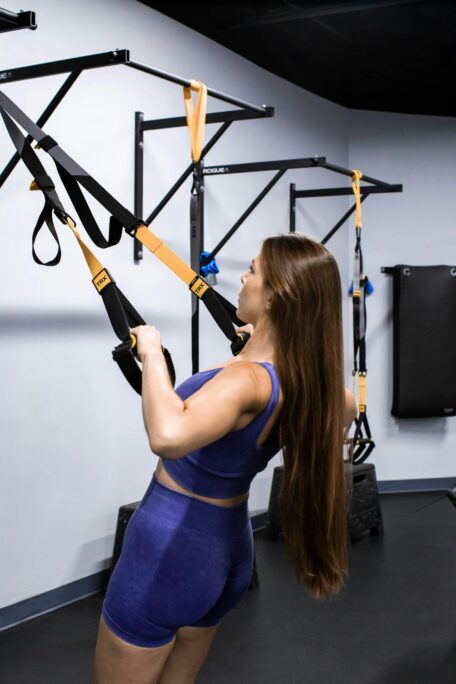
Suspension Training: The advantages and disadvantages As a fitness course provider, it is vital that we are keeping up to date with the latest industry trends. One of the more popular trends over the last decade has been the introduction of suspension training. Suspension training is considered a resistance based training method involving a system of ropes, straps and handles to allow the user to work against their own bodyweight. Some of the brands associated to suspension training devices include TRX and CrankIt, both of which have their own advantages and disadvantages. In my experience, both devices work well and will be more than capable of providing clients with an engaging, enjoyable, yet challenging training session. From the Personal Trainer point of view, one of the great advantages of utilising suspension training devices is that they are a portable piece of equipment which can be adapted to almost all training scenarios. If you are a PT who works within the gym environment you can quite easily anchor them from many exercise machines. In addition to this, if you are a PT who works outdoors they have the flexibility of being able to be anchored from trees, playground equipment, light poles or goal posts. Essentially wherever you run your sessions, there will no doubt be an option available to utilise suspension training methods. Beyond this, suspension training methods also allow the Personal Trainer to program for many different forms of basic resistance exercises including; squats, push ups, pull ups,  and the plank as well as more complex movements such as squats jumps, lunge jumps, the pike and the standing dive just to name a few. If you’re looking to include some cardiovascular exercises into the program then the suspension training device can also help with exercises such as sprinters and mountain climbers. All in all suspension training should be considered is an excellent, versatile tool for all Personal Trainers. From the clients point of view this training method has many advantages. One of these advantages is the development of functional strength. Functional strength, is that considered to be important to activities of daily life and is best demonstrated in suspension training through the ability to move in multiple planes. As human beings we are not robots, we do not only move forwards and backwards, we also have the capacity to move side to side and rotate. Suspension training exercises allow you to move through each of these phases individually and in some cases more than one plane at a time. Look up the rotational pull! Another advantage includes greater amounts of core activation and stability due to the fact that these exercises are unsupported and the core muscles need to be activated to protect the lower back. This increased activation of stabiliser muscles around the core as well as at other joints such as the shoulder and hip may also assist with the prevention of injury. On the negative side, suspension training exercises, due to their unsupported nature can be quite complex and not always the first choice for beginners to resistance training. The following considerations should be made when working with suspension training devices. These include; breathing, tension in the straps and positioning of the body. Clients are encouraged to focus on breathing technique during each exercise. It is recommended that the client breathe in through the nose during the relaxation phase and breath out through the mouth on the exertion phase. Tension should be maintained in the straps at all times throughout the exercise to avoid injury and the client should look to avoid rounding of the lower back and hunching of the shoulders at all times. Suspension training opens up a huge array of exercises and uses to a personal trainer. If you’d like to know more, we offer both an online and face-to-face course on the subject, aptly named Suspension Training for Personal Trainers. You can find out more by visiting our workshops page. The post Suspension Training: The advantages and disadvantages appeared first on Australian Fitness Academy. As a fitness course provider, it is vital that we are keeping up to date with the latest industry trends. One of the more popular trends over the last decade has been the introduction of suspension training. Suspension training is considered a resistance based training method involving a system of ropes, straps and handles to […] The post Suspension Training: The advantages and disadvantages appeared first on Australian Fitness Academy. khore{authorlink}https://www.fitnesseducation.edu.au/blog/personal-training/suspension-training-the-advantages-and-disadvantages/Australian Fitness Academy Training tomorrow’s fitness leaders… https://www.fitnesseducation.edu.au/wp-content/uploads/2020/12/favicon-1.png

Suspension Training: The advantages and disadvantages Read More »

How to Push Up: Proper Bodyweight Push Up Technique

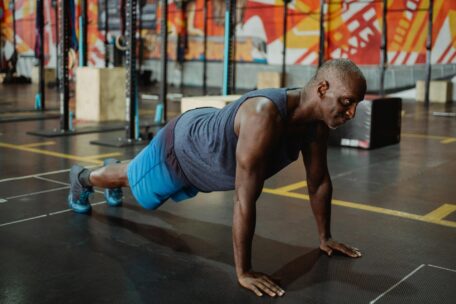
How to Push Up: Proper Bodyweight Push Up Technique A bodyweight push up is one of the most effective functional exercises to enhance our upper body strength, and the best part is, you can do it anywhere. However, it can be a difficult exercise to master, as keeping that neutral spine throughout can be a challenge for most when developing a proper push up technique. Starting Position: The best way to start your push up is to make sure that you get the exact position required. To do this, lie on your stomach and place your hands directly under your arm pits. From here, move your hands away from your body by exactly one hand—this will give you a good base start position. Coming up onto your toes: You should try to imagine that you have a broom stick on your back, and that your head, upper thoracic (upper back) and top of the pelvis are all touching the broom stick with only a slight gap at your lumbar spine. This will give you your neutral spine, and will keep your arms directly in line with your shoulders. Push Up Teaching Points Begin in prone position on the floor with your arms slightly wider than shoulder width Arms should be directly under the shoulder with soft elbows Body in neutral position with even balance throughout both hands and toes Concentric Phase – pushing through the palm of the hands and keeping neutral position. Contact the chest muscles and straighten the arms Breathing out during the concentric phase Eccentric phase – slowly lower your body by bending through the elbows and keeping neutral alignment until your chest is almost at the floor Breathing in as you come down Common Errors Placing the arms forwards in line with the head rather than the shoulders, causing a weaker stance and putting a lot of pressure on the shoulders Loosing alignment of neutral spine – increased lumber lordosis (sagging bum downwards) increased thoracic kyphosis (arching of the middle of the back) Not moving through the elbows or bringing the chest to the ground, cause the neck to go forwards Push Up Variations Knee Push Up – same technique however on knees rather than toes. Wall Push up – Use a wall as the base rather than on the ground. Decline Push Up – Placing toes on a bench and hands on the ground. Bosu Push Up – Placing your hands on a Bosu. Push Up Clap – Plyometric movement adding in a clap when coming up through the concentric phase.   By taking one of our fitness courses, you’ll be able to learn a wide array of exercise techniques and a whole lot more!   What is a body weight push up? A push up using no additional weights or equipment – just the weight of your body What are some tips for doing a push up? 1) Lie on your stomach and place your hands under your arm pits. 2) Move your hands away from your body by exactly one hand 3) Try to image you have a broom stick on your back to keep a neutral spine What are some push up variations? Knees – push up but rest some weight on your knees Wall push up – use a wall instead of the ground Decline – Place toes on a bench and hands on the ground Bosu – Place hands on a Bosu Push up clap – clap your hands through the concentric phase of the push up The post How to Push Up: Proper Bodyweight Push Up Technique appeared first on Australian Fitness Academy. A bodyweight push up is one of the most effective functional exercises to enhance our upper body strength, and the best part is, you can do it anywhere. However, it can be a difficult exercise to master, as keeping that neutral spine throughout can be a challenge for most when developing a proper push up […] The post How to Push Up: Proper Bodyweight Push Up Technique appeared first on Australian Fitness Academy. khore{authorlink}https://www.fitnesseducation.edu.au/blog/personal-training/how-to-push-up-proper-bodyweight-push-up-technique/Australian Fitness Academy Training tomorrow’s fitness leaders… https://www.fitnesseducation.edu.au/wp-content/uploads/2020/12/favicon-1.png

How to Push Up: Proper Bodyweight Push Up Technique Read More »

Start rounding up new Personal Training clients

Start rounding up new Personal Training clients Are you a newly qualified Personal Trainer? Are you an experienced Personal Trainer with some space for new clients? Do you want some more new clients? Do you want to start a new bootcamp? If you answered yes to any of those questions, now is the perfect time of the year to put some extra effort into signing up new clients. For many people, the new year includes resolutions to become fitter and healthier. In order to make this resolution a reality, they’ll need your help – though they may not know it! You have to convince them that you are the person that can make it happen. We suggest you adopt the following techniques in marketing material, on social media, or when talking face to face or over the phone. 1. A reminder of past years No doubt this will not be the first time many potential personal training clients have tried to make getting healthy a new year’s resolution. Subtly remind them that in order to be successful in their new healthier self, they will need a personal trainer, and that personal trainer is you 2. Promote your success stories Before and after photos work great, as it shows your success in the past. You can also write or talk about your own personal journey to fitness and how you required a PT, or talk about how you’ve changed a friend’s life for the healthier. Using real stories is a great way to prove your credentials and convince people to use you as their personal trainer. 3. Call past clients Now might be the best time of the year to call any clients you used to work with that gave up at some point. They might have made that commitment to start again, and this time they mean it. Encourage them to come back to you as a personal training client. Make the call personal, and remind them of the progress they were making and the success you could achieve together. 4. Talk to local businesses Exercising in the morning is a great way to wake the body and get the endorphins firing. This is great for work morale and efficiency. Therefore, convincing local businesses that this is a relatively cheap way to improve their staffs’ work rate and happiness is quite easy. By hosting a bootcamp for the company, they can pay you $200 for the hour. If 20 of their staff participate, that’s merely $10 a head for that local business, and an extra $200 for you. You also have the opportunity to make some of the staff more permanent clients. 5. Send out emails Use email marketing to blast persuasive emails to every email address you can get your hands on. This is a low effort way to bring in more clients that you may not have spoken to because you didn’t have time. It’s also a great way to warm up your leads before calling them. 6. Use social media advertising With social media advertising you can set the ads to only be shown to a very specific audience, those who may be interested in becoming your personal training client. The level of specificity is huge, you can go right down to people who live near to you, and have a specific interest, such as weight loss or muscle gain. You then create specific ads to advertise to these segments. For example, to those wanting to lose weight, advertise your ability to help them with that. There are many ways to build up your client list, and putting some effort into that aspect of your business at this time of the year will reap greater rewards. Anything you have tried in the past that has had success, do it again now with extra effort. If you’re not yet a personal trainer but want to become one, check out our Personal Trainer Course, and start your journey towards a healthier and more fulfilling career. The post Start rounding up new Personal Training clients appeared first on Australian Fitness Academy. Are you a newly qualified Personal Trainer? Are you an experienced Personal Trainer with some space for new clients? Do you want some more new clients? Do you want to start a new bootcamp? If you answered yes to any of those questions, now is the perfect time of the year to put some extra […] The post Start rounding up new Personal Training clients appeared first on Australian Fitness Academy. khore{authorlink}https://www.fitnesseducation.edu.au/blog/personal-training/start-rounding-up-new-personal-training-clients/Australian Fitness Academy Training tomorrow’s fitness leaders… https://www.fitnesseducation.edu.au/wp-content/uploads/2020/12/favicon-1.png

Start rounding up new Personal Training clients Read More »

How to travel the world as a Personal Trainer

How to travel the world as a Personal Trainer In order to travel the world without a serious amount of money saved up, you’ll need to work throughout your trip. You might think that in order to work in other countries you’ll need to be prepared to work in hospitality or some other menial job, or perhaps be a writer or designer that can work from a laptop anywhere in the world. I’m going to tell you this isn’t the case. More and more people are taking their skill set abroad and finding work. And Personal Training is a skillset that is very appealing to employers the world over. As a Personal Trainer wanting to travel the world, the first thing you might be thinking is that you won’t know the language of the country you’re planning on travelling to, so how can you train someone? But fear not, it is possible, and you could be living a life in paradise doing the job you love. What’s better than that? Even your travel expenses can be paid by working as a Personal Trainer. Here are some things to be ready for and the types of jobs available to the travelling Personal Trainer. Are you qualified enough? Before taking the leap, you’ll want to make sure you are prepared to travel as a Personal Trainer. Firstly, if you don’t have them already, you will need to get your qualifications in Personal Training. With the Australian Fitness Academy our Personal Trainer course will enable you to get qualifications of Cert III & IV in Fitness, which means you can work as a nationally accredited personal trainer. With the Australian Cert III & IV in Fitness you’ll then be able to work in the following countries by using the Global Portability Matrix: The Caribbean The United States South Africa United Arab Emirates Canada New Zealand Belgium The Netherlands Hungary United Kingdom Ireland Lebanon Poland Most of Europe in fact That’s not all, though. Your qualifications will be more than enough in many other countries to be hired as a Personal Trainer. On top of that, lots of hotels and resorts that have guests coming from English speaking countries, or any of those countries listed above, will recognise your qualifications and want to hire an English speaking fitness instructor or personal trainer. Even if your plan is to simply run fitness classes, which in Australia only requires a Cert III in Fitness, it is definitely worth getting both Cert III & IV in Fitness. This will give you a much better chance of employment. It also opens up many more opportunities. As well as the qualifications mentioned above, you should look to gain some experience leading classes or training clients if you can, although it’s not a requirement for many employers, it will make you more employable. If you want to lead group classes you could also get qualifications with companies like LesMills or Zumba, as these classes can be quite popular in many countries. What jobs are out available to a Personal Trainer travelling? Hotel or Resort Fitness Class Instructor What many people forget when they think about travelling the world, is that the countries they want to travel often have hotels and holiday resorts built for western and English speaking travellers. Some of which are quite luxurious. These hotels and resorts often offer daily exercise classes like aerobics, spinning or strength training to their guests and need someone like you to run them. The turnover of staff can be quite quick, as many trainers are travelling the world too. This means jobs often open up frequently. Therefore, if you have the qualifications and some experience teaching classes you can put your name down and start working as a fitness class instructor. Hotel or Resort Gym Instructor or Personal Trainer Similar to the above, many luxury hotels or resorts also offer personal training as an option to their guests. Or at least offer a gym that’ll need someone to look after. As you can imagine, being someone’s Personal Trainer for a short period of time means certain skills are required: you’ll have to be good at assessing a guest’s current exercise program and level of fitness, and then develop a personalised exercise program that will help them maintain their goals and around their holiday. To find these sorts of jobs, head to big hotelier chains or resort chains, usually more high-end hotels and resorts, and search on their website for careers or jobs. You’ll find numerous jobs available within the fitness realm. And if you get in, there’s a good chance that you’ll be able to hop between their hotels and resorts all over the world. Cruise Ship Personal Trainer Again, many cruise ships will offer their guests complimentary personal training sessions, as well as fitness classes. You’ll be able to run these sessions as well as carry out other fitness related jobs like gym and spa orientations. If you want to travel from one place to another for free, you can use the cruise ship option to get you there. You’ll have free board, food and most of the entertainment available, and many will often pay you too. Just search Google for cruise liner companies and check their websites out for jobs. We have a listing of the Steiner company here who offer these types of jobs. Travel with a client If you are lucky, you might be able to get a wealthy client who travels the world. Although these are rare, and you won’t have the choice of where you’re going, if you put out the word that you’re willing to travel and train someone, you might get some bites. Make it known and someone within your network might have a client that wants such a Personal Trainer, and you’ll be recommended. This is a rare job to come across, but if you have that flexibility, it can’t hurt to put the word out. Fitness Retreats Also called fitness holidays or

How to travel the world as a Personal Trainer Read More »

What can be done to keep business booming when it gets wet and cold?

What can be done to keep business booming when it gets wet and cold?   In the months before the summer period and after the hype of New Year’s resolutions, demand for qualified, skilled and successful personal trainers soars beyond belief. There is no doubt that in anticipation for the hot summer months and the prospect of a promise, personal trainers have no trouble keeping their business booming. However, it is the mark of a smart and responsible personal trainer to look beyond these periods of the year and sets plans for the colder months – exactly what we are facing in Australia at present. When the sun begins to set early and the mornings are cold, how can you ensure your personal training business continues to tick over? Of course, personal trainers who motivate and engage with clients are likely to have loyal customers over the winter period. This said, there is no excuse not to try to expand your operations during the wet and cold months. Here are three ways to lift personal training business performance. 1) Get engaged with social media Social media is a way to engage customers over winter. One of the reasons why people begin to look at personal trainers and gyms to get fit before summer is that they see friends and family on social media looking to improve their health. Whether this is in the form of a picture of themselves at the gym or purchasing new active wear clothes, social media has the power to influence. As such, this is where personal trainers can benefit during the colder months, or any month really through effective use of social media. Social media is just one of the technologies that personal trainers must adopt and use to address changing consumer preferences. Certainly, a good social media presence should factor into your plan. Using success stories from over the summer to showcase other clients achievements, providing general tips and advice on how to get and remain fit and healthy through winter and creating/promoting special deals that the audience can share. By continuing to be in the thought process of consumers over winter, personal trainers have a greater chance to see high demand. 2) Get creative with session planning For many Australians, the opportunity to get out of the house and train in parks, beaches and other locations is enough to keep them engaged over the summer. However, when it becomes harder to leave bed or becomes less enticing to go to the park after sunset, personal trainers might see a drop-off in attendance and business. As such, personal trainers who run their business in the great outdoors must take this into account over winter and schedule sessions that are creative and keep customers interested in fitness. In fact, just because a session is forced inside doesn’t mean it has to be boring. Allowing customers to use equipment and tools that they haven’t encountered before is a great way to improve interest. This could include free weights, resistance bands, kettlebells. Alternative forms of fitness using Pilates, yoga and medicine ball experiences may also provide that point of difference to both retain and attract customers.   3) Offer positive incentives Winter deals can promote your brand during the colder months. Over the winter period, there can definitely be a drop in Australians that are actively seeking a personal trainer. As such, it is your job to reach potential customers and give them a reason to work with you now. If success stories and testimonials don’t work, perhaps a financial offer may sway their opinion. This is where positive incentives such as coupon marketing can benefit your cause. It doesn’t have to be a major discount, but enough to get potential customers talking about your brand and what you can offer. However, be careful not to fall into the trap of heavily discounting your services all the time. You service must remain of value. Having said this, a good understanding of the ‘sweet spot’ for rates is good for a personal trainer to know. You can work this out by finding out what other PTs in your area are charging for their services and what people are willing to pay. Over the winter period, there can definitely be a drop in Australians that are actively seeking a personal trainer. It’s also always worth offering some sort of referral scheme to your current happy clients! Encourage them to refer a friend and every friend referred who starts training with you means your client gets a discounted session! If you are a good personal trainer, who communicates well with your clients and makes them feel good, you will find in time word of mouth is your most valuable form of marketing!   Australian Fitness Academy – committed to your success As well as offering an entry point into the world of personal training with our Certificate III & IV in Fitness courses, we at Australian Fitness Academy work hard to ensure your career path is smooth. Whether this is supporting you find a job or develop your own businesses, we are committed to helping you reach your full potential. For more information on what we offer, feel free to get in touch with us today. The post What can be done to keep business booming when it gets wet and cold? appeared first on Australian Fitness Academy. During the coldest months of the year, personal trainers need to keep a focus on managing their business performance, especially if their business is outdoors!. Read on to find out more. The post What can be done to keep business booming when it gets wet and cold? appeared first on Australian Fitness Academy. khore{authorlink}https://www.fitnesseducation.edu.au/blog/health/what-can-be-done-to-keep-business-booming-when-it-gets-wet-and-cold/Australian Fitness Academy Training tomorrow’s fitness leaders… https://www.fitnesseducation.edu.au/wp-content/uploads/2020/12/favicon-1.png

What can be done to keep business booming when it gets wet and cold? Read More »

Strength training for women over 50

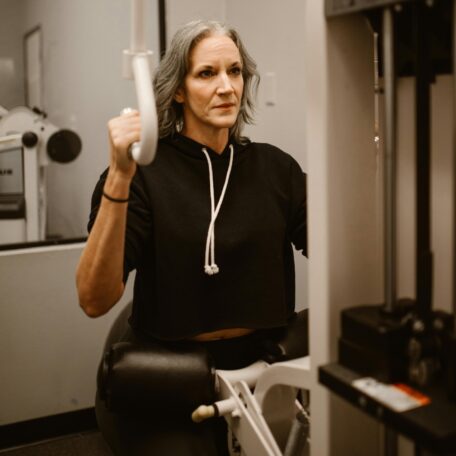
Strength training for women over 50 “It’s as critical to your health as mammograms and annual doctor visits.” – Holly Perkins, Certified Strength and Conditioning Specialist What is strength training? Strength training (also called resistance training or weight training) involves applying resistance to muscular contraction to build your muscle strength and endurance, using free weights, weight machines, resistance bands or even your own body weight. An effective program will have you progressively increase the weights as you become stronger, so that your muscle strength gradually improves. The benefits of strength training for women after 50 You are never too old to gain muscle strength. Strength training has mental and physical benefits for people of all ages. The documented benefits of training with weights after turning 50, include: Impact of strength training Personal benefits Improved posture, mobility, flexibility and balance Makes you less likely to fall Supports your physical independence Allows you to fully participate in the activities of daily living Improved muscle strength and tone Protects your joints from injury Increased muscle-to-fat ratio Helps you to manage your weight Prevention/improvement of chronic conditions Helps you to manage your symptoms of diabetes, heart disease, arthritis, osteoporosis and depression Increased bone density and strength Reduces your risk of osteoporosis Improved sleep Helps you to avoid insomnia Increased confidence and self-esteem Makes you feel better about yourself Key health concerns for training over 50 Most women reach menopause between the ages of 45 and 55. For some women, the effects of menopause can significantly disrupt their daily activities and sense of well-being. Associated with menopause are increased risks of osteoporosis (bone thinning) and cardiovascular disease, even in women without any previous significant history. Women lose lean mass tissue at the rate of 5% per decade from their 30s, and will generally find they gain more belly fat after turning 50.   Setting up a strength training program for women over 50 Implementing a pre-exercise screening tool It is important that a pre-screening assessment is undertaken, especially for those new to fitness training and for older adults. A screening process will help to identify those women over 50 with medical conditions who may be at greater risk when exercising. AUSActive advocates the use of a pre-exercise screening tool and strongly advise you to consult with health professionals before starting a new fitness program. 2. Determining baseline fitness assessment Older adults should take a baseline fitness assessment to determine their current exercise tolerance and to define their limits. If it is to be effective, a strength training program should be properly matched to the individual, with exercises prescribed at the intensity, frequency, and duration that the person can perform. 3. Designing a program The Australian Government’s Department of Health has released Australian Physical Activity and Sedentary Behaviour Guidelines. The recommendations for older adults include light strength training 2 to 3 times a week, using exercises to work all the major muscle groups of your body (i.e., legs, hips, back, chest, abdomen, shoulders and arms). It is important for older adults to apply only low levels of impact on the muscles to avoid injuries. Elastic band exercises, for example, are ideal. 4. Starting strength training Take time to learn the skills and correct techniques for exercising and lifting weights. Develop awareness of how to exercise safely. This will be very important for reducing your risk of injury and making your program effective. A typical beginner’s program will involve 8 to 10 exercises across the body’s major muscle groups in 2 to 3 sessions per week. The average amount of repetitions for each exercise is usually 8 to 12. There is a range of strength exercises available for you to work into your program. Be guided by your fitness instructor. Good instruction will advise you on why you are doing each exercise and learn how to do each exercise properly. For example, check out Holly Perkins’ 10 best strength-training moves for women over 50 (5)— along with her explanations about what makes each one so vital. 5. Monitoring progress It is important to maintain a strength training program that results in muscle gains. Sometimes, a doctor or health care provider neglects to emphasise this. Under-dosed strength training programs are relatively ineffective and should be avoided. Instead, your program should have a goal of increased strength as compared to your original baseline measurements. The aim is to maintain good technique and use a resistant force/weight that will challenge you. Regular adjustments to the training variables (frequency, duration, sets and repetitions) will make you progress and improve.   Tailoring a program for women over 50 Foster a safe and supportive environment Provide opportunities to socialise (e.g., over a cup of coffee after each session) Allow time for muscle recovery between sessions – at least 48 hours is usually required. Integrate cross-training with strength training, to support cardiovascular and aerobic development. Provide ongoing education, training and monitoring of skills and techniques for performing strength exercises effectively and safely.   If you’re interested in taking the first step towards a fitness career, check out our Personal Training Course. The post Strength training for women over 50 appeared first on Australian Fitness Academy. “It’s as critical to your health as mammograms and annual doctor visits.” – Holly Perkins, Certified Strength and Conditioning Specialist What is strength training? Strength training (also called resistance training or weight training) involves applying resistance to muscular contraction to build your muscle strength and endurance, using free weights, weight machines, resistance bands or even […] The post Strength training for women over 50 appeared first on Australian Fitness Academy. khore{authorlink}https://www.fitnesseducation.edu.au/blog/personal-training/strength-training-for-women-over-50/Australian Fitness Academy Training tomorrow’s fitness leaders… https://www.fitnesseducation.edu.au/wp-content/uploads/2020/12/favicon-1.png

Strength training for women over 50 Read More »