Collagen Protein vs. Whey Protein (& Why I Take Both!)
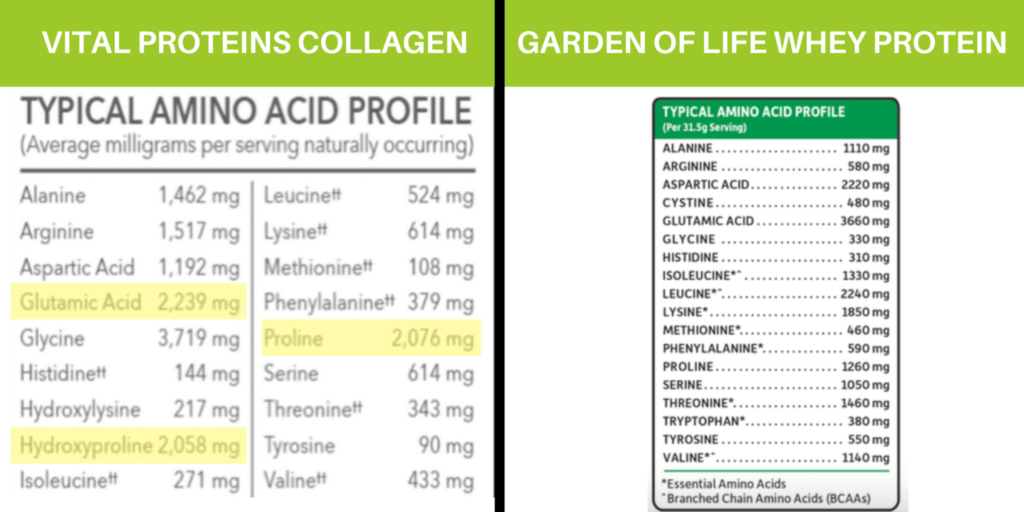
Collagen Protein vs. Whey Protein (& Why I Take Both!) Learn the differences of collagen protein vs whey protein to understand the unique benefits of both, and why you may want to incorporate both into your routine. After decades as a fitness instructor and women’s health coach, I’m going to break down the protein powder combination that works best for me. Both collagen and whey proteins are beneficial to your joint and muscle health (especially if you exercise often). But, women ask me all the time, what exactly is the difference between collagen protein vs. whey protein? The main difference between collagen and whey lies in the amino acid profile. Each contains different profiles of amino acids, meaning you will receive different benefits depending on which one you take. I will mention right away that I use collagen AND whey protein powder every day. I’m going to explain both protein sources, their benefits, and why I take each of them as a post-menopausal woman. Collagen Protein vs. Whey Protein: What’s the Difference? Both collagen protein and whey protein offer substantial benefits. The main difference between the two comes down to their amino acid profiles. Check out the example below (remember that 1,000 milligrams are equivalent to 1 gram): Here, Vital Proteins Collagen contains a high value of glutamic acid (2.2 grams), hydroxyproline (2 grams), and proline (2 grams). These particular amino acids primarily benefit your hair, skin, and nails. On the other hand, Garden of Life Whey Protein contains a high value of isoleucine (1.33 grams), leucine (2.24 grams), and valine (1.14 grams), which are very beneficial for muscle recovery. Additionally, collagen contains eight out of the nine essential amino acids, as opposed to whey which contains all nine. Overall, collagen and whey proteins both offer great health benefits. Whichever one you choose should be based on your own personal needs. Whey Protein Helps boost muscle growth and help muscle recovery after a workout. Collagen Protein Helps ease joint pain or improve your skin, hair, and nails. The good news? You can take collagen and whey protein simultaneously to maximize their combined muscle and joint benefits. This should boost your overall health and nutrition. What is Collagen? Collagen is the most abundant protein in your body, making up around 30 percent of your total body protein and 70 to 80 percent of your skin. It helps your body form the connective tissue found in your skin, bones, muscles, tendons, and cartilage. Collagen helps these body parts stay strong—without it, they lose elasticity and the ability to function properly. The collagen protein, which is naturally produced by the body, is made up of 18 beneficial amino acids—the molecules that combine to form proteins. Three key amino acids found in collagen include glycine, proline, and hydroxyproline. They account for 57 percent of its total amino acids. The reason they are so important? Amino acids are the building blocks of protein, which your body needs to maintain functionality and good health. Along these lines, you may be wondering—what are collagen peptides? Collagen peptides are basically collagen protein in a more broken-down form. They are small pieces of animal collagen that are more easily digestible. Often, the two phrases “collagen peptides” and “collagen proteins” are used interchangeably. The Natural Decline in Collagen Collagen production starts declining as we age. If you are perimenopausal or postmenopausal, you’ll want to read this! Collagen supplements can help maintain younger-looking skin and healthy joints. Studies show that women’s skin loses about 30% of its collagen during the first five years of menopause. After that, the decline is more gradual. Women lose about 2% of their collagen ever year for the next 20 years. As collagen diminishes, our skin loses it firmness and begins to sag. A decrease in collagen can lead to wrinkled or sagging skin, hollowing of the eyes, weakened muscles, stiffer joints, digestive issues, and problems with blood flow. Of course, supplements are also a popular option among those looking to boost collagen production. Benefits of Collagen Protein Supplements Collagen peptides are essentially broken down forms of collagen responsible for maintaining the strength and elasticity of your skin, hair, nails, joints, and more. As I mentioned, as we age, our natural collagen production declines. This leads to wrinkles, joint pain, and other signs of aging. Collagen peptides are derived from animal sources such as bovine or marine collagen . They are hydrolyzed, meaning they’re broken down into smaller, more easily digestible molecules. One of the primary benefits of taking collagen peptides is their ability to support skin health. Studies suggest that collagen supplementation can improve skin elasticity, hydration, and overall appearance. It can reduce the appearance of wrinkles and promoting a more youthful complexion. Another benefit of collagen peptides is to support joint health. It does this by promoting the production of cartilage, the connective tissue that cushions joints and prevents friction. This can help reduce joint pain and stiffness, particularly in individuals with conditions like osteoarthritis. Collagen peptides may also benefit hair and nail health, promoting stronger, thicker hair and reducing brittleness and breakage in nails. I add a scoop of collagen powder to my AG1 greens every morning and shake it up. For me it’s the easiest way to stay consistent. However, many women tell me they add it to their coffee or smoothie. Just remember that collagen supplements are not a magic bullet. They work best when combined with a healthy diet and lifestyle. What is Whey Protein? Milk is comprised of two proteins: whey and casein. Whey is the liquid left behind during the cheese-making process. It is extracted and concentrated into a powder, which can be found in protein supplements such as shakes, drinks, powders, gels, and energy bars. Whey is a fast-absorbing protein that contains all nine essential amino acids your body needs to maintain good health. It helps with building muscle, repairing tissue, and boosting your immune system. It also offers the highest concentration of branched-chain amino acids (BCAAs)
Collagen Protein vs. Whey Protein (& Why I Take Both!) Read More »