Health Coach vs Life Coach: What’s the Difference?
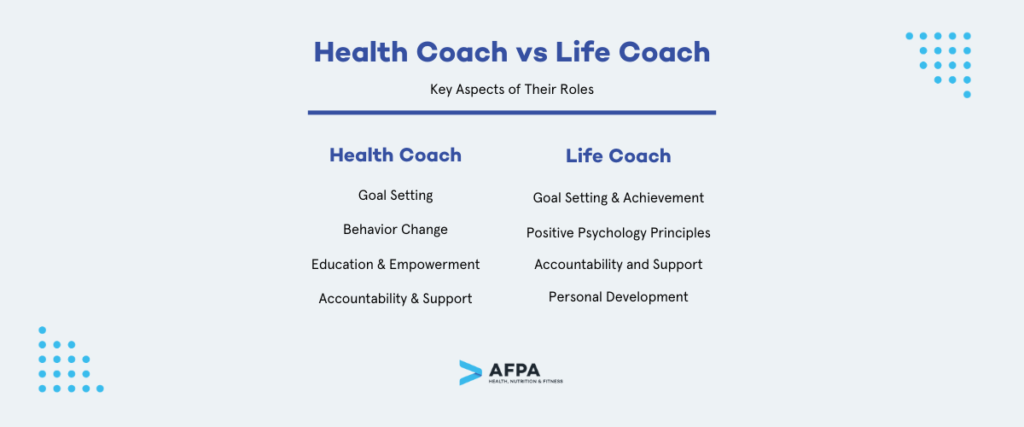
Health Coach vs Life Coach: What’s the Difference? Are you curious about becoming a coach? Health coaches and life coaches are two of the many types of coaches out there who strive to improve the well-being of others. However, health coaches and life coaches are often confused with one another. Although they work in tandem to enhance people’s health, these two positions focus on different aspects of that process. A life coach helps people reach their professional and personal objectives, whereas a health coach helps people improve their physical health, diet, and way of life. If you are thinking about becoming a coach, this difference is critical. This article gives you the rundown on what it takes, how to choose the right type of coaching for your wants and needs, and how AFPA is revolutionizing the industry with its Certified Master Health and Wellness Coach Program, created in response to the growing awareness of the importance of both physical health and personal fulfillment in today’s society. What is a Health Coach? A health coach is a professional who focuses on guiding clients towards achieving their health goals. They work with individuals who want to make positive changes in their physical fitness, dietary habits, and overall well-being. Health coaches use evidence-based strategies to help their clients develop sustainable lifestyle changes. Their approach is holistic, considering all aspects of health, including physical, mental, and emotional well-being. Key Aspects of a Health Coach’s Role Goal Setting: Health coaches help clients identify and set specific health goals that align with their needs and aspirations. This may involve weight loss, improving fitness levels, managing chronic conditions, or adopting healthier eating habits. Behavior Change: Health coaches assist clients in making behavior changes that support their health goals. They provide guidance and support in areas such as exercise routines, meal planning, stress management techniques, and sleep optimization. Education and Empowerment: Health coaches educate clients about the impact of lifestyle choices on overall health and well-being. They empower clients by providing them with the knowledge and tools necessary to make informed decisions about their health. Accountability and Support: Health coaches provide ongoing support and accountability to help clients stay motivated and on track with their goals. They serve as a source of encouragement during challenging times and offer strategies to overcome obstacles. What is a Life Coach? Unlike health coaches who focus on physical health and wellness, life coaches concentrate on broader aspects of personal development. Life coaching is centered around helping individuals achieve personal and professional goals by leveraging principles from positive psychology. Key Aspects of a Life Coach’s Role Goal Setting and Achievement: Life coaches work with clients to identify goals in various areas of life, such as career, relationships, personal growth, or work-life balance. They assist clients in creating actionable plans to achieve these goals by breaking them down into smaller, manageable steps. Positive Psychology Principles: Life coaches use principles from positive psychology to help clients cultivate a positive mindset, build resilience, and enhance overall well-being. They focus on strengths, values, and personal growth to empower clients in their journey towards self-improvement. Support and Accountability: Life coaches provide support and accountability to their clients as they work towards their goals. They offer guidance, encouragement, and feedback in a safe and non-judgmental space. Life coaches help clients overcome limiting beliefs, self-doubt, and obstacles that may impede progress. Personal Development: Life coaching involves helping individuals develop personally and professionally. Coaches may provide resources, tools, and techniques to enhance skills such as communication, time management, decision-making, and self-reflection. It’s important to note that while health coaching and life coaching have distinct focuses, there can be overlap between the two. Some health coaches may incorporate elements of life coaching into their practice to provide a more comprehensive approach to wellness. Similarly, life coaches may address aspects of physical health when it is relevant to their clients’ goals. By understanding the differences between health coaching and life coaching, individuals can make informed decisions about which type of coach aligns with their specific needs and aspirations. Whether seeking support for physical health or personal development, working with a coach can be a valuable step towards achieving desired outcomes and enhancing overall well-being. Understanding Health Coaching A health coach is a professional guide and mentor who empowers individuals to take charge of their health and achieve their wellness goals. The role of a health coach extends beyond offering advice; it involves educating clients on creating sustainable lifestyle changes that foster long-term health. This unique support system is especially critical in addressing chronic diseases, where prevention plays a pivotal role. Chronic Disease Prevention Chronic diseases such as obesity, diabetes, and heart disease pose significant health risks and are often preventable through lifestyle modifications. Health coaches play an instrumental role in chronic disease prevention by: Encouraging regular physical activity. Advocating for nutrient-dense, whole-food diets. Promoting stress-reducing activities. Assisting clients in tobacco cessation and moderating alcohol consumption. By addressing these key factors, health coaches help reduce the prevalence of chronic conditions, enhancing the quality of life for their clients. Evidence-Based Methods Health coaches utilize evidence-based methods to facilitate positive changes. These methods include: Motivational interviewing to bolster a client’s motivation and commitment to change. Goal-setting techniques that are Specific, Measurable, Achievable, Relevant, and Time-bound (SMART). Cognitive-behavioral strategies to modify unhealthy thinking patterns and behaviors. These scientifically supported approaches ensure that health coaching interventions are grounded in research that promotes effective lifestyle changes. Nutrition and Fitness Focus The focus on nutrition and fitness is central to health coaching. Coaches provide insights into how dietary choices affect one’s health while tailoring education to each client’s unique needs—a concept known as bio-individuality. Similarly, personalized fitness education and accountability can be provided not only to improve physical condition but also to be enjoyable and thus sustainable. Certification Requirements Certification ensures that health coaches are equipped with the knowledge and skills necessary to provide high-quality support to their clients. To become a board certified health coach, one must meet
Health Coach vs Life Coach: What’s the Difference? Read More »