
Performance

Auto Added by WPeMatico

Full Range of Motion FOREVER Forget 90-Degrees

Full Range of Motion FOREVER Forget 90-Degrees Full Range of Motion vs. Partial Range of Motion Training Is this even a debate? Full range of motion, FOREVER. Forget this 90-degree nonsense that defies every established principle of biomechanics, movement anatomy, neurophysiology and motor skill development that’s been producing muscle, strength and resilience results for hundreds of years. But to avoid absolutist black and white “do THIS, not THAT” context, I believe that partial range of motion deserves a more nuanced discussion surrounding the range of motion spectrum, and how best to navigate it for gains across the board. But spoiler alert, ONLY training at 90-degree joint angles is just fucking dumb (my honest opinion)… We Are De-Evolving, Inside The Gym and Out I’d argue that people who strength trained 50 years ago were achieving BETTER results across the board than the confused, frustrated and information innondated person today scrolling a social media feed in search for the next fraudlent faker shilling a new quick fix. A big reason for this dubious de-evolution phenomenon is “new and innovative” coaches and training methods taking a steaming shit on the scientific theories and principles of human anatomy, physiology and movement mechanics. Like the established science doesn’t even matter. This is the training equivalent of feelings over facts. Today’s Training Reality Today, we’re seeing a rapidly de-evolving world population (highlighted by our epic struggles right here in America) with record levels of preventable pain, sickness and lifestyle diseases strickening people from all walks of life. But what does that have to do with the already outlying population of active gym goers and fitness fanatics? People on the cusp of being obese, struggling with orthopedic pain and injuries OR barely hanging on by a thread both physically and mentally are desperate AF. And no one loves quick fix solutions more than desperate people. Unwilling (or unable) to do the things that we know will produce results? Time to scroll instagram to find the next short-cut that will get me BIG, get me STRONG, get me LEAN or get me HEALTHY with the most minimal work involved. You’ll find a lot. But the only problem? None of this shit works, especially 90-Degree only training. The RIGHT Way To Train Range of Motion When did strength training get so fucking complicated? Remember the days where you went into the gym, had a plan to learn some big lifts, perfect your form and add a little weight to that great form as you got stronger and needed more stimulus? Those days are gone. But not because they don’t work to product results (this is actually the most effective way to get results if you want to get technical). It’s because people are too physically and mentally lazy to do the work, and too physically and mentally weak to buy into a longer term solution for success across the board. So what is this simple, predictable AND time tested progression I’m referring to? Full Range of Motion Strength Training 101 Here’s what a simplified strength training progression for muscle, strength and injury prevention SHOULD (and always has) look like: Establish a full range of motion movement pattern Load full range of motion movement pattern Continue to overload full range of motion pattern Specialize with extended and partial ranges of motion See steps 1-3? For a vast majority of people, this continual progression will take months, if not years of learning, developing, fine tuning and perfecting these 6 foundational movement patterns for proficiency, load capacity and overall skill development. And for many? They will never leave this cyclical steps 1-3 process, which is absolutely fine. We need to remember that movement is an ever changing landscape in the human body. Over time, due to chronic daily postural positions, change in lifestyle or work demands, sleep, stress, nutrition, hydration (and a host of other multi-factorial variables) things change. They get better, they revert back. Your body is a fluid environment. So being able to maintain step 1 for life is HUGE! And the greatest thing about establishing, maintaining and gaining range of motion for life is that it gives you the best ability to build muscle, get strong AND stay healthy. Yes, results STILL matter, contrary to popular belief on shiny object social media fitness and training. How Is 90-Degree ONLY Training Even A Thing? The above outlines a pretty clear cut scenario for intelligently training according to the range of motion spectrum. But this entire “debate” if you want to call it that begs the question, why is 90-degree only training even a thing? And who in their right mind would ever adhere to such absolutist (and incorrect) models of training and movement? The problem today is weak, frail, piss poor movers want to take the short cut and buy into this 90-degree bull shit because it’s inherently easier. It’s cheating, it’s half repping, it’s not full range of motion, and it’s a straight up ego stroke. Fits a majority of clowns perfectly. Is there a place for partial rep squats, deadlifts, presses, pulls? Absolutely. But this should serve as a more advanced method for intermediate to advanced trainees WHILE only making up less than 10% of total training volume througout a week. NOT the entire program, Jesus I can’t beleive I’m needting to address this once again. But here we are. Think of partial range of motion like sprinkles on a sundae. Is ice cream and chocolate sauce fucking delicious without beads of processed sugar shaken on top? Absolutely it is. Will covering your sundae with loads of sprinkles make the entire thing taste like shit? Likely, yes. But will the perfect amount (and the right flavor for the right person) enhance the taste? It can for sure. But the audacity that it takes to somehow say that 90-degree only training is superior to full range of motion is just unbelievable, literally. Whether you’re attempting to build muscle, get strong OR (especially) stay healthy, full range of motion

Full Range of Motion FOREVER Forget 90-Degrees Read More »
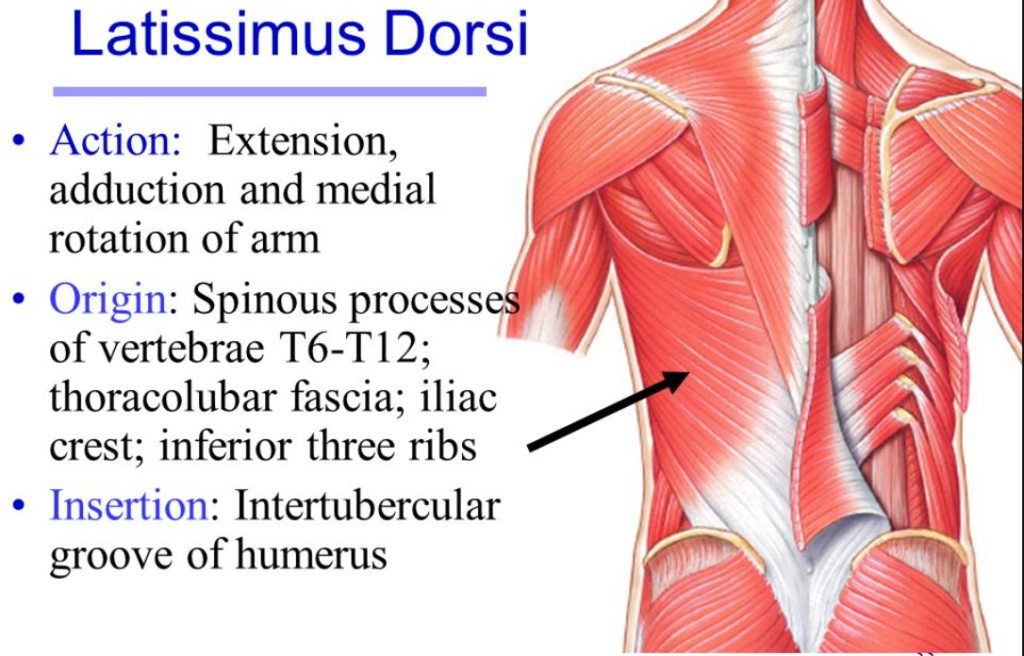
Lat Pulldowns Don’t Train The Lats? Debunking This Dubious Lat Pulldown Claim…

Lat Pulldowns Don’t Train The Lats? Debunking This Dubious Lat Pulldown Claim… Lat Pulldowns It’s In The NAME Claiming that Lat pulldowns don’t train the LATS is quite literally one of the dumbest things I’ve ever heard. Next thing you know we’ll have IG influencers claiming triceps extensions don’t train the triceps, biceps curls don’t train the biceps, abdominal crunches don’t train the abs, and calf raises don’t train the calves (unless you’re me)… This sensationalizing of the ineffectiveness of simple staple NAME SAKE exercises needs to stop. Because the reality is, biomechanics and human anatomy has NOT changed in hundreds of thousands of years. And certainly NOT in our lifetime. But instead of bitching and talking shit about dubious statements like the above, lets break down this incorrect claim with some more context… The “Isolated” Roll of The Lats In isolation, the lat’s textbook action is to adduct, extend and internally rotate the humerus (upper arm bone). If you dive into the anatomical actions of the lats one layer deeper you’ll learn that the lats also play a secondary roll in rotation and stabilization of the torso (upper and lower) along with the pelvis. But the “bro” action that many perseverate on is indeed the action of the upper arm relative to the rest of the body. The so called “isolated” action beloved by bodybuilders and booty chicks alike. But here’s the problem, muscles don’t function in isolation, they function in INTEGRATION. Especially the lats. The Complicated Shoulder Complex As the broadest attaching muscle in the human body, the lats are synergistically tied to the muscles of the upper back complex (comprised of 16 muscles around the shoulder blade) and also the pectoralis complex on the front side of the body. So simply put, in order for the lats to fire and create dynamic movement, the upper back AND the pectoralis groups must also be active playing rolls in dynamic stability and mobility to potentiate the lats to ultimately carry out their primary actions. Unless you’re dead or knocked unconscious and hooked up to electrodes or EMG’s, there truly is NO isolation. Not from a biomechanical perspective, and certainly not from a neuromuscular perspective. The brain is always on, and since the brain controls the body, we will ALWAYS have relative tension, recruitment and potentiation in muscles, especially those that have a local active mover in the vicinity. And since the lats are anatomically tied into the shoulder complex (comprised of 4 synergistic joints and countless muscles that work, overlay and interact together in a myriad of different positions around the most mobile joint in the human body, the glenohumeral joint) there is truly no great argument for lat isolation during training or exercise. So What About The Traditional Lat Pulldown Exercise? Respecting the synergistic nature of the lats, lets take a look at the traditional lat pulldown exercise (the original name sake exercise for lat development) knowing very well that the lats fire in ALL types of lat pulldown variations and derivatives (sorry, it’s just simple science). Trained in a pure vertical plane of motion (as many lat pulldown machines are setup) the shoulder blade’s rotation becomes more apparent and dominant, hence creating increased targeting at the upper back, and slightly less at the lats. BUT the lats are still working. Think of the lats, upper back and pecs “sharing” the load necessary to move a weight throughout a complete range of motion of an exercise. If we need 100% as a total to complete an exercise, that 100% is shared between these 3 key players. To what degree remains the question, and the foundation of this debate. If your goal is to get as strong as possible, then integrating as many muscular movers as possible into the lat pulldown exercise is going to be advantageous. This means bigger grip, more upper arms, and absolutely intense amounts of upper back recruitment to control that free floating shoulder blade on the thoracic cage. But for muscular hypertrophy (AKA bodybuilding), or trying to bring up a weak point or linchpin in the kinetic chain, there would be great benefit to getting MORE out of the lats, and having less recruitment from the other secondary muscular players in the movement itself. NOTE: It’s worth repeating that there no such thing as ISOLATION Making Lat Pulldowns More Lat Dominant Making a traditional lat pulldown more LAT dominant isn’t rocket science, it’s anatomical (and neurological science). Simply use a slightly “off” angle of pull with arms slight out in front of the torso angle to create more targeting at lats, and less at the upper back. And if you want to go one step further, freeing the hands in order to rotate more naturally, or preferentially, having the hands assume a more neutral (palms facing one another) position while incorporating the anteriorly directed plane of motion of the pull, can also reduce the amount of recruitment at the biceps and upper back, theoretically placing more directly over the lats.   In real time execution, this may look like leaning back slightly in traditional lat pulldown machine setups (where the cable is coming from above you and you’re seated with your knees under a pad) OR using a chest supported position on an incline bench with single OR double cables to achieve a more optimal angle of the lats to be the first line of action and the primary targeted musculature of the exercise. With the equipment options available today, there are a million and one different setups that can both target the lats to their full potential in the pull pattern, but also allow the vertical or “off plane” pulling pattern to get as strong as possible (as safely as possible on the shoulders) for training. Don’t be a slave to a single exercise variation, especially lat pulldowns. With the combination of the broad attachment points of the lats, and it’s synergistic relationship with the upper back and shoulder complex, there are

Lat Pulldowns Don’t Train The Lats? Debunking This Dubious Lat Pulldown Claim… Read More »