Back

EXERCISE:

1 WIDE GRIP CHIN UPS

2 SUPER-SET 2 OF THE FOLLOWING: ROWS DUMBBELL ROWS T-BAR ROWS

REP RANGES
WIDE GRIP CHIN UPS: 4 Sets to Failure
ROWS WEEK 1: 30 Warm Up, 12, 10, 8, 6
ROWS WEEK 2: 30 Warm Up, 8, 6, 4, 2
ROWS WEEK 3: 30 Warm Up, 12, 10, 8, 6
ROWS WEEK 4: 20, 15, 12

Our top stretches to avoid back problems

Our top stretches to avoid back problems Back problems are a prevalent issue that affects millions of people worldwide. Whether it’s due to a sedentary lifestyle, poor posture, or muscle imbalances, taking proactive steps to maintain a healthy back is essential. Regular exercise and stretching can help strengthen the muscles, improve flexibility, and reduce the risk of back pain and injuries. In this blog post, discover our top stretches to avoid back problems.   Cat-cow Stretch The Cat-Cow stretch is a simple yet effective exercise for promoting spinal flexibility and relieving tension in the back. Here’s how to do it:   Start on all fours with your hands directly under your shoulders and your knees under your hips. Slowly arch your back upward while dropping your head down, creating a “C” shape with your spine. Hold this position for a few seconds. Then, slowly lower your back and lift your head, creating a reverse arch in your spine. Repeat this motion 10-15 times, moving slowly and focusing on the stretch.   Bridge Pose The Bridge pose targets the lower back, glutes, and hamstrings, promoting strength and flexibility in these areas. Follow these steps to perform the Bridge pose:   Lie on your back with your knees bent, feet flat on the floor, and arms relaxed at your sides. Press your feet into the floor, engage your core, and lift your hips upward until your body forms a straight line from your shoulders to your knees. Hold the position for 20-30 seconds while breathing deeply. Slowly lower your hips back to the ground. Repeat this exercise for 8-10 repetitions.   Child’s Pose Child’s Pose is a restorative stretch that helps release tension in the lower back and promotes relaxation. Here’s how to do it:   Start on all fours with your knees hip-width apart and your toes together. Sit your hips back onto your heels while extending your arms forward, resting your forehead on the floor. Allow your spine to lengthen and relax, and take deep breaths, focusing on releasing any tension in your back. Hold this position for 30-60 seconds, or longer if comfortable.   Bird Dog Exercise The Bird Dog exercise strengthens the core muscles and improves stability, which is crucial for maintaining a healthy back. Follow these steps to perform the Bird Dog exercise:   Start on all fours with your hands directly under your shoulders and your knees under your hips. Engage your core and extend your right arm forward while simultaneously extending your left leg backward. Keep your hips and shoulders parallel to the ground and maintain a neutral spine. Hold this position for a few seconds, then return to the starting position. Repeat on the opposite side, extending your left arm and right leg. Aim for 10-12 repetitions on each side. Incorporating regular exercise and stretching into your daily routine can go a long way in preventing and alleviating back problems. Our top stretches to avoid back problems, mentioned in this blog post target various muscle groups, promote flexibility, and strengthen the core, ultimately contributing to a healthier and more resilient back. Remember, it’s essential to listen to your body and work within your comfort zone. If you have pre-existing back conditions or chronic pain, it’s advisable to consult with a healthcare professional or a qualified physical therapist before starting any new exercise routine. By prioritising your back health and incorporating these exercises and stretches into your lifestyle, you can minimize the risk of back problems and enjoy a more pain-free and active life. For more information on how you can prevent back problems at work, check out this article from Mayo clinic! The post Our top stretches to avoid back problems appeared first on MyFitnessChat. Back problems are a prevalent issue that affects millions of people worldwide. Whether it’s due […] The post Our top stretches to avoid back problems appeared first on MyFitnessChat. MyFitnessChat{authorlink}https://www.myfitnesschat.com/our-top-stretches-to-avoid-back-problems/MyFitnessChat A blog on everything health and wellbeing.

Our top stretches to avoid back problems Read More »
Lat Pulldowns Don’t Train The Lats? Debunking This Dubious Lat Pulldown Claim…

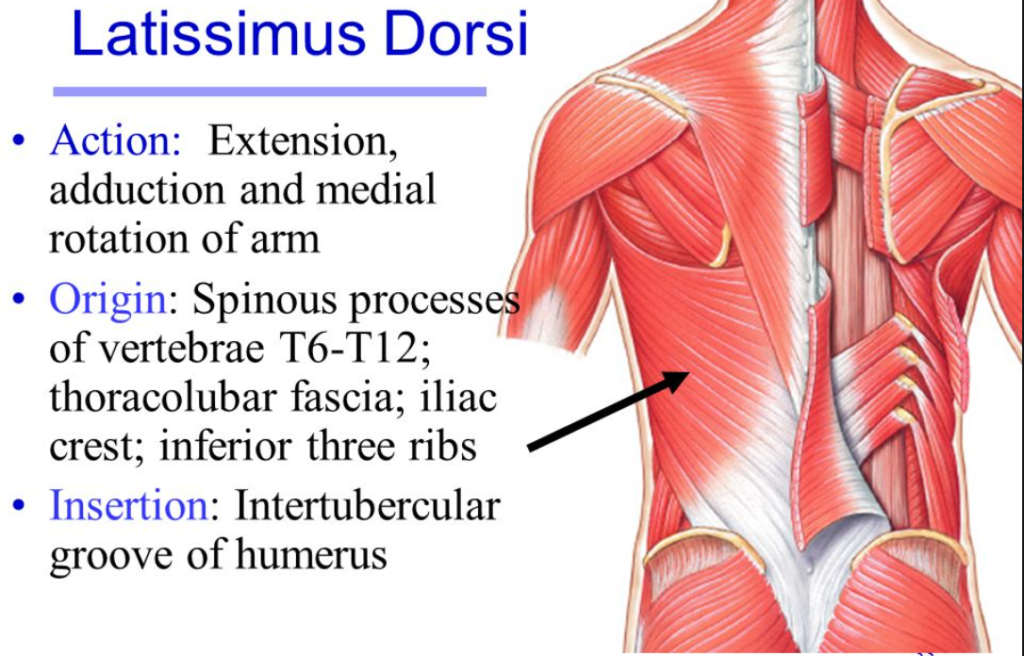
Lat Pulldowns Don’t Train The Lats? Debunking This Dubious Lat Pulldown Claim… Lat Pulldowns It’s In The NAME Claiming that Lat pulldowns don’t train the LATS is quite literally one of the dumbest things I’ve ever heard. Next thing you know we’ll have IG influencers claiming triceps extensions don’t train the triceps, biceps curls don’t train the biceps, abdominal crunches don’t train the abs, and calf raises don’t train the calves (unless you’re me)… This sensationalizing of the ineffectiveness of simple staple NAME SAKE exercises needs to stop. Because the reality is, biomechanics and human anatomy has NOT changed in hundreds of thousands of years. And certainly NOT in our lifetime. But instead of bitching and talking shit about dubious statements like the above, lets break down this incorrect claim with some more context… The “Isolated” Roll of The Lats In isolation, the lat’s textbook action is to adduct, extend and internally rotate the humerus (upper arm bone). If you dive into the anatomical actions of the lats one layer deeper you’ll learn that the lats also play a secondary roll in rotation and stabilization of the torso (upper and lower) along with the pelvis. But the “bro” action that many perseverate on is indeed the action of the upper arm relative to the rest of the body. The so called “isolated” action beloved by bodybuilders and booty chicks alike. But here’s the problem, muscles don’t function in isolation, they function in INTEGRATION. Especially the lats. The Complicated Shoulder Complex As the broadest attaching muscle in the human body, the lats are synergistically tied to the muscles of the upper back complex (comprised of 16 muscles around the shoulder blade) and also the pectoralis complex on the front side of the body. So simply put, in order for the lats to fire and create dynamic movement, the upper back AND the pectoralis groups must also be active playing rolls in dynamic stability and mobility to potentiate the lats to ultimately carry out their primary actions. Unless you’re dead or knocked unconscious and hooked up to electrodes or EMG’s, there truly is NO isolation. Not from a biomechanical perspective, and certainly not from a neuromuscular perspective. The brain is always on, and since the brain controls the body, we will ALWAYS have relative tension, recruitment and potentiation in muscles, especially those that have a local active mover in the vicinity. And since the lats are anatomically tied into the shoulder complex (comprised of 4 synergistic joints and countless muscles that work, overlay and interact together in a myriad of different positions around the most mobile joint in the human body, the glenohumeral joint) there is truly no great argument for lat isolation during training or exercise. So What About The Traditional Lat Pulldown Exercise? Respecting the synergistic nature of the lats, lets take a look at the traditional lat pulldown exercise (the original name sake exercise for lat development) knowing very well that the lats fire in ALL types of lat pulldown variations and derivatives (sorry, it’s just simple science). Trained in a pure vertical plane of motion (as many lat pulldown machines are setup) the shoulder blade’s rotation becomes more apparent and dominant, hence creating increased targeting at the upper back, and slightly less at the lats. BUT the lats are still working. Think of the lats, upper back and pecs “sharing” the load necessary to move a weight throughout a complete range of motion of an exercise. If we need 100% as a total to complete an exercise, that 100% is shared between these 3 key players. To what degree remains the question, and the foundation of this debate. If your goal is to get as strong as possible, then integrating as many muscular movers as possible into the lat pulldown exercise is going to be advantageous. This means bigger grip, more upper arms, and absolutely intense amounts of upper back recruitment to control that free floating shoulder blade on the thoracic cage. But for muscular hypertrophy (AKA bodybuilding), or trying to bring up a weak point or linchpin in the kinetic chain, there would be great benefit to getting MORE out of the lats, and having less recruitment from the other secondary muscular players in the movement itself. NOTE: It’s worth repeating that there no such thing as ISOLATION Making Lat Pulldowns More Lat Dominant Making a traditional lat pulldown more LAT dominant isn’t rocket science, it’s anatomical (and neurological science). Simply use a slightly “off” angle of pull with arms slight out in front of the torso angle to create more targeting at lats, and less at the upper back. And if you want to go one step further, freeing the hands in order to rotate more naturally, or preferentially, having the hands assume a more neutral (palms facing one another) position while incorporating the anteriorly directed plane of motion of the pull, can also reduce the amount of recruitment at the biceps and upper back, theoretically placing more directly over the lats.   In real time execution, this may look like leaning back slightly in traditional lat pulldown machine setups (where the cable is coming from above you and you’re seated with your knees under a pad) OR using a chest supported position on an incline bench with single OR double cables to achieve a more optimal angle of the lats to be the first line of action and the primary targeted musculature of the exercise. With the equipment options available today, there are a million and one different setups that can both target the lats to their full potential in the pull pattern, but also allow the vertical or “off plane” pulling pattern to get as strong as possible (as safely as possible on the shoulders) for training. Don’t be a slave to a single exercise variation, especially lat pulldowns. With the combination of the broad attachment points of the lats, and it’s synergistic relationship with the upper back and shoulder complex, there are

Lat Pulldowns Don’t Train The Lats? Debunking This Dubious Lat Pulldown Claim… Read More »